After Thanksgiving Break, “The Caucasian Chalk Circle” was missing a key piece: a director. Since then, the Wirtz Center team found a new director and completed blocking and staging on an expedited schedule.
Director Hamid Dehghani initially developed the cast and creative vision, but had to leave the production due to family obligations. Before Fall Quarter ended, the Wirtz Center announced a new director, Kathryn Walsh, to lead the play.
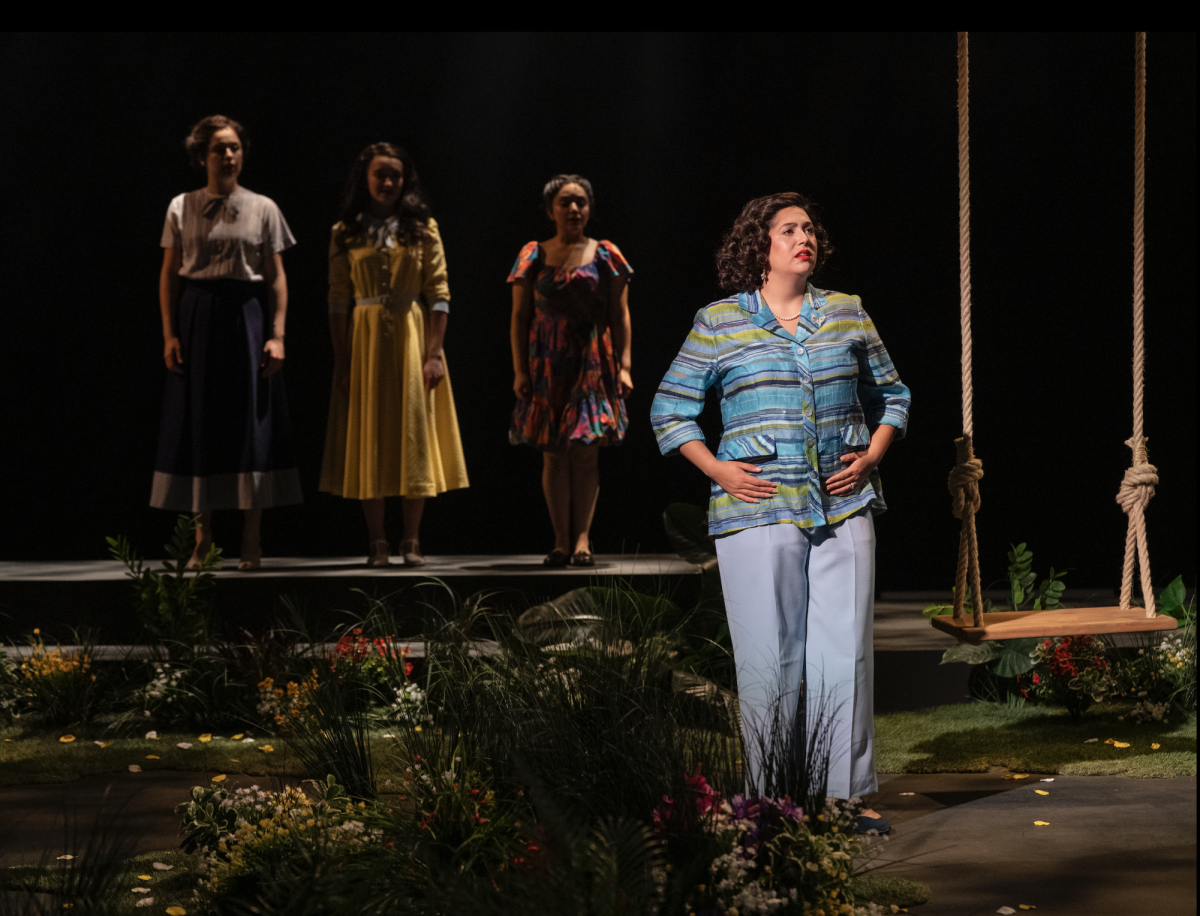
Walsh and the cast have prepared a play that includes everything from an abandoned baby and a drunken monk to a melodica-playing judge for its performances Feb. 5-8.
“The Caucasian Chalk Circle” tells the story of a maid named Grusha who rescues a baby of a wealthy family following an uprising in the Soviet Caucasus region at the end of World War II.
Entangled in political violence and custody debates, Grusha grows to love the baby and makes continuous sacrifices to protect him.
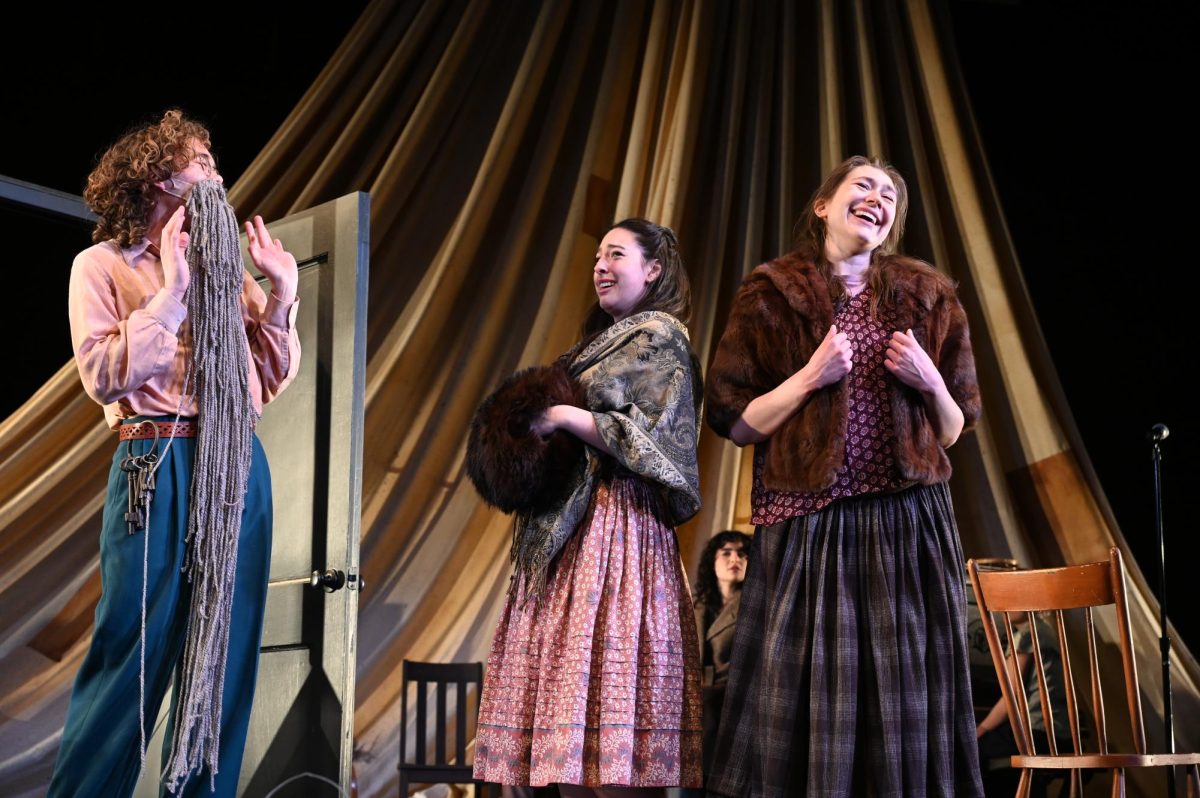
Communication senior Lucy Honor Lewis, who plays the judge (Azdak) and one of the narrational singers, said the team was “very sad” about Dehghani leaving, but had positive expectations for Walsh.
“Everyone I talked to, I just heard nothing but great things and I was like, ‘Okay, we’re gonna be fine,’” Honor Lewis said. “Things are gonna be a little bit weird, it’s gonna be a little bit crazy, but I have a feeling that I might be in good hands.”
Because Walsh joined at the start of Winter Quarter, there were two weeks of rehearsal without a director. Cast members spent most of that time working with Music Director Justin Cavazos, who composed original music for the performance.
Honor Lewis said Cavazos presented the cast with a box of instruments in an early rehearsal and asked them to pick one. She said these instruments ended up being played by cast members, including her on the melodica — which she had never played before.
“I don’t play it a ton in the show, but when I do, it’s like, ‘Oh, she’s playing that,” Honor Lewis said.
Cast members said the first few weeks of rehearsal without a director helped them bond into a tight-knit group because it forced them to depend on each other’s leadership.
Communication sophomore Finn Callander, who plays Grusha’s fiancé, Simon, said Cavazos and older cast members made those weeks productive and fun.
“We had to really rely on ourselves,” Callander said.
When Walsh arrived in January, she said the cast developed a shared vision for the play, a conversation which would usually take place during early tabling.
Unusually, they did this while beginning the staging process in the Josephine Louis Theater.
“We talked about the big picture ‘why’ and then we keep coming back to it over the course of the rehearsal process, when we are sharpening a storytelling moment or when we’re talking about, particularly in this production, the moments where we are sort of engaged as an ensemble,” Walsh said.
She said emphasizing the show’s purpose propelled the cast to their high performance quality.
Cast members shared that they discussed both historical context and current politics to better understand the show’s themes.
“It’s unfortunately easy to relate a lot of things from history to what’s happening now,” said Communication first-year Molly Coogan, who plays Grusha. “It’s easy to connect these themes of ownership and social responsibility to what’s happening in our country today.”
“The Caucasian Chalk Circle” was written in 1944 by Bertolt Brecht, a German playwright who fled to the U.S. when his works were burned. Cast members described Brecht’s plays as very theatrical and self-aware.
“Once we started working with Katy, that’s when we kind of realized (Brecht’s) style of reminding the audience that they’re watching the show,” Callander said.
He said one of the ways the cast accomplished Brecht’s style was by presenting “Caucasian Chalk Circle” as a “show within a show,” beginning with a prologue that makes the entire performance appear “impromptu.”
Another staple of Brecht plays is “stock characters,” where many actors play multiple characters who fit into an archetype, according to Communication junior Alex Arinkin.
Both cast members and stage design elements are used in a way that Walsh said creates a “complicated piece” that is “quite deceptively simple.”
After an abnormal production process and an “incredible ensemble undertaking,” Walsh said she cherished the experience.
“I think we’ve had a little less time to get to know one another, and so I’ve just been really grateful that everyone welcomed me with such open arms and generosity,” Walsh said.
Email: [email protected]
Related articles:
— ‘The Addams Family’ blends heart and humor, drawing full houses at Wirtz Center
— Wirtz Center original play ‘Amicus’ follows university students through love, war
— Wirtz Center debuts ‘Doctor De Soto,’ inspires next generation through theater