This review contains spoilers.
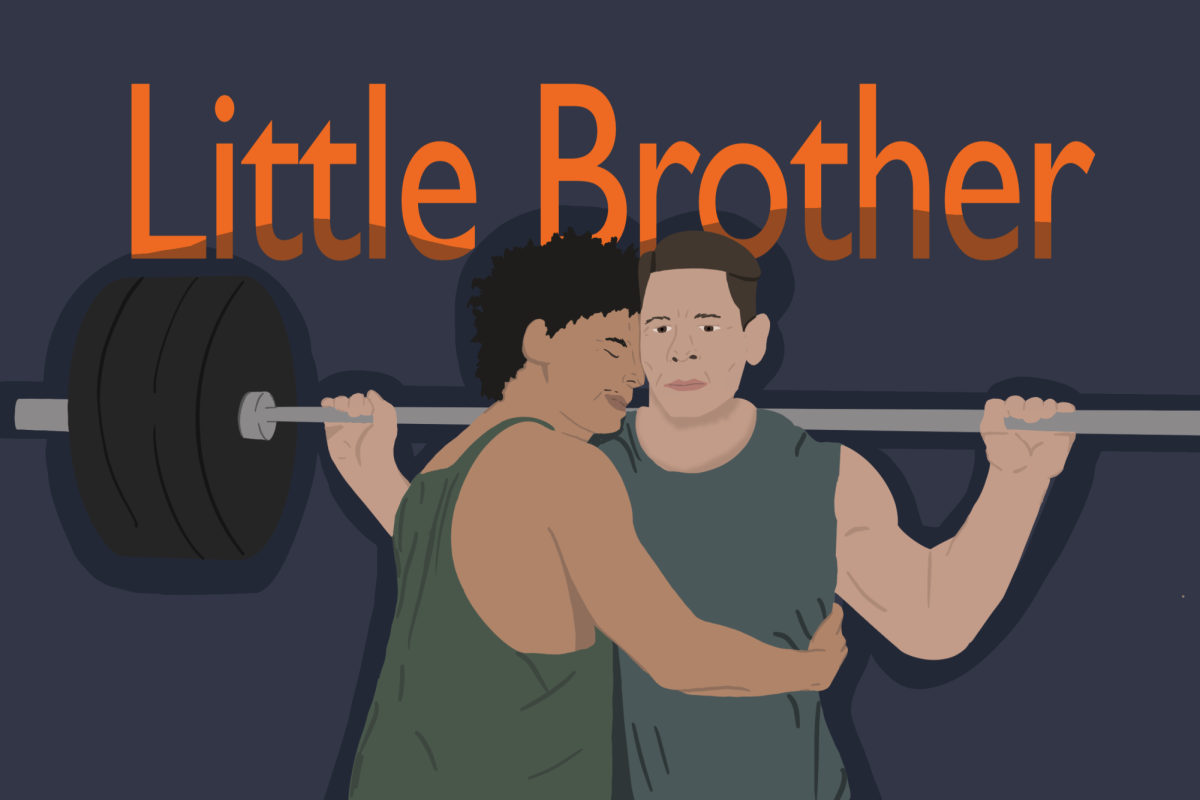
As protagonists Rudd Landy (John Cena) and Marcus Pinchel (Eric André) shoot hoops at the same basketball court where they first met as kids in a Big Brothers Big Sisters-style program, the wholesome moment successfully lands the theme of brotherly bonds despite the overdone sexual content that distracts throughout the film.
“Little Brother,” released June 26, reveals every angle of Rudd’s heart and every part of Marcus’ body in a movie that swings between inviting viewers into heartwarming moments and making them want to cover their eyes when the plot goes completely off the rails.
The movie follows Rudd, an ambitious New York City realtor seeking to make a name for himself. Rudd has always felt overshadowed by his older brother, billionaire Josh Landy (Christopher Meloni), constantly seeking his approval.
When Rudd gets a shot on “NYC Hustlers,” a real estate reality TV show, he makes it his mission to impress the producers, believing this to be his big break — even if it means straining the relationships with those closest to him, including his wife, Deirdre Landy (Michelle Monaghan), and their children.
With his quirky and upbeat nature, Marcus is the catalyst for Rudd’s character development.
After emailing Rudd’s assistant, who poses as Rudd, Marcus decides to find his long-lost “brother.” It is this sudden return of Marcus to Rudd’s life, decades after the two met through the mentoring program as kids, that catapults his carefully constructed life into chaos — and eventually leads to meaningful change.
Marcus, a sweetheart who reflects a deep understanding of Rudd’s insecurities, is also one of the wildest personalities I’ve seen venture into the comedy genre. From his unbelievably bad luck that gets him struck by vehicles left and right to his relentless craving for sex, Marcus constantly pushes the film into outrageous territory. He is an almost unacceptably offensive character for much of the movie, only beginning to tone it down at the end.
His out-of-pocket nature is undeniably funny, and often fantastic, but it is also too shocking, crude and jarring for the film’s central message of brotherhood and family, reinforced by the recurring phrase: “Brothers for life.” Marcus is one of the few elements preventing “Little Brother” from feeling like a family movie.
I’m not saying the filmmakers should have made him boring — because much of the comedy depends on his unpredictability — but he simply did not need to be so literally exposed as a character. The excessive nudity and sexual humor often feel more interested in shock value than actually serving the story, creating a disconnect between the film’s emotional core and its raunchiest moments.
Although it takes a long time to get there, Marcus and his relentless persistence to learn from Rudd ultimately bring the two back together. Their relationship evolves through countless ups and downs as Rudd slowly overcomes his insecurities and constant need for validation, a journey that feels surprisingly relatable beneath the film’s absurd comedy.
Rudd genuinely loves his family, but he convinces himself that he has to “work twice as hard” to make them happy and prove himself worthy of success. Over time, he comes to understand that what his family wants most is not a bigger house, a television career or greater financial success — they simply want their husband and father back.
Once the movie lets its emotional beats breathe, and the relentless barrage of outrageous scenes finally settles down, its message becomes genuinely moving.
Rudd and his “Little Brother” ultimately prove the importance of not getting carried away in chasing success or validation. Instead, the film argues that fulfillment comes from looking inward and being present for the people who matter most, whether they are family by blood or choice.
Had “Little Brother” trusted those heartfelt moments more than the movie’s most excessive jokes, its touching message about brotherhood would have landed with even greater force.
Email: [email protected]
Related Stories:
— Reel Thoughts: ‘Supergirl’ is a super flop
— Reel Thoughts: Mindy Kaling’s ‘Not Suitable for Work’ is a ‘Friends’ ripoff, but I’m okay with that
— Reel Thoughts: ‘I Will Find You’ finds success through powerful plot lines