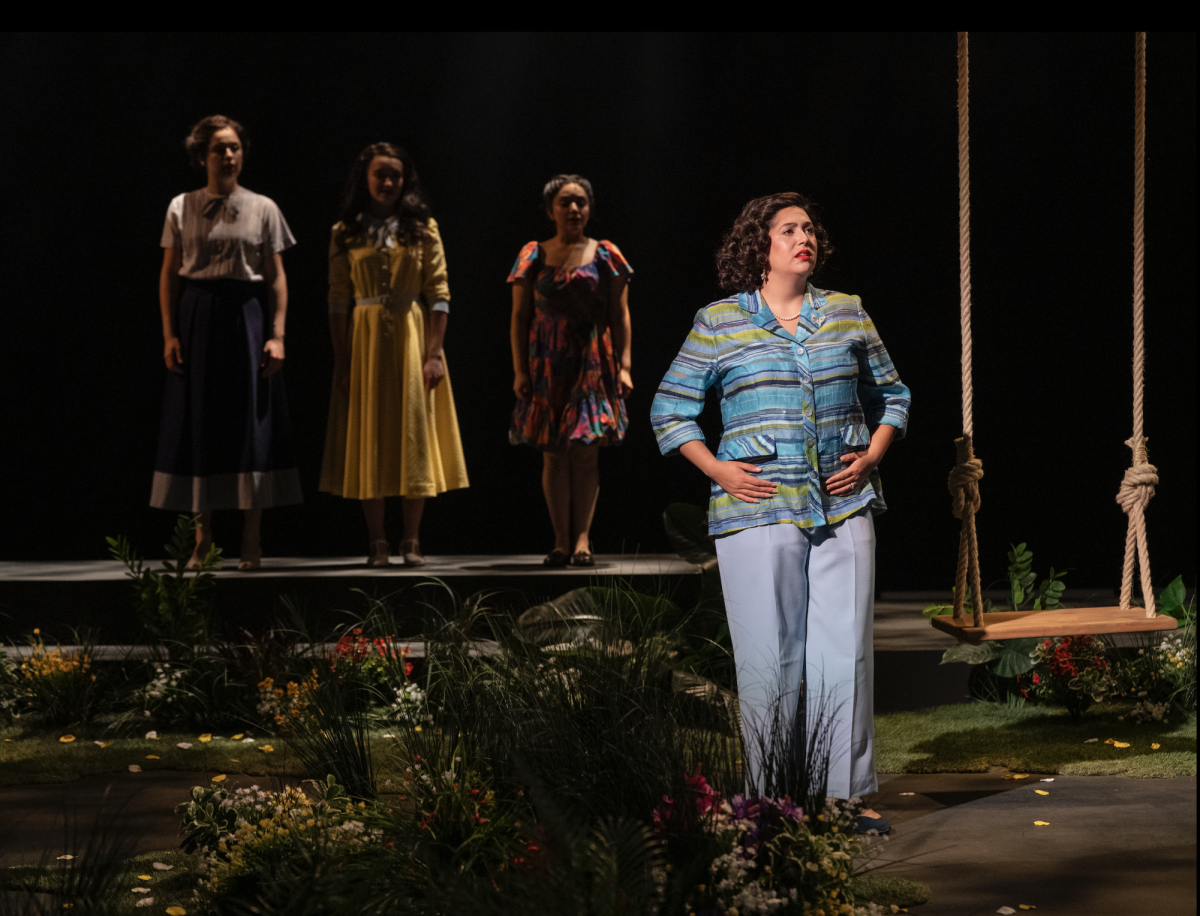
For those who write off opera as a lost art, Cosmia Opera Collective wants to rock your world.
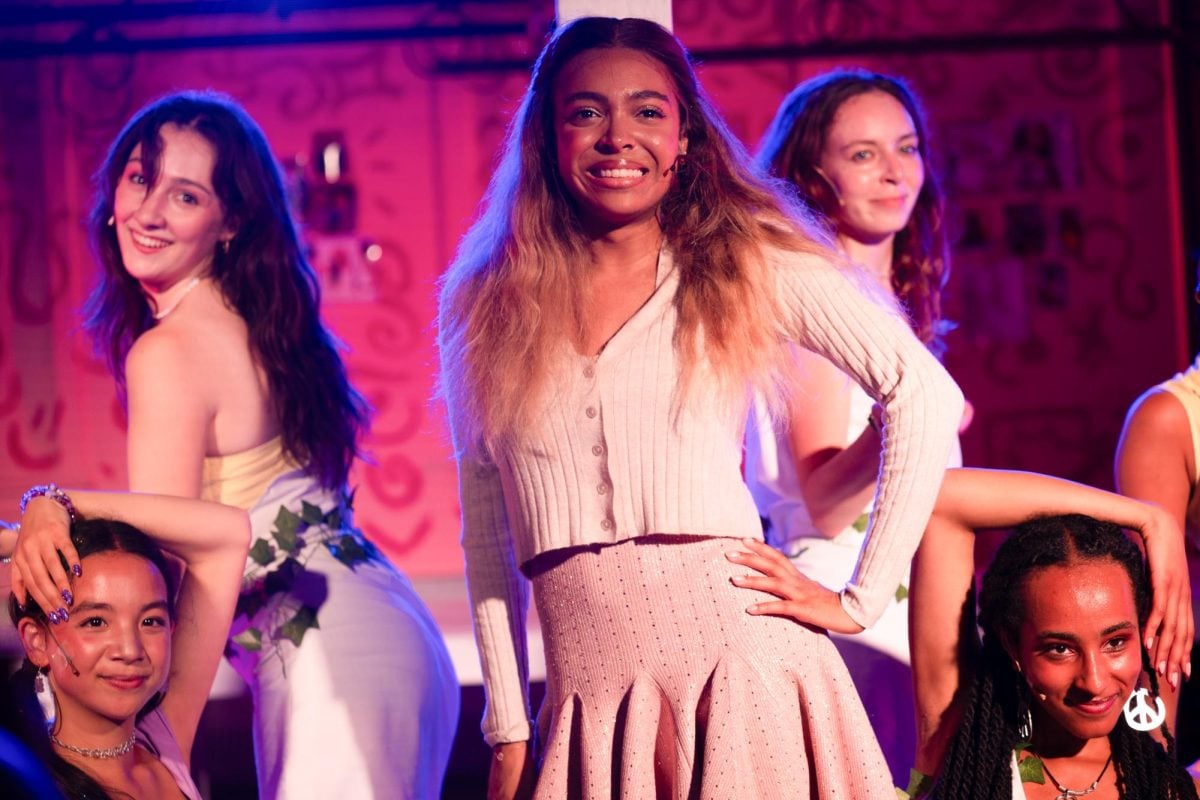
Cosmia premiered “Green Room” in the Ryan Opera Theatre on Friday, continuing its pursuit of bringing student-written work to the stage.
Blending electronic pop elements with those of a traditional opera score, “Green Room” tests the boundaries of the genre.
“Green Room” is the second opera created by Bienen senior and Cosmia founder Cecelia Olszewski. She cites her main inspiration as an article by Iris Rachamimov, which details the presence of drag and female impersonation in theatrical productions staged by World War I prisoners.
“It was a really interesting social phenomenon where there were no women in the camp, so they had to improvise,” Olszewski said. “It’s very interesting to analyze how these men in drag changed the social dynamics of the camp and were both a stabilizing and a destabilizing presence for these officers.”
The opera itself is set in the green room of one such production. Much of the libretto, or script, is adapted from Rachamimov’s research and translations to accurately and powerfully portray the emotions of the time.
Through a 40-minute series of vignettes, “Green Room” tells the stories of several prisoners struggling to balance the fluidity of their gender and sexuality with traditional norms.
Bienen graduate student Solamada Pando Girard plays Prima Donna, a female-presenting character who serves as a role model for Emmerich, a new prisoner starting to explore their gender. Pando Girard saw her lived experience as a transgender woman reflected in the characters’ relationship.
“I think of that relationship of sisterhood, of support,” Pando Girard said. “That’s still how a lot of transgender women relate to each other, and I think about the people who have helped me in my transition.”
The mentorship that Prima Donna provides Emmerich embodies the opera’s focus on how LGBTQ+ individuals find safe spaces with one another. The green room itself serves as one such third space, as it is used for identity exploration and transformation.
As Emmerich and other prisoners interact, the opera’s score reflects their rising inner dissonance through a unique use of microphones.
“Normally in opera, we are unamplified,” said Bienen senior and “Green Room” co-producer Claire Coven. “In this opera, the singers could be singing unamplified, but the microphones are here to distort the voices.”
Coven believes that the electronics and vocal distortion add a pop aspect to the score, making the show feel more modernized than most operas.
“Green Room” ties its story to the present through music and message. The electronically modified vocals and the tumultuous story culminate in a parallel to a Berlin nightclub scene, a modern-day example of a queer third space.
“By transforming into this space where people are truly free to be themselves,” said Olszewski. “The green room exists in all these different timelines.”
A recording of “Green Room” will be published in the coming weeks on YouTube.
Email: [email protected]
Related Stories:
— Cosmia Opera Collective breathes life into opera, uplifts underrepresented composers
— ‘Proving Up’ opera navigates the myth of the American Dream