Evanston Township High School’s E-Town Sunrise group and Community Service Club hosted a climate justice panel Wednesday in celebration of Earth Day.
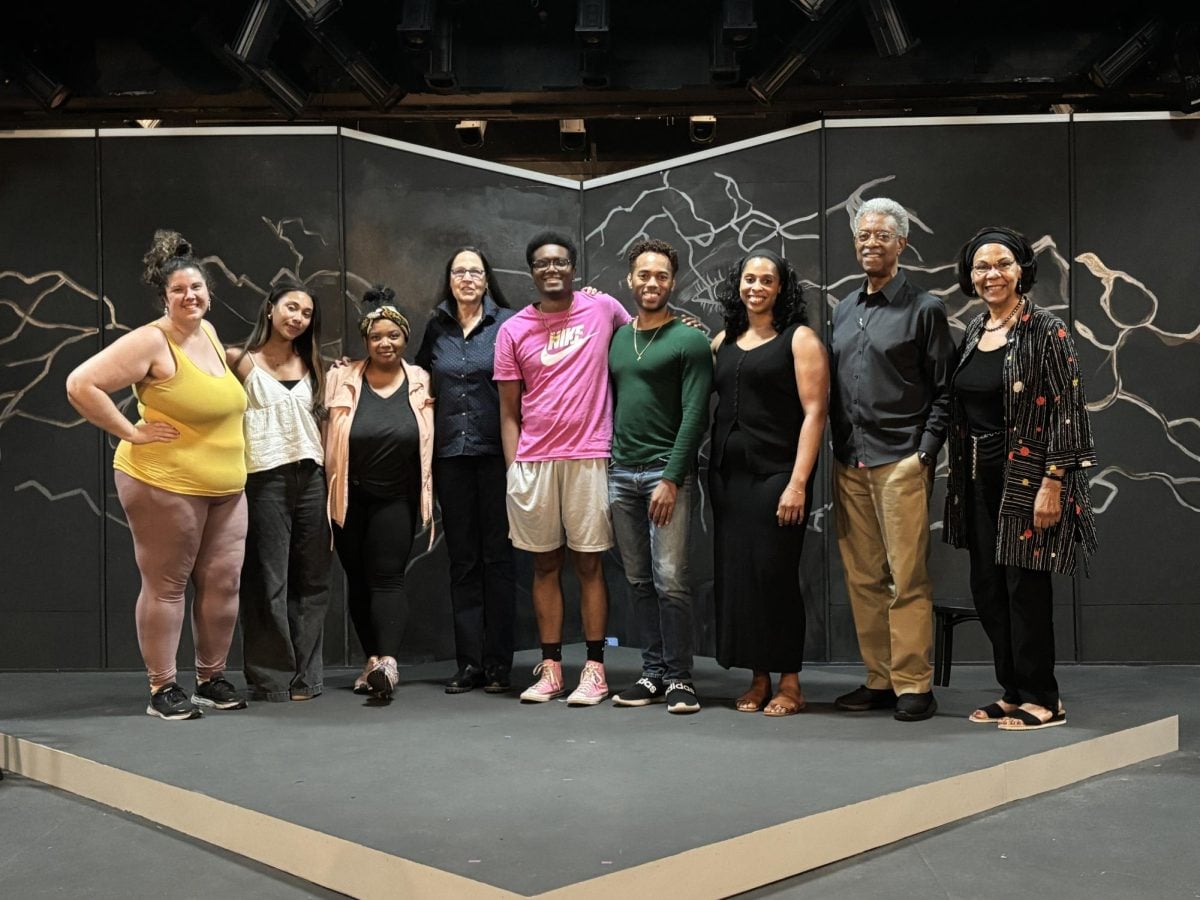
The panel featured Environmental Justice Evanston Co-Chairs Janet Alexander Davis and Jerri Garl, Climate Action Evanston Executive Director Jack Jordan and sixth-year Northwestern Ph.D. candidate in civil and environmental engineering Jordan Gurneau.
From civil service in the U.S. Environmental Protection Agency to decades of local activism, each speaker spoke to a different facet of climate justice.
When asked how residents can ensure Evanston’s transition to a greener future remains equitable, Jordan provided students with a definition of climate justice.
“We want everybody to have a clear and healthy environment, regardless of their race and regardless of their income,” Jordan said. “It sounds very simple, but it’s an uphill battle.”
As a longtime racial and climate justice activist, as well as a lifelong Evanston resident, Davis said she has witnessed the intertwined injustices of the climate crisis firsthand.
Davis, also a real estate agent, focused on housing discrimination. She told students that she has often heard other realtors advise Black clients to take family photos down during appraisals in order to avoid “suspiciously low” appraisal values on their homes.
“This is not a feeling,” Davis said. “It’s a pattern, and it robs families of color equity, opportunity and generational wealth.”
Through his doctoral research, Gurneau has been monitoring regional wetland ecosystems with the goal of aiding the Ojibwe people in preserving wild rice, known as Manoomin, in an increasingly unstable climate.
When asked about his work, Gurneau said a key idea that keeps coming up is developing a relationship with the land. Gurneau added that traditional approaches to ecological knowledge tend to evade the empirical methods of Western science.
“When it encounters traditional ecological knowledge, say the research that I’m looking at, it doesn’t want to recognize what Indigenous people have known,” he said. “I don’t think Western science is ready for it. I don’t think it’s good to handle it.”
He encouraged the students to “brush up your skills of observation.” While it can be as simple as observing seasonal changes, such as there being less snow during the winter holidays, Gurneau said students should keep track of these changes and share them with others.
Garl said observation was key to the success of the city’s January Environmental Equity Investigation, an effort to assess environmental burdens in Evanston’s historically marginalized neighborhoods.
During a short break, students were invited to play an interactive trivia game about the investigation’s findings. Questions such as, “What is unequal about the tree coverage in Evanston?” sought to teach students how environmental factors linked to unequal infrastructure in Evanston have led to a lower quality of life throughout the city.
“The Environmental Equity Investigation really laid this out through a process of community listening and public workshops where people were able to tell their stories,” Garl said. “Which, again, that observation, that ability to share your experience, is critical.”
Throughout the event, panelists shared what brought them hope. Davis turned her attention to the crowd of students.
“The students understand something critical. They will inherit a mess they did not create,” she said. “Whether it is polluted air and water, the unaffordable housing, or the racial inequities baked into our institutions, they will be the ones living with the consequences. Their voices matter, and we should be listening.”
Email: [email protected]
Related Stories:
— Climate Action Evanston kicks off Earth Week with community celebration
— City returns focus to Waste Transfer Station as Evanston residents continue to express discontent
— ETHS students undertake sustainability projects with Climate Action Accelerator