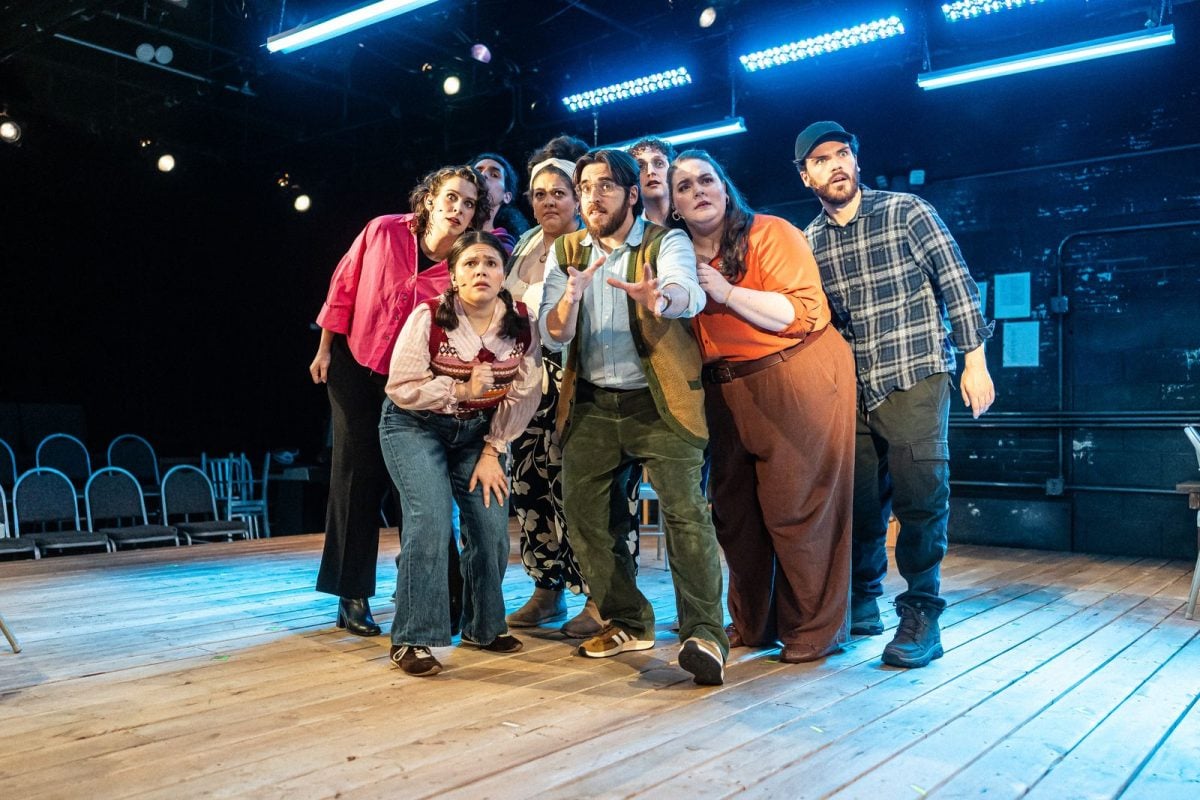
Northwestern’s Virginia Wadsworth Wirtz Center’s production of “The Harvest,” directed by Jonathan Berry (MFA ’07), closed out its run Sunday afternoon following four performances throughout the weekend.
The production featured five graduate students in NU’s MFA acting program, alongside rising Communication junior Sarah Bock and Communication Prof. Shawn Douglass.
Set in an Evangelical church basement in southeastern Idaho, the play follows a group of five missionaries as they prepare for a trip to the Middle East. Ada (Peach Balajadia), who has made the trip before, leads the group as they plan their four-month-long visit. But Josh (Tyler James Murphy), who recently lost his father to alcoholism, is intent on moving permanently — until his estranged sister Michaela (Gillian O’Daniel) arrives to convince him otherwise.
Meanwhile, Josh’s best friend Tom (Darren Shin) struggles with anxiety and his complicated relationship with his father, Pastor Chuck (Douglass), as tensions between couple Denise (Bock) and Marcus (Anthony Kairouz) grow increasingly evident.
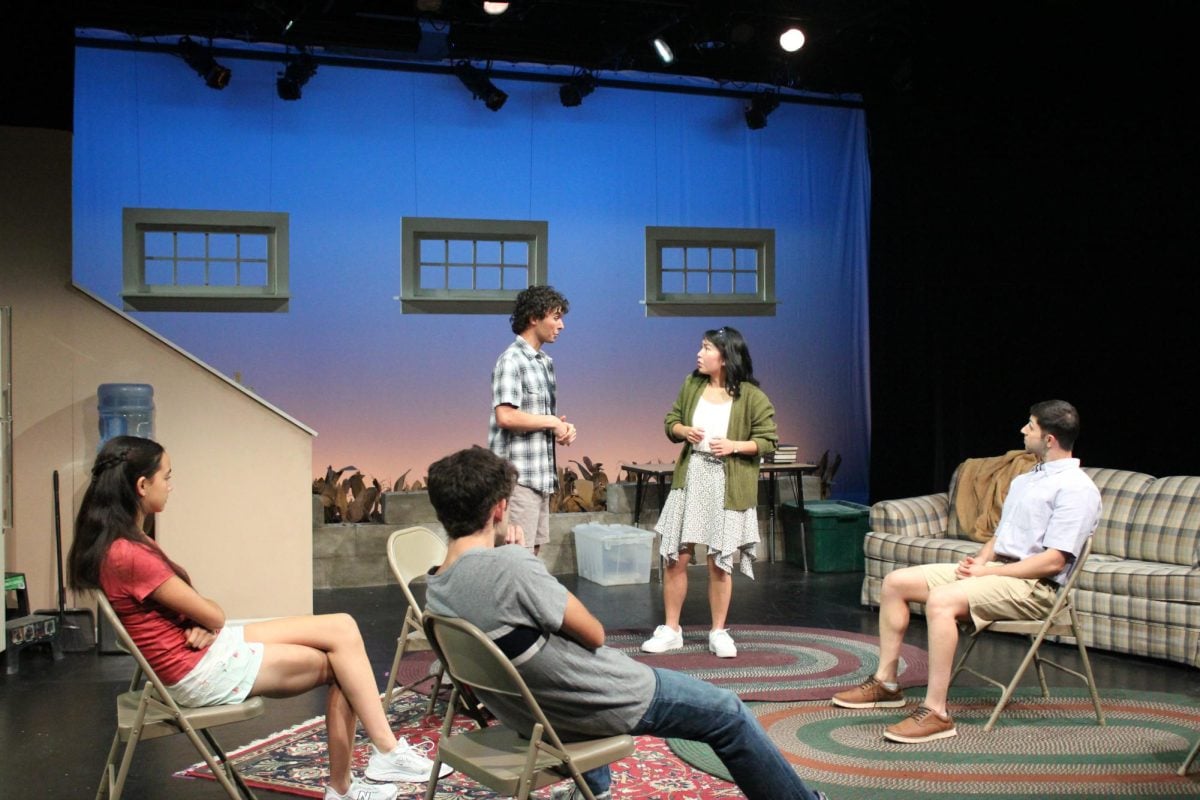
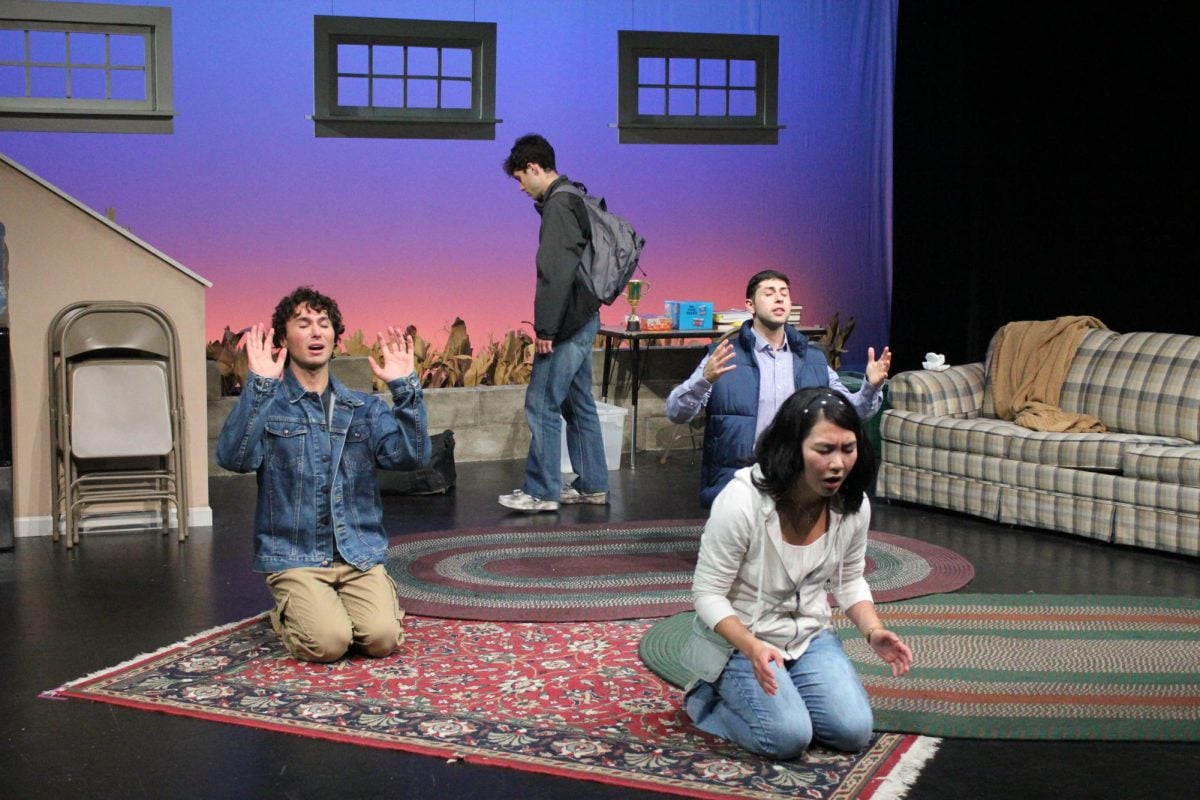
The show’s opening scene was both striking and intense. Set in the church basement, the group prays in tongues, moving around the room as they throw their hands in the air, kneel on the ground and grow louder.
Berry said this first scene was one of the most challenging in the show, with around nine pages of written-out prayers in tongues that he called “devilishly hard to memorize.”
Still, Balajadia said it was the power of that scene that initially drew her into the show.
Shin compared the sequence to a “choreographed dance in an unknown language,” adding he had never done anything like it before. In the moment, each actor had to listen carefully to cues from the others, Shin said.
“It was really about trusting the other actors on the stage that they have you, that you aren’t going to be left out in the cold not knowing where you are in the space, in the time, in the play,” he said. “It’s really about trusting that we all have each other in that moment, because once that ball starts to roll, there’s no going back.”
Balajadia said although the scene was a challenge, everyone in the cast was up for the task. She said they did outside research, including watching videos of people speaking in tongues, in order to do the scene justice, especially because she said it sets the tone for the rest of the show.
Berry said the show aims to understand each individual’s perspective and reveal their motivation, or “why.” He said one highlight of the show’s rehearsals was watching the actors dive into their craft to bring detail, richness and nuance to their characters. He said he wants audiences to leave with interest and empathy for each of them.
“My hope is that you walk away with a little bit more understanding, but maybe more importantly, a little more curiosity,” Berry said. “That curiosity is so important to us as a society right now, a desire to understand a little bit more.”
For Balajadia, learning to understand her character, Ada, was an important part of the process. When she first read the script, Balajadia said she was taken aback by some of her character’s lines. However, she began to find similarities between herself and Ada, such as the way her character stands strongly for what she believes in.
Balajadia said finding these similarities made it easier to step into her character, and she ultimately wanted to understand Ada as a person and show the audience who she really is.
Shin also found similarities with his character, Tom. He said the religious aspect of the play appealed to him, since he also grew up going to church. He was drawn to the dichotomy between the ways religion can be welcoming yet judgmental, which he said Tom experiences.
But even for those who didn’t grow up religious, Shin said he hopes audience members can relate to the play’s characters.
“The lived human experience, we all share it,” he said. “We all go through periods in our life, and moments and hardships and laughs and failures, and I want the audience to see themselves in these characters.”
Shin added the show’s message of empathy rings especially true today. Berry also said many of the play’s big ideas resonate currently.
For Balajadia, hope was one of these big ideas audiences can draw from many aspects of the production.
“Hope can come from any part — it can be from religion, and it can be from a different place,” she said. “If you look for something, you’ll find it. Keep looking for happiness and hope, because you will find it.”
Email: [email protected]
Related Stories:
— The story of the Mirabal Sisters lives on in ‘In the Time of the Butterflies’
— Curtain Call: Bienen’s ‘La Rondine’ is an entertaining rom-com with deeper subtext