Family secrets, generational trauma and forbidden love collide in “The Brief, Wondrous Life of Oscar Wao,” a profound yet directionless production that opened at The Goodman Theatre on Monday night.
Adapted from Junot Díaz’s Pulitzer Prize-winning novel, the stirring play pays homage to Dominican culture. However, it suffers from uneven pacing, an agonizing nearly three-hour run time and distracting transitions undercutting an already dense plot.
Conceived by Marco Antonio Rodríguez and directed by Teatro Vista Producing Artistic Director Wendy Mateo, the play opens on aspiring writer and comic book enthusiast Oscar (Lenin D’Anthony Izquierdo) moving into his college dorm at Rutgers University. Painfully awkward and insufferable in his nerdiness, he becomes fast friends with his roommate Yunior (Kelvin Grullon), a player by all definitions of the word.
Unlike his activist sister Lola (Julissa Calderon), whom he describes as a “big woman on campus” who “knows just about everybody with any pigment,” Oscar is timid and cynical about his romantic future. Early on, he remarks, “It is clear love shall never be an occurrence for a thing such as I.”
During the first week of college, he spots a girl named Jenni (Jalbelly Guzmán) from across the cafeteria and is convinced that he’s found the love of his life, eventually building up the courage to approach her after Yunior’s goading. However, Oscar and Jenny’s friendship ends in his near death at the end of the first act.
In the second half, Oscar, freshly hospitalized and clinging on for dear life, travels to the Dominican Republic in search of new beginnings, a chance at love, a reunion with his beloved Abuela Inca (Rossmery Almonte) and a resolution to a longtime family curse.
The curse manifests itself most potently in Oscar and Lola’s mother (Yohanna Florentino), who quietly succumbs to the indignities of late-stage cancer but refuses treatment.
For a brief period at the top of the second act, it seems as if Oscar’s trajectory will take a turn for the better. He arrives in the Dominican Republic as a restored man following his accident.
“Look at all these Dominicans coming to see their families! It’s like slapping back the diaspora engine into reverse,” Oscar quips.
However, his bright prospects are soon squashed after he quickly falls in love with Abuela Inca’s sex worker neighbor Ybón (also played by Jalbelly Guzmán), and faces the wrath of her police officer boyfriend (Arik Vega). Given the play’s title, it’s no wonder that Oscar’s passionate yearning for love results in his death in a cruel twist.
The vagaries of romance and attraction are an extractive influence on Oscar’s life. As Yunior and Lola quickly strike up a relationship, Oscar wonders when he’ll ever have a chance at love.
Despite his clear lack of a grip on normal social interactions, Oscar’s innocence and blind faith in humanity pulled at the heartstrings of Monday’s audience, who audibly hummed in sympathy throughout the show.
A raw and devastating performance from Izquierdo made Oscar’s plight deeply immersive. Inventive lighting added to said immersion, as solar beams projected onto the walls set a haunting undertone.
Unfortunately, the play’s confusing pacing was a glaring distraction. In the novel, Díaz specifies that it is only once Oscar graduates that he travels to the Dominican Republic and rekindles a connection to his homeland.
However, the play’s first act ends on a dramatic cliffhanger, which sets the basis for the second act. If Oscar is still in college by that point, it is never specified — a flaw in the play’s storyline.
As their Abuela finally explains the family curse — which stemmed from an ancestor’s perilous encounter with fallen dictator Rafael Leónidas Trujillo — Oscar and Lola uncover history about their mother’s fraught journey to the United States after their father’s abandonment. As devastating as her story is, all of it is relayed through Abuela Inca, with none of the details coming from the source.
Despite her history’s significance to the play’s core, their mother is treated as somewhat of a background character, appearing only briefly in select scenes. While this absence may have been stylistic, it left gaping holes in the plot.
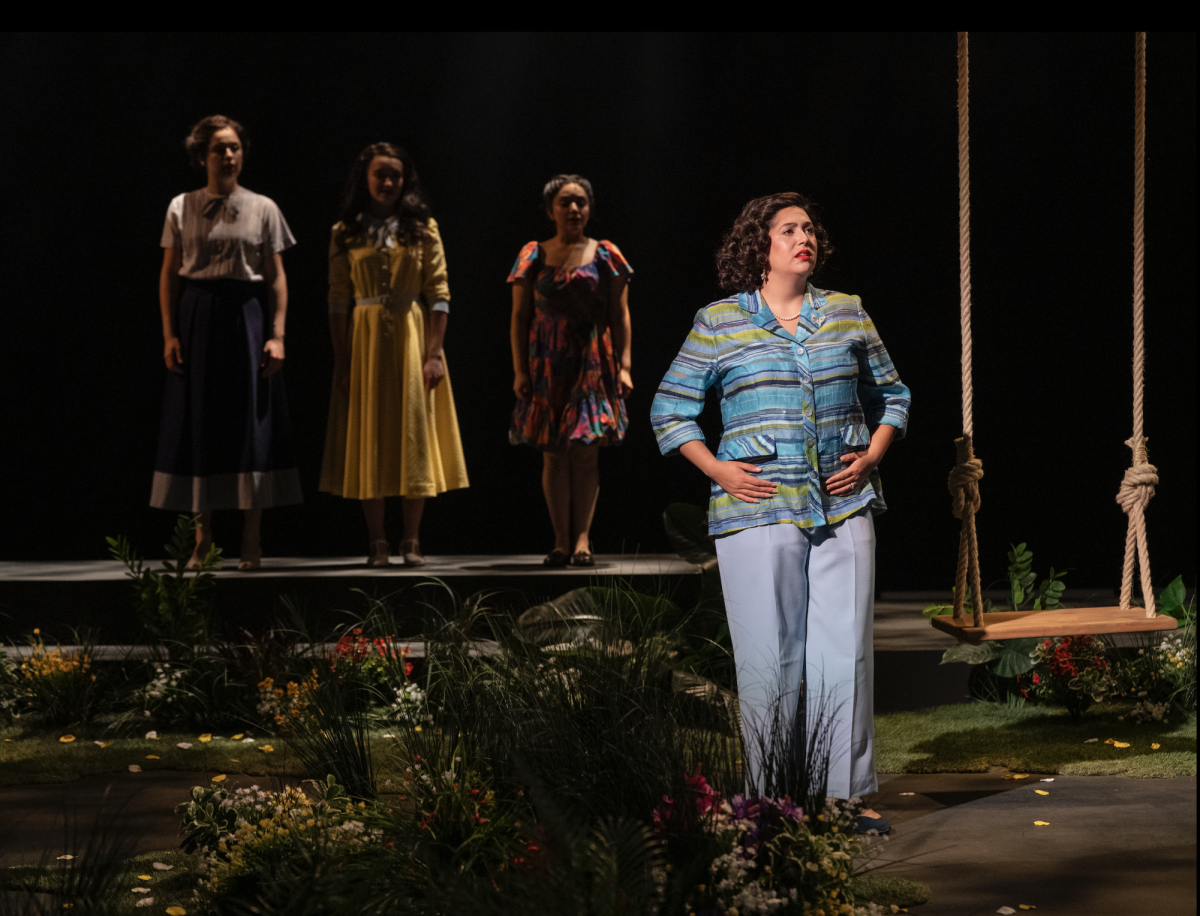
Another unmistakable flaw is the play’s set: barebones pieces of furniture and objects that seem haphazardly strewn together. For the entirety of the play, the stage is flanked by a bedroom exterior, even when Oscar travels to the Dominican Republic.
Pregnant transitions between scenes remove the audience from the story, particularly when stagehands come on stage to move set pieces around. Still, the play was hardly unwatchable, particularly during the well-executed first act.
Strong dramaturgy, memorable characters and scene-stealing performances from Grullon and Calderon partially compensate for the production’s chaotic plot. Moreover, beautiful costumes that aptly reflected the transition between college life in the first act and the Dominican backdrop in the second are certainly commendable.
Regrettably, a dynamic cast and endearing premise could not save this chaotic production of “The Brief Wondrous Life of Oscar Wao,” which seemed unready for an audience.
Email: [email protected]
Related Stories:
— Curtain Call: The Goodman’s ‘Holiday’ presents a poignant meditation on wealth and romance
— Curtain Call: ‘Eureka Day’ hysterically parodies civic discourse in a Bay Area private school