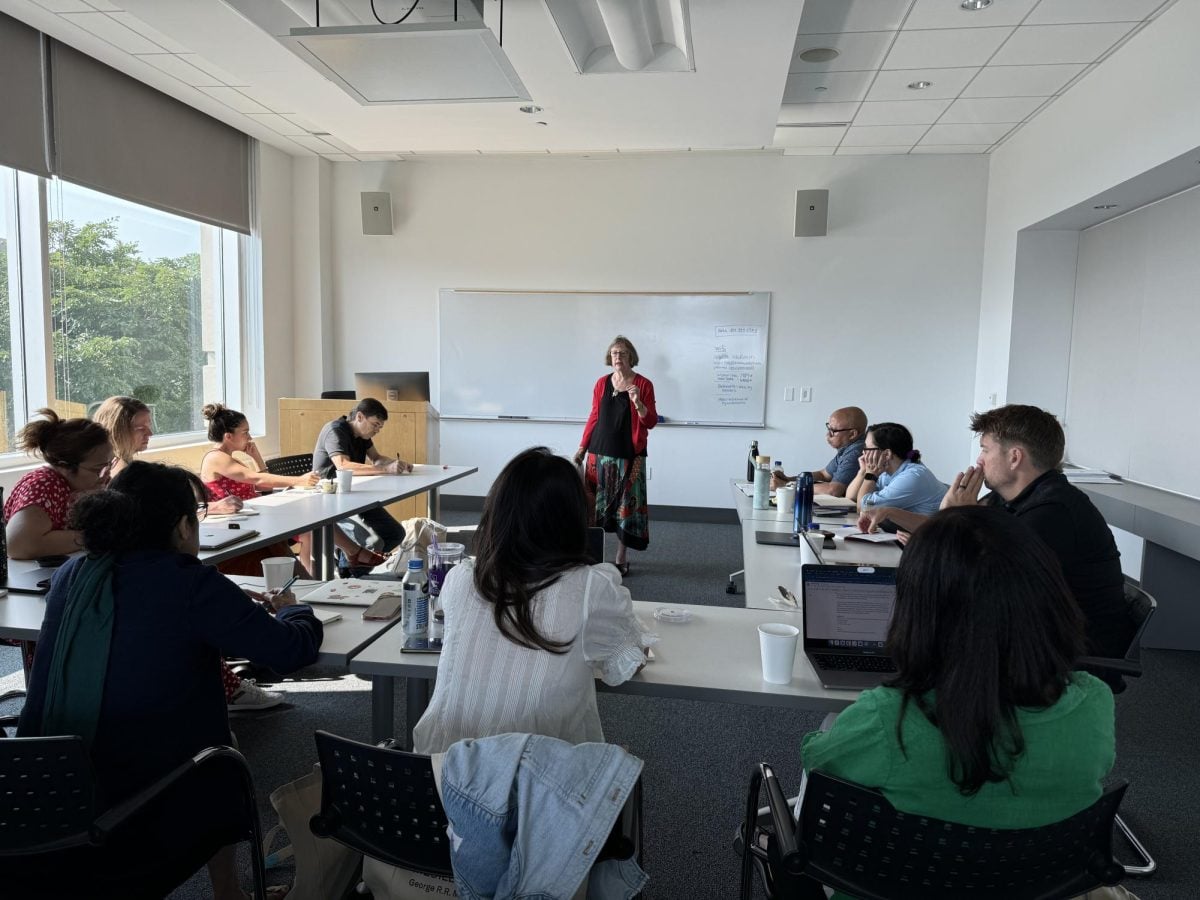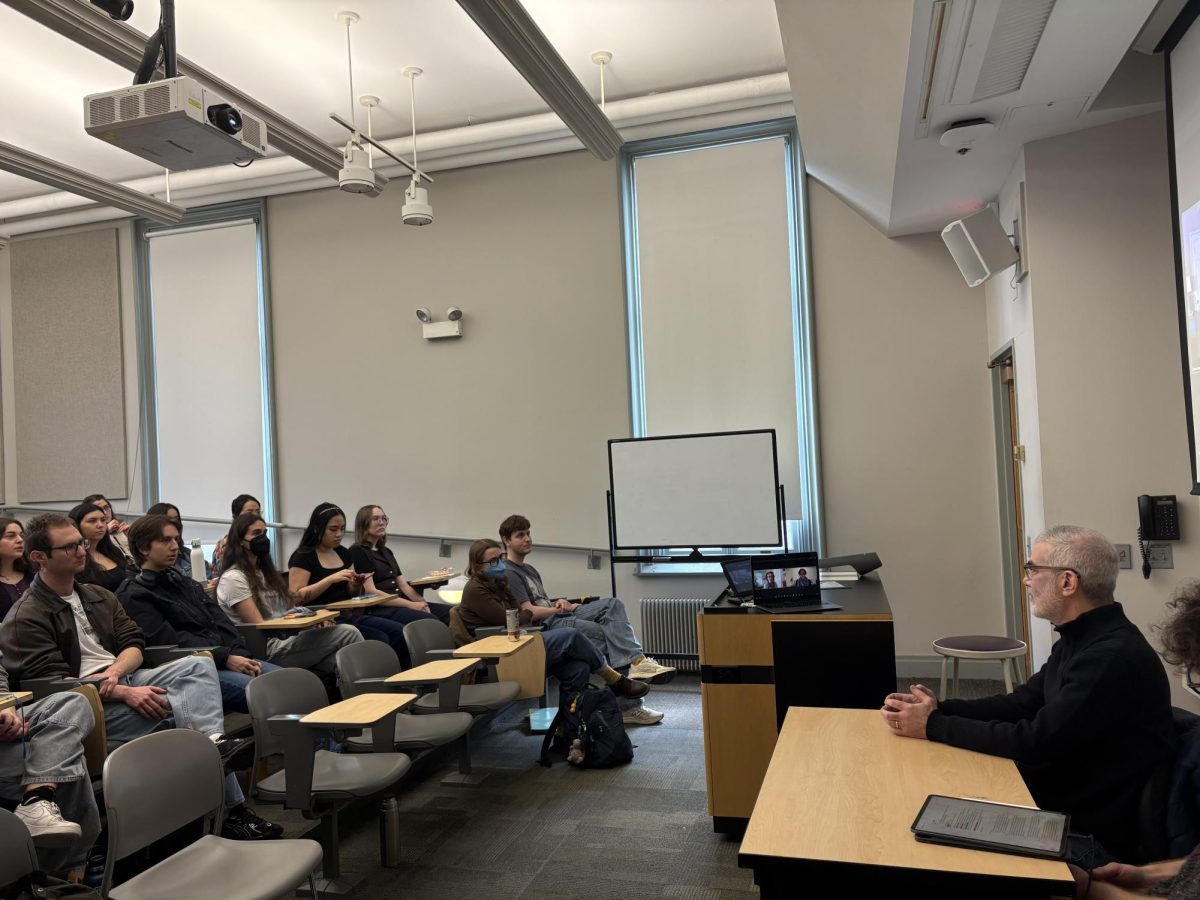
Northwestern’s chapter of Jewish Voice for Peace hosted a panel with Jewish anti-Zionist educators on the relationship between institutional Zionism and the political weaponization of antisemitism.
Each panelist shared their perspective on antisemitism, anti-Zionism and campus life beyond universities’ Zionist frameworks.
Rabbi Brant Rosen, co-founder of the Jewish Voice for Peace Rabbinical Council, said he thinks the Jewish community needs to understand how Zionism is “a form of Judaism” to understand how it emerged and how to respond to it.
He said Zionism was a European movement influenced by colonial ideas that became “hegemonic” in the Jewish community.
“Zionism is about creating an ethnic Jewish nation-state in historic Palestine,” Rosen said. “This moment did not exist, did not emerge on Oct. 7. This colonization and dispossession of the Palestinian people in the name of Judaism has been many, many decades in the making.”
He said the legacy of Judaism was up to Jewish leaders “in this moment of genocide.”
The UN’s Independent International Commission of Inquiry on the Occupied Palestinian Territory, including East Jerusalem, and Israel found in September 2025 that Israeli security forces in Gaza committed genocide.
Donna Nevel is a founding member of Jews Say No!, a national organization of Jewish activists opposing Israeli governmental policies in the West Bank, Gaza and Israel.
Nevel said antisemitism is intertwined with other forms of injustice like anti-Black racism, anti-Palestinian racism and Islamophobia.
“The conflation of antisemitism with criticism of Israel and Zionism, which has become an instrument of repression across academia and well beyond, has been codified into policies, bills and actions that produce false charges of antisemitism,” Nevel said.
Jewish anti-Zionist anthropologist Maura Finkelstein, a professor fired for pro-Palestinian speech, was asked about her experiences and opinions of Hillel.
Hillel partners with Birthright Israel, which Finkelstein described as a “liberal zionist project” that promotes Israel as a democratic, inclusive, multicultural and multireligious state. She said the group ignores the country’s existence as an “apartheid state.”
Israel has been accused of apartheid by non-governmental organizations like Human Rights Watch and B’Tselem — The Israeli Information Center for Human Rights in the Occupied Territories.
“There’s no existence of the state of Israel that is not an apartheid state that’s built upon genocide and ethnic cleansing,” she said.
Nevel said education on the 1948 Nakba could disrupt existing narratives on Palestine in Jewish spaces.
The 1948 Nakba, meaning catastrophe in Arabic, refers to the approximately 700,000 to 750,000 Palestinians who became refugees during the establishment of the state of Israel.
“The expulsion of 750,000 Palestinians from their land and home is essential as a foundation to understand both the settler colonialist nature of Israel and also to understand that it isn’t about a liberal and democratic state, that that is absolutely incompatible and impossible within that context,” Nevel said.
Finally, panelists explored the future of pro-Palestinian activism and Jewish life beyond “institutional hegemony.”
Despite her optimism for the future of pro-Palestinian activism, Finkelstein said wants students to understand their roles and responsibilities in resistance.
She said as an anti-Zionist Jewish person, she felt a deep sense of responsibility for addressing Zionism in her community.
“Even as we imagine alternatives, we also have to understand that we have to be fighting against the structures of power that are trying to crush us,” Finkelstein said. “But we’ll win. That’s right. We will.”
Email: [email protected]
Related Stories:
— JVP hosts antisemitism workshop in response to NU anti-bias training
— New required bias training met with boycotts from SJP and JVP, approval from others