Content warning: This story has mentions of eating disorders.
It was the summer of 1987. Carol Boyd Earls, then a rising junior on Northwestern’s women’s cross country and track teams, was about to receive a call she would never forget.
Her father, a Michigan track alum, who spurred her love for running from a young age, told her someone was on the phone. It was Cynthia Patterson, NU’s assistant director of athletics.
“I was sitting at my kitchen table, and she said, ‘I’m sorry, the program is being cut,’” Earls recalled. “‘We’ll pay your scholarships if you want to stay. If you want to leave, we’ll give you immediate release, so you don’t have to redshirt.’ That was the conversation. She just hung up.”
On July 30, 1987, then-University President Arnold Weber announced that six NU varsity sports — men’s and women’s cross country, indoor and outdoor track — would shutter at the end of the 1988 spring season.
The women’s cross country and track team, which had already faced significant adversity under two coaches, was about to go through even more hardship.
But an interim coach reset the culture in the team’s swan song, giving team leaders new love for the sport as it was about to disappear.
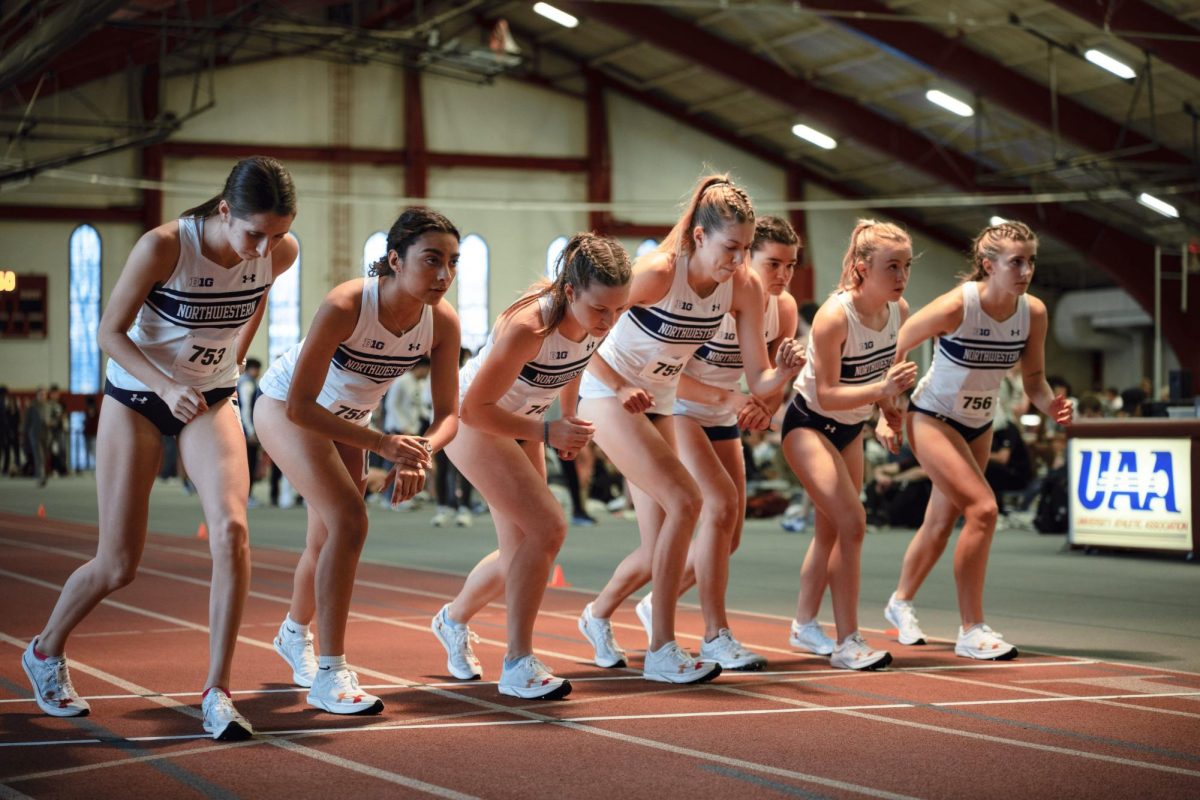
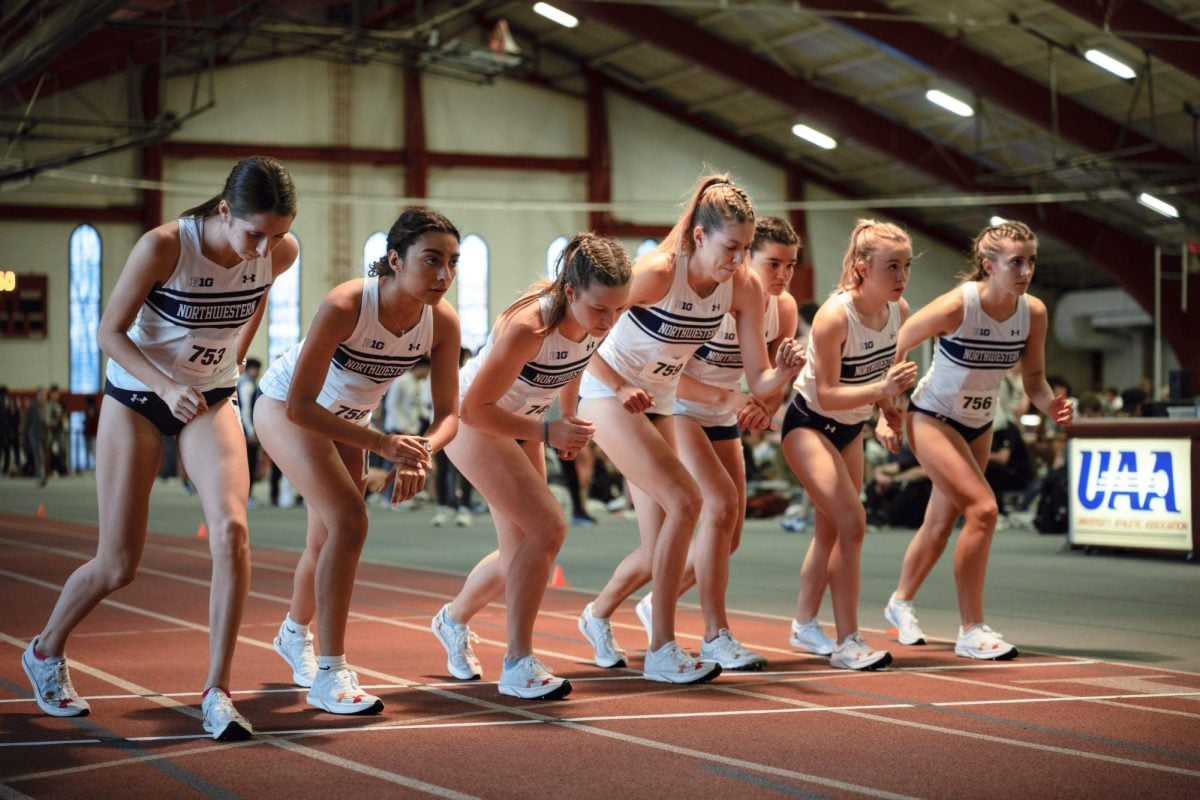
Fast-forward 38 years to 2026, and NU has officially returned to Division I women’s indoor and outdoor track for the first time since Earls’ junior year. Now under the leadership of seventh-year cross country coach Jill Miller, the ’Cats are preparing for a comeback to postseason indoor track this winter and outdoor this spring — and reuniting a long-forgotten alumni base in the process.
“Northwestern is really back on the map,” cross country and track alumna Sue Keeney McNatt (Weinberg ’88) said. “They’ve surpassed what we were able to do.”
How NU got back on the blocks
After women’s cross country was brought back in 1997, NU coaches began sending cross country runners to track meets to keep them in shape during the winter and spring, starting a years-long effort to bring the ’Cats back to officially competing in NCAA track. Former coach April Likhite secured NCAA sponsorship for the team in 2015, allowing the team to travel farther for meets.
It would be another 11 years before NU track cleared the final hurdle and became an entirely school-sponsored sport. The 2025 House settlement, which put restrictions on the number of scholarships an individual program can provide, was what made the difference, Miller explained.
The program’s success on the cross country course helped garner support from the athletic department, which didn’t want to lose around 30 to 40 percent of the team because of the House settlement’s new roster restrictions, Miller said. A fully fledged track team provides enough scholarships to keep distance runners who can swing between all three sports while helping Miller recruit track specialists, she added.
Senior distance runner Mia Mraz said the team had “lofty” long-term goals when she first joined the team, and their patience over the years has now paid off.
“That commitment to slow progress and the focus on the long term lets us achieve results that people never would have expected,” she said.
The ’Cats come ‘full circle’ in return to the circuit
In its last season, in 1987, the team dropped to fifth in cross country and matched the previous year’s ninth-place finish at the conference indoor track championships. Earls scored NU’s only point in the outdoor conference championships with a sixth-place effort in the 5,000-meter run, and in their final hurrah, the ’Cats finished at the bottom of the team standings.
Earls transferred to Michigan for her senior year. Her longtime teammate, McNatt, drove up to one of her indoor track meets from Lake Forest Hospital, where she was learning physical therapy. Then, the team drifted apart and moved on with their lives, McNatt said, and old memories were put aside.
Women’s cross country returned eleven years later. Now under coach Miller, its 18th-place team finish at the NCAA Championships this fall was its best since the field was expanded to 32 teams in the program’s first year back.
After taking charge in the summer of 2019, Miller started a newsletter in her third month on the job, writing to recent alumni and donors with meeting recaps and inside scoops on team news. Old coaches started to reach out with alumni to add to her email list, she said, and word spread rapidly about the team’s ascendance.
She also teamed up with NU’s communications staff to put together a record book that accounted for the old team’s run times. Even after realizing a flood had destroyed team records stored in the athletic department’s offices, Miller said they sifted through old records in the University archives, and a reborn alumni network continues to dig mementos out of worn scrapbooks. The team plans to publicly release the record book at the end of this season.
Meanwhile, the 1987-88 women’s cross country and track team began to reconnect as prominent female runners publicly recounted their experiences navigating a toxic environment under Nike Track and Field. McNatt said she didn’t tell her parents about her experiences until they read national championship-winning distance runner Lauren Fleshman’s 2023 memoir, “Good For A Girl: A Woman Running in a Man’s World,” and realized the full extent of who John Capriotti, her former assistant coach at Northwestern and eventual Nike executive, had become.
It had felt like Capriotti had paid special attention to her weight, but as she exchanged stories with her former teammates over Facebook, McNatt realized she wasn’t the only one.
“When we all started talking about it, it’s like, ‘Oh, man, I didn’t realize that you were also going through it’ … and how we didn’t talk about it, but yet we wish we had,” she said.
Now a high school track coach in Massachusetts, McNatt said she can proudly tell her runners that NU supports all three sports, not just cross country. She also uses her postgraduate training in physical therapy to make sure her athletes know the long-term dangers of disordered eating.
For former distance runner Jackie Arnold Wiegand (Medill ’88), a walk-on who rose to become a team captain by her senior year, the fight she put in to wear the NU singlet has finally been reciprocated by her alma mater.
“It was kind of a transformative experience for me just to be part of a team, to work hard every day and sacrifice a lot just to represent the team and school well,” Wiegand said. “So, to have track and field come back to Northwestern feels really full-circle.”
Women’s track enters modernity
While varsity men’s track and field was established in 1911, it wasn’t until a national movement to expand women’s varsity sports that 15 women helped start NU women’s track and field in 1974. Women’s cross country would begin a year later, in the fall of 1975.
Slowly but surely, the hiring of Joanne Fortunato as NU’s first athletic director dedicated to women’s sports in the summer of 1975, and increased investment from Title IX regulations, helped get varsity women’s sports off the ground.
NU began to offer partial scholarships for women in Fortunato’s first year, but many female athletes said their various concerns went unanswered under a complex athletic department bureaucracy. Fortunato and fellow athletic director John Pont were out by 1981, and in their place stepped 29-year-old Doug Single, then the youngest major college athletic director in the country.
New women’s cross country and track coach Dee Todd was one of 30 athletic department hires in Single’s first nine months and the first Black woman to coach an NU varsity program. By 1982, five of NU’s women’s teams were regularly posting winning records, and Todd pulled women’s cross country up from the bottom of the Big Ten to consecutive fifth-place finishes in 1983 and 1984.
It was that version of NU women’s cross country and track that Sue Keeney McNatt (Weinberg ’88) committed to in the spring of 1984. After finishing eighth at the nationwide Kinney Cross Country Championships as a high school sophomore, McNatt said she visited Wisconsin, Dartmouth, Iowa State, Marquette and Colorado before settling on NU as one of 27 scholarship athletes in the cross country and track programs.
“Dee was really interested in building the team to a point where we could get to nationals, so that lured me to Northwestern,” McNatt said.
But behind the scenes, Todd turned out to be less supportive than she initially seemed, McNatt said.
Jackie Arnold Wiegand (Medill ’88), a walk-on who said she did “well enough not be kicked off,” said she did not envy the pressure Todd sometimes put on the scholarship athlete.
“She would berate the scholarship athletes,” Wiegand said. “She was big into the weigh-ins, which contributed to some of the athletes getting eating disorders.”
Todd said she was tough on her athletes, but never harmful. She apologized to anyone who felt her coaching crossed a line, but maintained that she held her team to the standard necessary to compete in the Big Ten.
The undermanned, distance-heavy team barely ever stood a chance at finishing higher than second-to-last in Big Ten track. But Todd, a strong competitor ever since her years coaching Illinois high school track, said she always wanted to help her team rise to the challenge.
“They were like my babies,” she said. “They were my girls.”
Todd was hired away to Georgia Tech after McNatt and Wiegand’s freshman year, and eventually became an assistant commissioner of the Atlantic Coast Conference for over 16 years. Men’s coach Michael Muska officially took the reins for the next two seasons, with assistant coach John Capriotti taking on increased responsibility over the women’s team.
Todd said she has known Capriotti since he was a high schooler running for eventual Nike executive Steve Miller at Bloom High School in Chicago Heights. Todd also coached in the Chicago area, and Miller became her mentor. Miller would go on to coach Capriotti at Cal Poly before becoming his boss as Kansas State’s athletic director. When Todd needed an assistant coach, she said Miller suggested Capriotti.
McNatt said she felt the pressure to lose weight ratcheted up under Capriotti. She said she weighed herself every week, sometimes reducing how much she ate or drank beforehand to keep the number on the scale down. Capriotti would make her run extra miles to lose weight, she added.
The assistant coach always framed the pursuit as what was best for the team, McNatt said — but no matter how much she trained, her body naturally took on weight.
“We all kind of felt like … it was only us that this was happening to, so we didn’t really talk about it,” she said.
Capriotti’s strategy worked in the short term: NU soared to second place at the 1985 Big Ten Cross Country Championships, earning the first and only NCAA Championships berth of that era. Two tibia stress fractures later in her career, however, would confirm the long-term consequences of that training regimen.
Now retired, Capriotti is one of the most infamous names in American track for the three decades he spent as an immensely powerful dealmaker at Nike Track and Field. In 2019, under Capriotti’s watch, Nike Oregon Project coach Alberto Salazar received a four-year ban from the sport for doping. Two years later, he received a lifetime ban by the United States Center for SafeSport for emotional and sexual misconduct.
World silver medalist Kara Goucher eventually came forward as the athlete who accused Salazar of sexual misconduct in her 2023 memoir, “The Longest Race,” and named Capriotti as one of the executives who enabled Salazar’s alleged abuse. Salazar has long denied the accusations.
McNatt said her strong and supportive teammates helped her through a difficult first two years.
“I wouldn’t have made it through, I don’t think, without them,” McNatt said.
Muska left for Brown in the summer of 1987, and Capriotti left for Kansas State. There, Capriotti was forced to resign after admitting to directly paying athletes in violation of NCAA rules. He then followed Kansas State Athletic Director Steve Miller to Nike.
The rest, for Capriotti, was history.
The beginning of the end
In March 1985, Single revealed that the athletic department was $500,000 underwater. After a Chicago Tribune article speculated that programs could be cut, Single said that would be a last resort. Then-University President Arnold Weber, on the other hand, said he wouldn’t rule out “a Band-Aid or an amputation.”
By October, Single startled many students with a proposal to cut down the deficit: charging $7.50 for student basketball tickets. It was the first time the athletic department had ever tried such a move. Students protested the rate down to $3.50, but student attendance plummeted by 68% in the ensuing season, according to a Feb. 7, 1986, article published by The Daily.
The scheme wasn’t enough. In a July 23, 1987 story by The Daily, Single conceded that the last two years had been “economically shaky.” While “belt-tightening” measures could be expected in the upcoming academic year, he again rejected the idea that NU would cut programs.
One week later, Weber announced that cross country and track were on the chopping block. Single resigned the same day.
As passionate runners and their parents penned letter after letter to the University, Weber defended the decision until the teams slowly realized their fate was sealed. In an October question-and-answer session with students, he told several cross-country and track athletes that cutting the programs would save $540,000, in an effort to eliminate a $1 million deficit in the athletic department budget.
Six years after NU ran the last race of that era, a new crop of students tried to start a cross country club. But as new athletic director Rick Taylor told The Daily in 1994, the interest didn’t mean much to him.
“I have an interest in owning a Mercedes, but it’s a question of who’s going to fund it,” he said at the time. “Right now, we’re underfunded as it is. I want to focus on making the existing teams better.”
A fresh start in the final moments
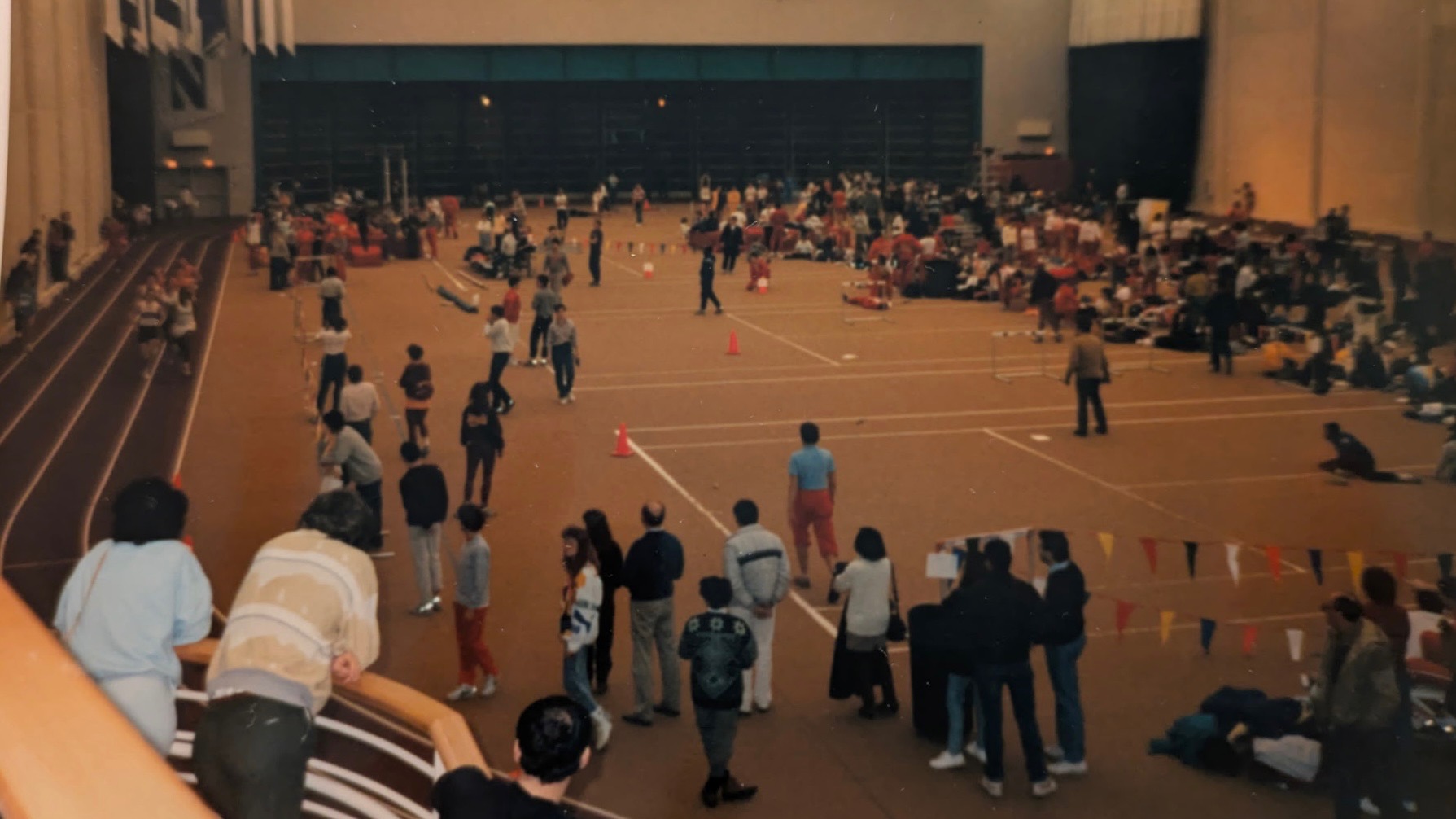
The fall of 1987 was a season of change for NU track. The $16.2 million Henry Crown Sports Pavilion and Aquatics Center opened at the start of the quarter, adding a full indoor track right in time for the varsity program’s demise. The luxury was short-lived, however, as it was demolished in renovations that brought the Combe Tennis Center in 2002.
After Muska and Capriotti left, former assistant Mike Shea was named interim coach of the women’s team three weeks before Weber announced the cuts. Seniors like McNatt and Wiegand focused on getting to graduation, while junior athletes like Earls made plans to transfer.
Faced with a bleak situation and a demoralized team, McNatt said Shea encouraged the ’Cats to make their last season one to be proud of.
“I try to tell him often that he really helped me and the other women on the team get back to a place where we love the sport, love to compete and love to run,” McNatt said. “As a team, we got together and said, ‘Hey, let’s just do everything we can to make it the best it can be, and make it fun.’”
Gone were the high-stakes weigh-ins and pressure to keep a strict diet, Wiegand said. Shea even told her she needed to gain a few pounds back, and she said she ran better as a result. A summer working 11 p.m. to 7 a.m. shifts at a paper mill helped her gain fitness, and by the fall, Wiegand had gone from being an overlooked walk-on to being named a team captain.
Shea would always put the athletes first, and McNatt remembers being glad that her teammates were eating hamburgers, ice cream and cookies again — in moderation, of course.
“A few of my teammates and I would get deep-dish pizzas sometimes after a really long run, and then eat as much as we possibly could,” Wiegand said. She added that she could probably stomach around three slices back then.
Earls said she remembered feeling she needed to prove NU’s administration wrong. After a “miserable” first two years, she said Shea turned her NU experience around, leaving her with a singular motivation to run.
She remembers Shea driving the team through heavy snow from an indoor track meet at Eastern Michigan. As the snow pelted Shea’s van, he lost control of the wheel, and the team ended up in a ditch, she said.
“‘We’re all sitting there, kind of in shock, and he goes, ‘Well, I guess we’d better get back on the horse,’” she recalled with a laugh. “I think that pretty much summed up the year for us, you know?”
Even today, the team still has to get creative with the limited resources it has. NU athletes now see an indoor track meet in Hyde Park as an opportunity to drive through the city with teammates, not a logistical pain. Without the old indoor track in SPAC, Miller said the ’Cats make do with runs around the lakefill, Ryan Fieldhouse and a variety of local parks.
As the ’Cats prepare to return to the Big Ten Indoor Track & Field Championships for the first time in 38 years, Miller knows many people have waited for this moment.
“We want our entire team to have an awareness of just how important that is to the history of our program,” she said. “I do want them to feel really empowered by our history and excited to make new history themselves, in this modern era.”
Email: [email protected]
X: @sidvaraman
Related Stories: