After the Trump administration froze $790 million of Northwestern’s federal funding over alleged antisemitism violations, Jewish students remain divided on whether the action truly addresses their safety on campus.
As of June, the University has yet to receive notice of the freeze, and, unlike Columbia University, NU has not been given a list of federal demands.
McCormick sophomore Christina Sher, who spent her summer working at an on-campus lab, said she feels that federal intervention could be positive if the resulting reforms are meaningful and genuinely focused on student safety.
“The funding freeze has definitely affected my lab. We have a lot less funding than we did before,” Sher said. “I think that a lot of people in the lab are hoping that Northwestern agrees to the (federal government’s) terms.”
Sher traveled to Washington, D.C. last spring on a trip organized by the Coalition Against Antisemitism at Northwestern to speak about her experience with antisemitism on campus.
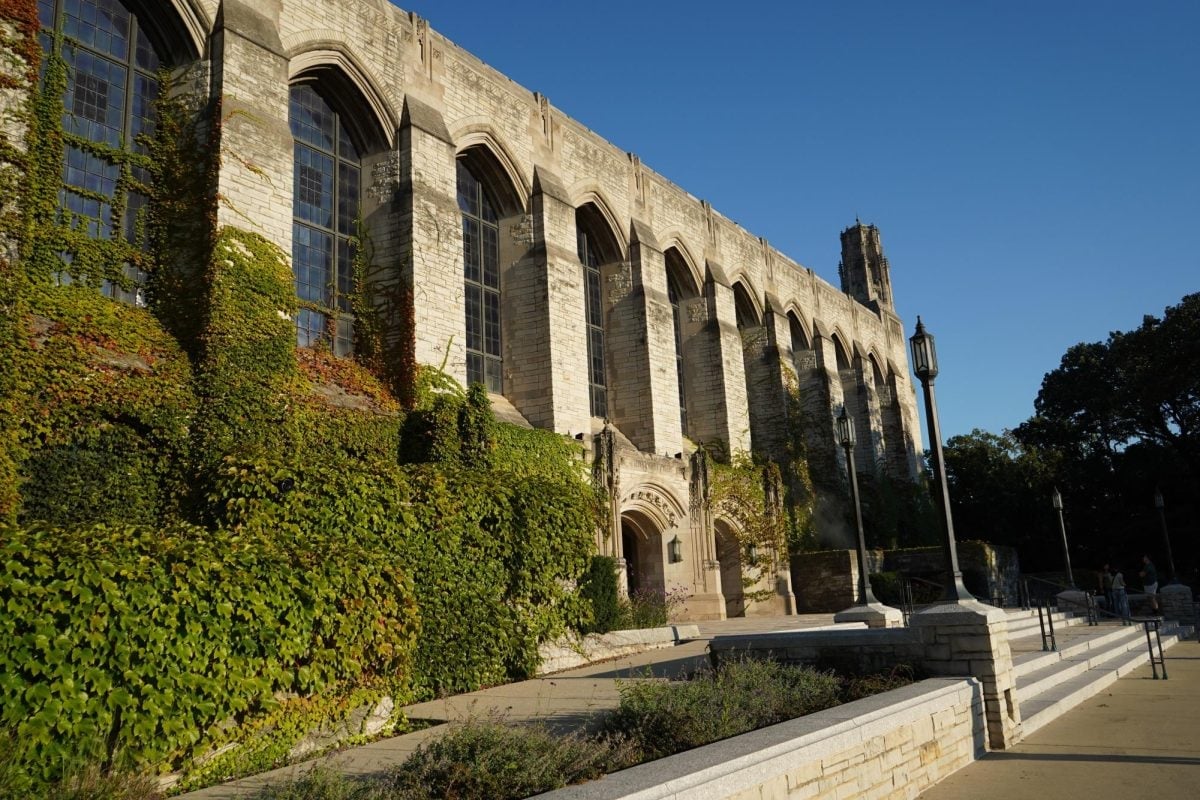
She said she spoke to U.S. House representatives about the graffiti on Kresge Hall last April during Passover, which former University President Michael Schill described as “antisemitic” and “hateful.”
Sher also noted a dance performance in Sargent Dining Commons last May where dancers wore military print and keffiyehs while waving a Palestinian flag, a decision criticized by Students Supporting Israel at NU, an unregistered student chapter of the international pro-Israel organization. University administration later denounced the performance.
“I feel like we never really saw any consequences for anything that’s happened this past year,” Sher said. “I understand that it’s difficult to identify the violators, but overall, it creates an atmosphere that makes me feel that the administration isn’t doing enough, even if, logically, they are.”
While some students described feeling unsupported by administrators, others offered a more reassuring view of the campus climate.
Weinberg sophomore Gabi Bernstein said her own experience has not reflected the hostile environment often described in national news coverage of elite universities.
Bernstein expressed skepticism that protecting Jewish students is the Trump administration’s priority. She noted that Executive Order 14188, which was signed in January to expand federal oversight of antisemitism on campuses, stated it would act against “leftist” universities.
“When I think about targeting antisemitism, I don’t want it to be a partisan issue,” she said. “Antisemitism is on both sides.”
Bernstein added that she believes University administration genuinely cares about addressing antisemitism on campus without intervention from the federal government. She said she was invited to speak with Schill about her experience as a Jewish student several times last school year.
McCormick junior Samuel Feldman expressed similar feelings. He said he appreciated Schill’s efforts to personally engage Jewish students during his tenure.
“Last year, Schill invited me and many other Jewish students to a couple of different events at his house, like a Passover Seder and another dinner,” Feldman said. “I hope that the new president also has Jewish students and opinions in mind because it’s important to have your ear to the ground.”
Feldman said he supports some of the federal government’s pursuits, like improving universities’ treatment of Jewish students, increasing transparency around taxpayer funding and addressing what he sees as a general left-leaning bias in universities.
However, Feldman said he has seen the negative impacts of the funding freeze as well. He works at the Corner Makery, a digital fabrication equipment facility on campus, which had to cut its free unlimited 3D printing program amid budget reductions linked to the stalled federal funding.
“I think the action of withholding funding full stop is not helping to protect Jewish students,” Feldman said. “Tying Jewish students to scientific research is not the way to go about it.”
While all three students said they feel safe being openly Jewish on campus, a May Daily poll showed 63.1% of Jewish students still view antisemitism as a serious problem, with three-fifths reporting personal or secondhand experiences of antisemitic behavior.
Sher said she would support NU reaching an agreement with the Trump administration, noting that many of the terms in Columbia’s resolution “seemed very reasonable” and could help students feel safer.
However, Feldman pointed out that unlike Columbia, NU has not yet been publicly presented with a clear set of conditions to restore its funding.
“It sounds more like it’s a grudge or a vendetta and not actually an agenda,” Feldman said.
The lack of clarity from federal officials has left some Jewish students skeptical of the Trump administration’s intentions.
Bernstein said the uncertainty around federal expectations raises concerns, pointing to the executive order’s reference to “anti-American” universities as a sign of the administration’s broader agenda.
“I don’t believe that the Trump administration genuinely cares about Jewish students,” Bernstein said. “The cuts to university funding are more of an attack on universities and academia in general.”
Email: [email protected]
X: @caylalc
Related Stories:
— NU Jewish faculty assess Trump’s efforts to fight antisemitism
— Trump administration reportedly seeks payments from NU, other schools over antisemitism allegations
— Poll: What the data says about the campus speech environment