

This article has been translated by Samantha Monje. Here is the original article in Spanish.
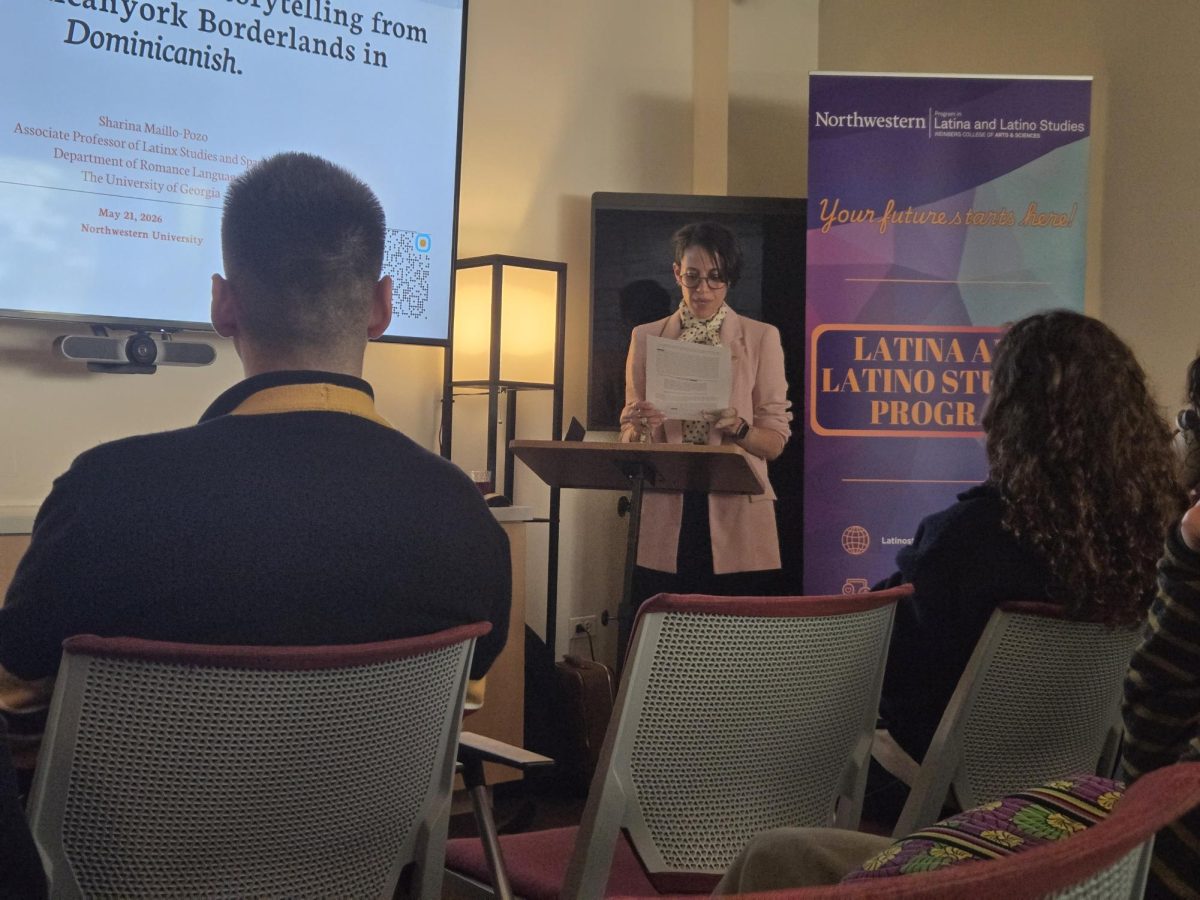
While Dominican literature is often overlooked, University of Georgia Prof. Sharina Maíllo-Pozo shared her analysis of the culture’s music, performances and literature in her book, “Bridging Sonic Borders,” at a lecture in Crowe Hall last Thursday.
Students and faculty of the Latino and Latina Studies Program attended Maíllo-Pozo’s lecture, where she discussed the fourth chapter of her book, titled “Storytelling from the Borderlands: The Journeys of a Dominicanyork Writer and Performer.”
The event was part of the program’s Frances Aparicio Lecture Series, which highlights cutting-edge scholars in the field. Before starting the lecture, Maíllo-Pozo thanked her colleagues and attendees, including Aparicio, whom Maíllo-Pozo called an inspiration.
“Aparicio talks about being an ear witness,” Maíllo-Pozo said. “So, how can we be critical ear witnesses, and through what we hear, (we can) try to understand that identity.”
She shared advice on how people can be more involved with learning about the Dominican identity through culture and literature.
Maíllo-Pozo highlighted three lessons she learned from Aparicio which helped her write the book: to be a fierce advocate for Latinx studies, to collaborate and to think culturally.
She added that through music, people can learn a lot about cultures and identities. She referenced Bad Bunny and his album “DeBÍ TiRAR MáS FOToS,” which includes phrases deeply connected to his identity and culture, allowing listeners to learn more about Puerto Rican history.
When discussing the chapter from her book, Maíllo-Pozo focused on writers and performers such as actress Josefina Báez, showing short videos of her work. Throughout the lecture, Maíllo-Pozo mixed both Spanish and English into the analysis and provided sonic examples, including music, performances and literature focusing on Dominican identity and Latinidad.
“I appreciated the going back and forth (of languages) because not every person speaks Spanish here,” Medill junior Sophie Lunda said. “I appreciate that they brought this lecture here because I don’t know if I could explore (the topic of Dominican identity) on my own.”
The lecture was one of two events planned to engage students with Dominican culture and identity. A week prior, the Latino and Latina Studies Program hosted a discussion about the book for students.
Teresa Alvarado-Patlán, a sixth year Ph.D. candidate in history, attended the event. She read some chapters of the book and mentioned the difference between Dominicans and “Dominicanyorks,” or Dominicans from New York City.
“It’s important to think about how geography and how people’s upbringing shapes their sense of identity and how they understand themselves,” Alvarado-Patlán said
Maíllo-Pozo stressed the importance of learning about culture through sounds from literature, performance and music. She ended her lecture by explaining that there’s no part of her identity that can’t be connected to music.
She also highlighted the struggle of understanding the Dominican identity while considering three umbrella identities: Dominican, Dominican American and Dominicanyork or Dominicanyorkian, identities she hopes won’t be forgotten. She also referenced some artists who switch between identity terms and some who strictly use one.
Through her book, Maíllo-Pozo wants people to better understand the Dominican identity. She said she has spoken with readers since the book’s launch in 2025 and loves to hear stories about people understanding their family’s and their own cultural identity.
“I want the book to be able to insert and recognize that there’s a Dominican corpus, a literary corpus and cultural corpus that has been here within Latinx studies, and that Latinx studies at times needs to also be more open to these non-traditional fields, which are not included,” Maíllo-Pozo said.
Email: [email protected]
Related Stories:
— Q&A: SESP Dean Bryan Brayboy talks Indigenous representation in higher education, graduation advice
— Indiana University Prof. Eunice Sang Eun Lee discusses book project at Buffett Institute
— Q&A: English Prof. James Hodge talks importance of studying, teaching film


