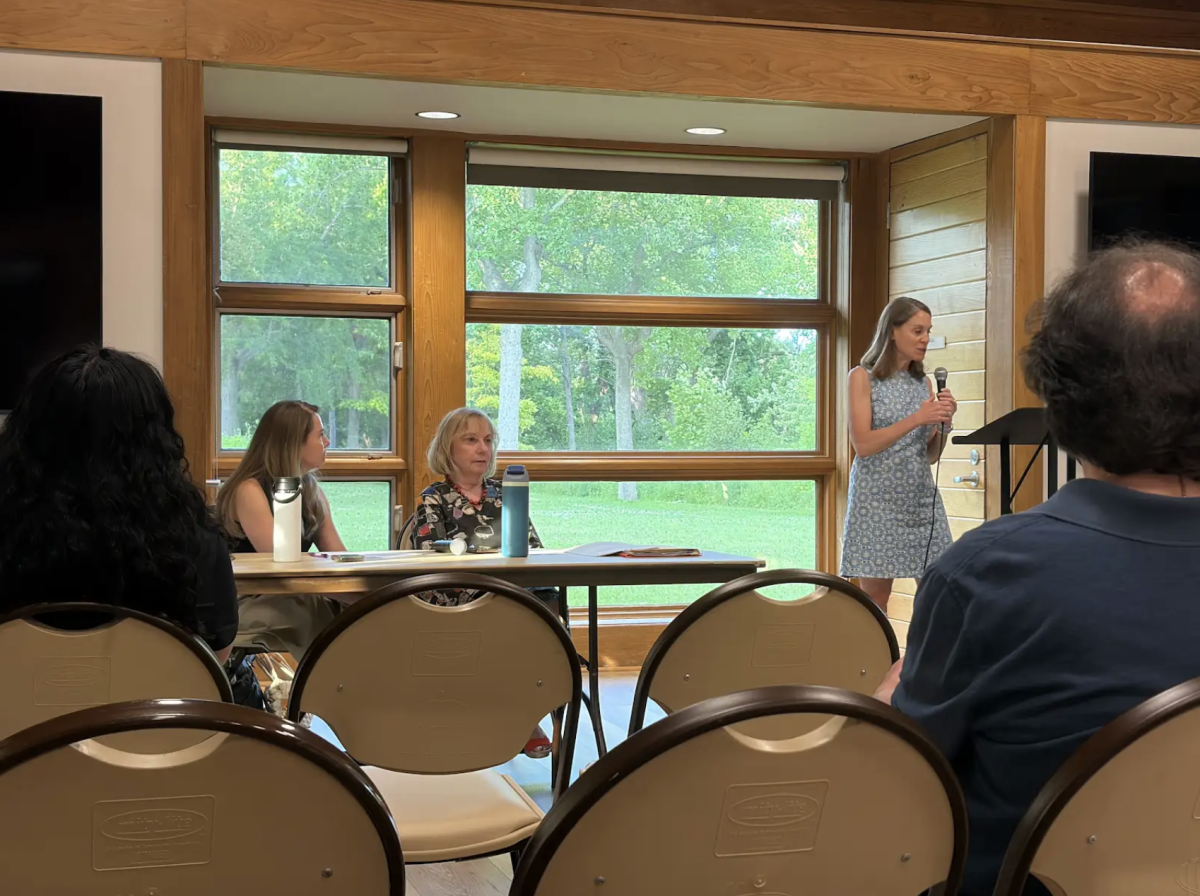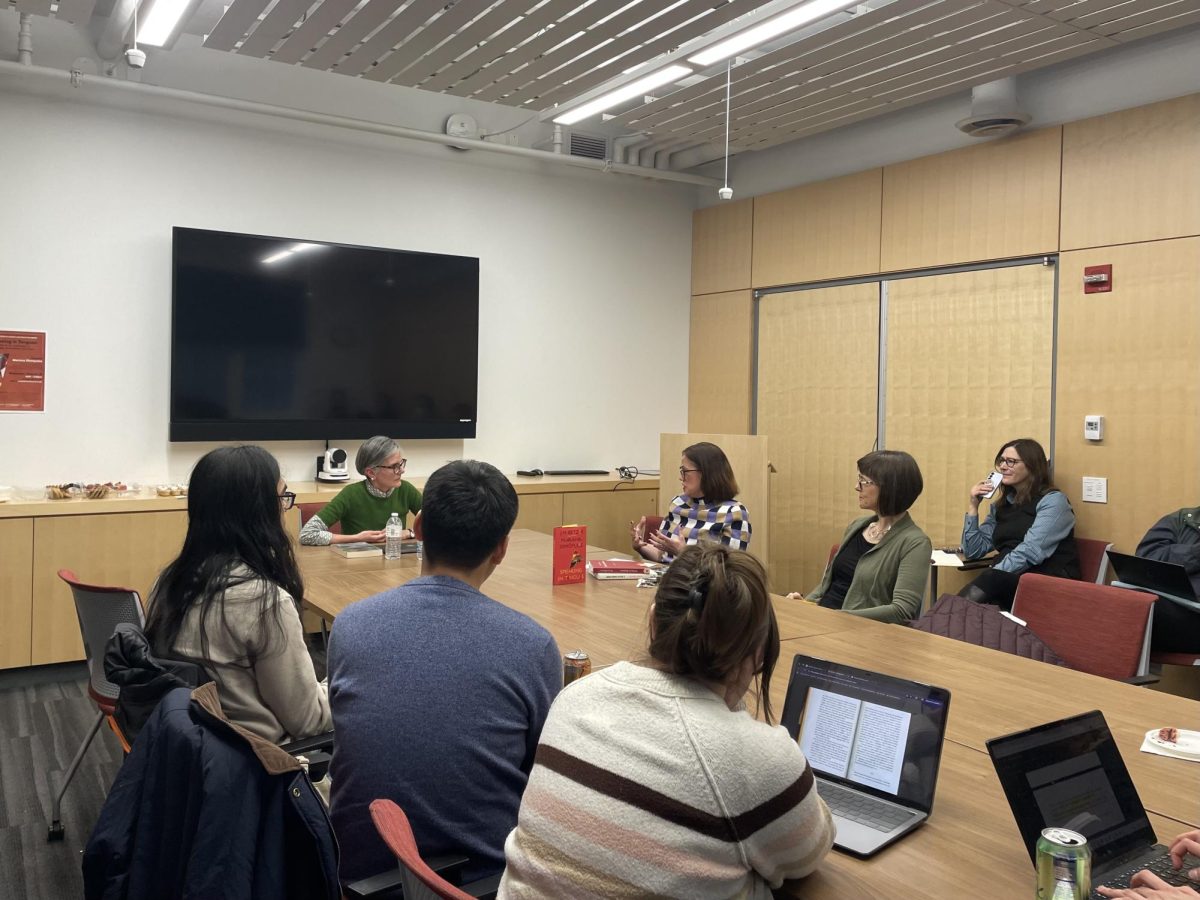
Writer and translator Mariana Dimópulos visited Northwestern to discuss her latest book, “Speaking in Tongues,” on Wednesday.
Written in the form of a dialogue between Nobel laureate novelist J.M. Coetzee and herself, the book explores the linguistic and philosophical challenges facing modern translators.
“We came up with the idea of writing ‘Speaking in Tongues’ as a way of explaining the concepts which were behind this gesture of Coetzee,” Dimópulos said.
This “gesture” is a reference to when Coetzee first published the Spanish translation of his 2023 book, “The Pole,” before publishing it in its original English.
Comparative Literary Studies Director and Spanish and Portuguese Prof. Alejandra Uslenghi, who helped organize the talk, said the explanation behind the decision stuck with her the most.
“Coetzee, in a way, gestured against the hegemony of English to show us a different perspective on hierarchies, how language circulates and how it makes thought and culture available to us,” Uslenghi said.
The event was part of Translation in Theory and Practice, a collaborative series between the Program in Comparative Literary Studies and the Alice Kaplan Institute for the Humanities. Every quarter, the series hosts scholars and practitioners to interact with students on the issues regarding translation.
Regarding Dimópulos, Uslengi said she introduced a language that “reflected on and produced theories of translation” in addition to exploring her perspective as a translator versed in German, Spanish and English.
During her talk, Dimópulos explored three main ideas: that the future of human translation will become subordinate to machine translation, global dominance of the English language will soon end with the emergence of new translation technology and that tradition is made possible through translation and memory.
Dimópulos said she aims to be provocative and urge students to rethink their ideas of literacy, translation and writing with the future of translation in mind.
“My first goal was to invite the future, you, to really think with all our capacities about the possibilities of the future,” she said. “Not being afraid, not relying on ‘Okay, that will be done by machines, and I have nothing to do here,’ but a middle way. That was my main goal: just think. Figure out something new that we will need in the future.”
German Prof. Anna Parkinson said the event encapsulated aspects of both her scholarly and personal life. However, there was an issue that caught her attention.
“I was much more interested in coming when I heard about the direction it was going to take with AI,” she said.
Parkinson said the discussion around artificial intelligence and translation is a complex mix of hope and terror.
During the event, students and professors debated the role of translation technology, considering whether AI will be used as a tool or a main translator and how machines will be built to navigate the gaps and nuances of translation.
Uslenghi, Parkinson and Dimópulos said they hope to encourage more students to reflect on translation and get involved in these conversations, especially considering NU’s multilingual environment.
“Please join us in this huge undertaking,” Dimópulos said. “I’m pretty sure it is going to transform our way of thinking of writing and ensuring tradition.”
Email: [email protected]
Related Stories: