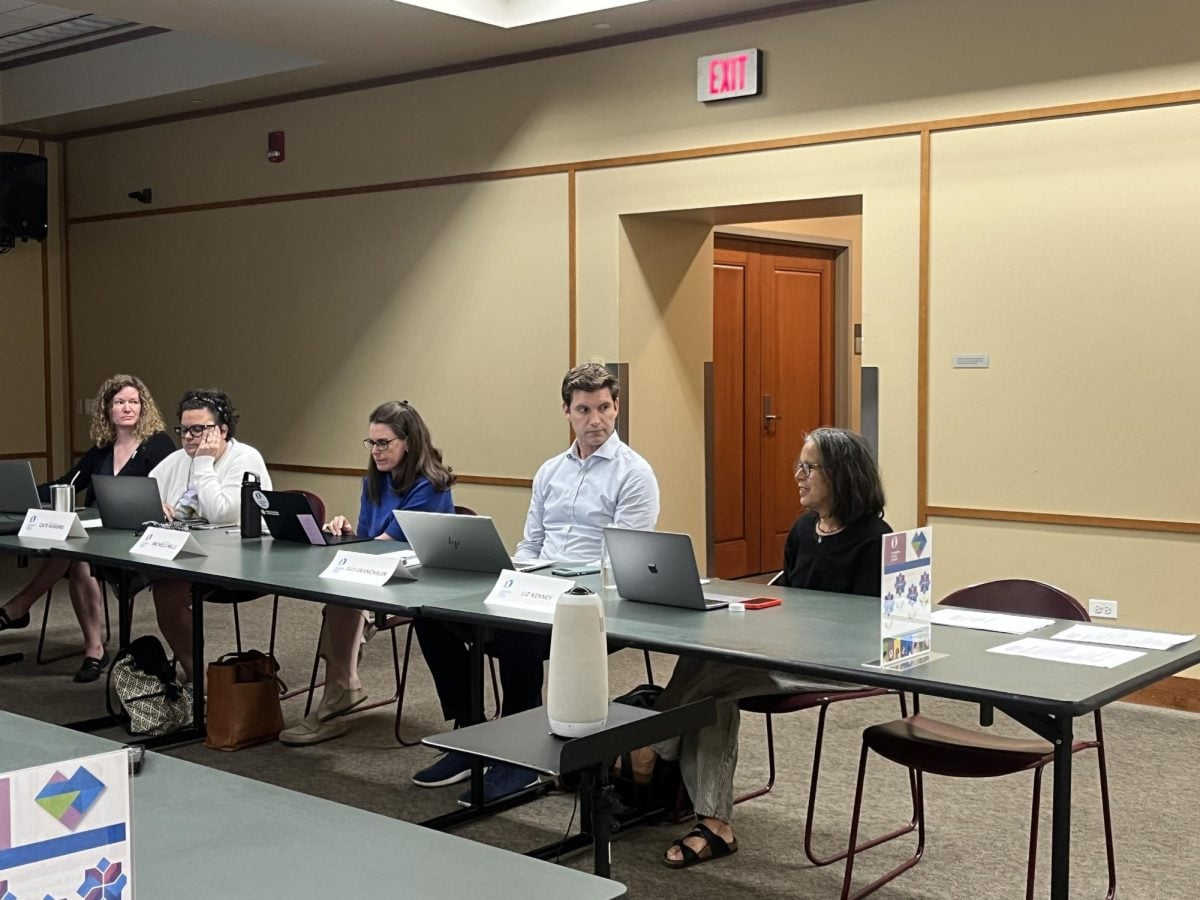
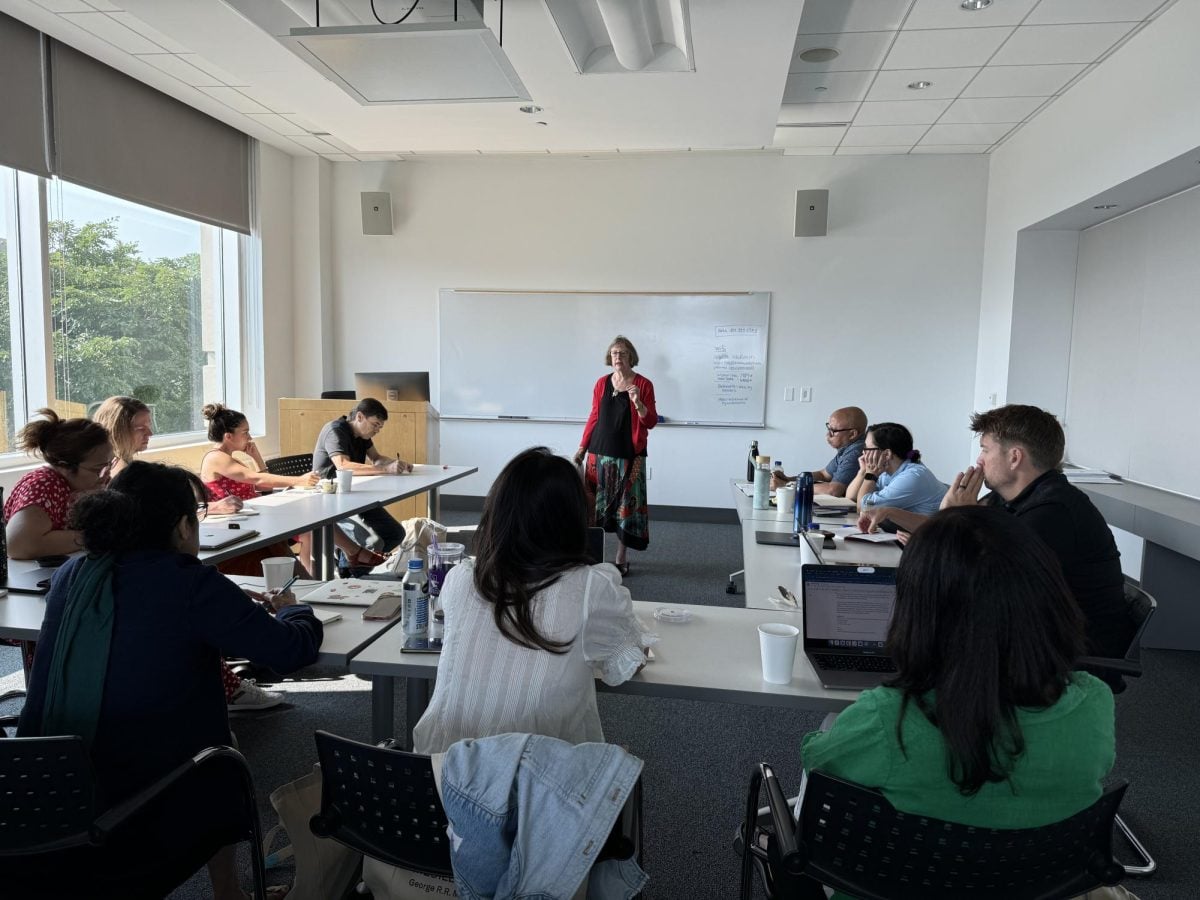
Evanston author and activist Meleika Gardner hosted a conversation with residents about her new book exploring the city’s racial politics and reparations program at the Evanston Arts Center on Thursday evening.
Gardner discussed her book, released April 13, titled “Unsafe Black Voice: Exposing Evanston’s Political Machine Inside America’s First Reparations City,” in which she documents City Council public meetings and records from the city’s reparations program.
Evanston is the first U.S. city to launch a reparations program. In 2021, the city approved the Restorative Housing Program, aiming to provide eligible Black residents with financial assistance to address decades of discriminatory housing policies. The program distributes up to $25,000 to Black residents, or their direct descendants, who lived in the city between 1919 and 1969.
The book talk, moderated by Evanston-based library equity consultant and activist Lesley Williams, began with Gardner explaining her motivations for writing the book.
Gardner said she wanted to criticize the “hidden historical realities” of Evanston, especially its social and racial inequities. The book stemmed from her background in activism, which started when she was 9.
At that age, Gardner said she lost her father, Mont Gardner. She said after an all-white grand jury declined to indict the man accused of killing him, she asked her grandmother for an explanation. Her grandmother told her that, to the jury, her father represented “just one less Black man in the world.”
She said this experience led her to become more involved in local politics, where she began attending meetings and following policy decisions. She said this trajectory shaped her criticism of how city government makes decisions.
“I believe they are playing chess with people’s lives instead of serving them,” Gardner said.
City Council operates through a council-manager form of government, in which Council sets policies, the city manager oversees city operations and residents can participate in the process through public comment during meetings.
Evanston resident Pandora Brown, who attended the book talk, said she often goes to Council meetings and she was present for discussions about reparations.
Brown said in those meetings, she observed “little to no representation” from the Black community. She added that the meetings often felt dominated by “white folks,” which she said made it harder to understand how decisions affecting her community were being made.
“They should hire a mix of people,” Brown said. “Now when you go into the city halls, you see mostly white folks. It’s unfortunate.”
Brown said after attending the book talk, she feels more empowered to engage during Council meetings because she now understands the importance of discussing reparations in Evanston.
Gardner encouraged attendees to do more than just vote, telling the audience members they need to engage with Council. She said public influence over governmental decisions happens long before public votes and the leaders in Council are “making serious decisions” that affect the Black community.
Evanston resident Judith Treadway echoed Gardner’s perspective.
Treadway said throughout her 30 years living in the city, many requests by the Black community to Council have repeatedly been “turned down,” including those related to reparations.
“This truth is very hard to decipher, and we all suffer from not telling it,” Treadway said.
Correction: A previous version of this story mischaracterized the death of Meleika Gardner’s father. The Daily regrets this error.
Email: [email protected]
Related Stories:
— Federal government moves to join lawsuit against Evanston’s reparations program
— Evanston Live TV owner Meleika Gardner educates, advocates, inspires
— Evanston’s Black population shrinks as city looks to address housing affordability