This article contains spoilers.
The moment the “Wuthering Heights” adaptation was announced, with director Emerald Fennell at its helm, I could not have been more excited. Despite not having read the book, I enjoyed Fennell’s previous films, namely “Saltburn,” and I admire their ability to always keep me guessing.
However, as the film began to take shape through trailers and press, my initial enthusiasm waned. I saw numerous videos complaining about the film’s departure from its source material and the whitewashing of Heathcliff, who is portrayed as racially ambiguous in the novel.
Critics also commented on Fennell’s interviews, which many believed indicated her lack of understanding of the novel’s themes. All of these criticisms were valid, but they morphed my excitement into skepticism.
Walking into the theater, on Valentine’s Day no less, I was a bag of nerves, not sure what to expect from a film that had been advertised as “the greatest love story of all time.” While I disagreed with this characterization, “Wuthering Heights” exceeded my lowered expectations.
It is not a faithful adaptation in any sense, but it is an enjoyable and emotional movie.
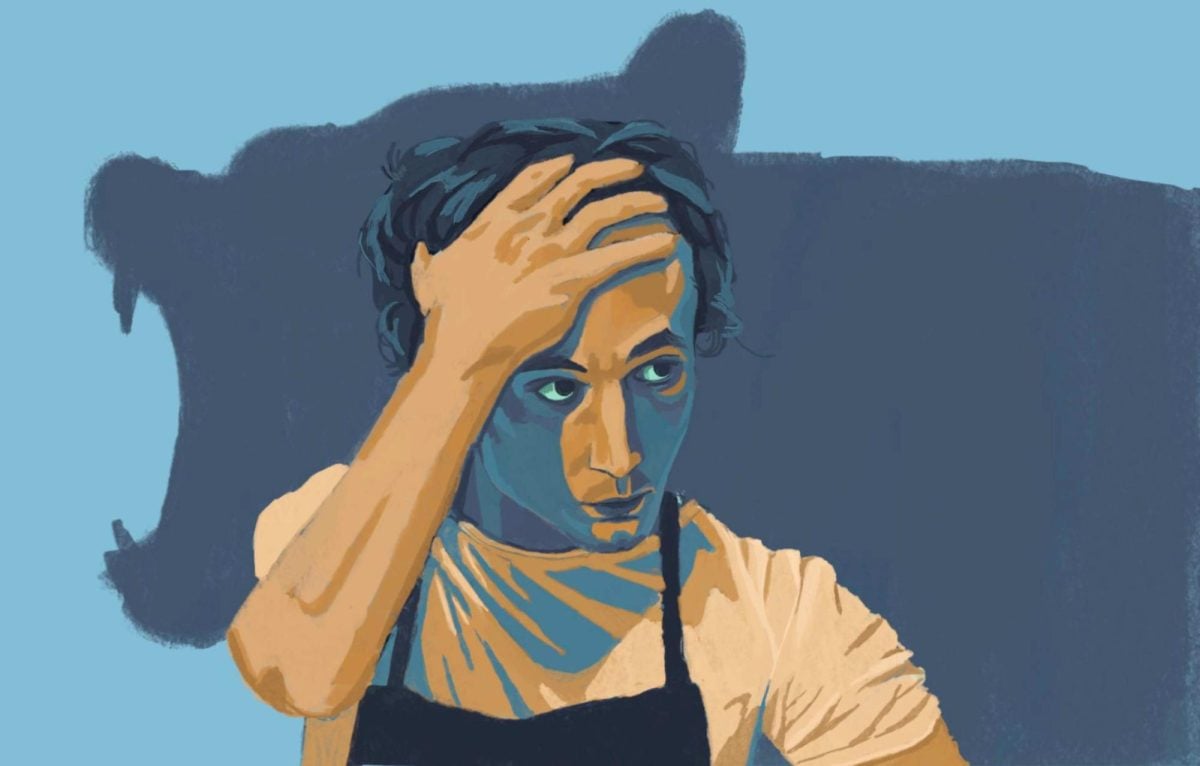
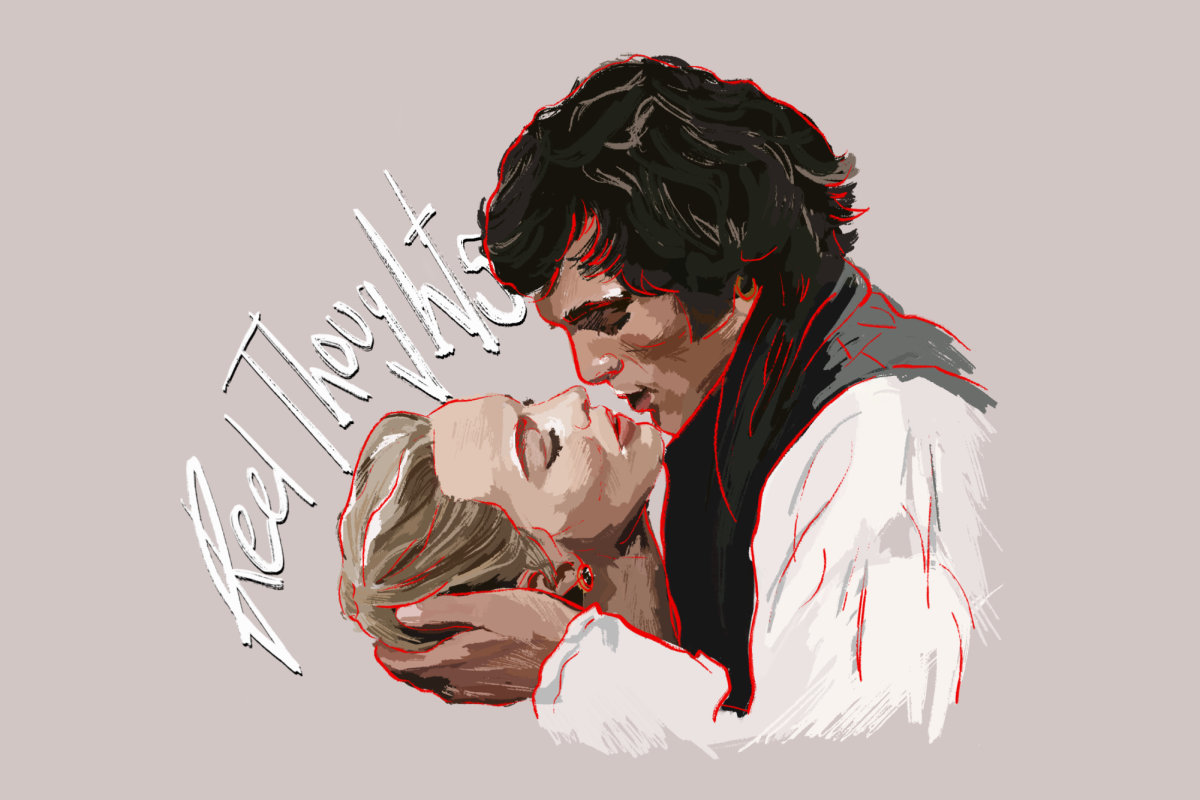
Inspired by Emily Brontë’s 1847 novel of the same title, “Wuthering Heights” follows upper-class Catherine Earnshaw (Margot Robbie) and her servant Heathcliff (Jacob Elordi) and their tumultuous love story over the span of many years.
After growing up alongside one another, their romance becomes complicated when Earnshaw agrees to marry the neighboring lord Edgar Linton (Shazad Latif), causing a heartbroken and distraught Heathcliff to disappear for five years. Upon his return, Earnshaw must face her suppressed feelings for him and decide whether she is willing to sacrifice her marriage for Heathcliff or continue to live unhappily.
Fennell’s scripts can be shoddily written, leaving the onus on the actors to perform exceptionally. Thankfully, the actors across the board lived up to this pressure. In the novel, Cathy and Heathcliff are both teenagers, while the film ages the two up significantly.
It feels odd to see Robbie and Elordi engage in dialogue that seems written for two teenage actors, but they delivered performances that illustrated the push-and-pull nature of passion and romance.
Their younger counterparts, played by Owen Cooper and Charlotte Mellington, were standouts. The two beautifully portrayed the innocence of young love. Cooper, in particular, wonderfully embodied the sacrifices that accompany it, in one scene taking the blame for Catherine’s wrongdoings and receiving brutal lashings that leave permanent scars.
Given their youth, I was shocked at the levels of maturity and intensity they brought to their performances, and I expect to see big things for both of them in the future.
Another standout was Alison Oliver’s performance as Isabella Linton. With Linton’s character, Fennell took complete creative liberty, giving her an inconsistent characterization. Isabella is introduced as an intelligent young woman, and in her last scene, she is portrayed as the dog in her and Heathcliff’s staged BDSM-esque relationship.
Of the actors, Oliver had one of the most difficult roles to embody. While I wish Fennell illustrated Linton’s genius more, she was one of my favorite characters, and her scenes were the most enjoyable.
Although vastly different from her character in the novel, Oliver, for the most part, portrayed Linton as the teenager she was intended to be. She characterized her as lovesick, passionate and blissfully unaware.
Another one of the film’s more redeeming qualities was its cinematography. Jarring color contrasts, particularly between red and white, added to the drama at the film’s core. Red does not represent love as I expected it to but death, while white symbolizes purity and life.
These two are frequently juxtaposed, creating a sharp visual clash and drawing attention to what is most important in the scene. Its most impactful use is in the scene of Cathy’s death. The dark red blood contrasted with her pale, lifeless figure heightened the scene’s emotional intensity and drew many sniffles from the movie’s audience because of its pure shock.
As its critics suggested prior to its release, “Wuthering Heights” was rife with issues. After reading a synopsis of the novel after the film, I realized how much information had been sacrificed to incorporate Fennell’s new “Fifty Shades of Grey”-inspired elements.
Had these elements been left out, I would have found the film more enjoyable.
The characters also seemed more one-dimensional than those in the novel. Even the film’s leads, Cathy and Heathcliff, substantially lacked substance, something that can be attributed to its surface-level writing.
The whitewashing of Heathcliff’s character, something that has occurred in most adaptations, also takes much nuance out of the film. It’s miraculous how Heathcliff was able to climb from rags to riches, especially given the prejudice of 18th-century England. With Elordi as Heathcliff, this ability to climb through the ranks falls flat.
I understand the pain that the novel’s fans feel. As an adaptation, “Wuthering Heights” grossly falls short of meeting its source material’s quality. But as a film, it is enjoyable, visually stunning and rife with wonderful performances.
Email: [email protected]
Related Stories:
— Reel Thoughts: ‘The Moment’ spotlights impacts of fame, commercialization
— Liner Notes: Charli XCX’s ‘Wuthering Heights’ is the epitome of gothic theatrics