This review contains spoilers.
Content warning: This review contains mentions of sexual assault and violence.
Baking a cake has never had higher stakes.
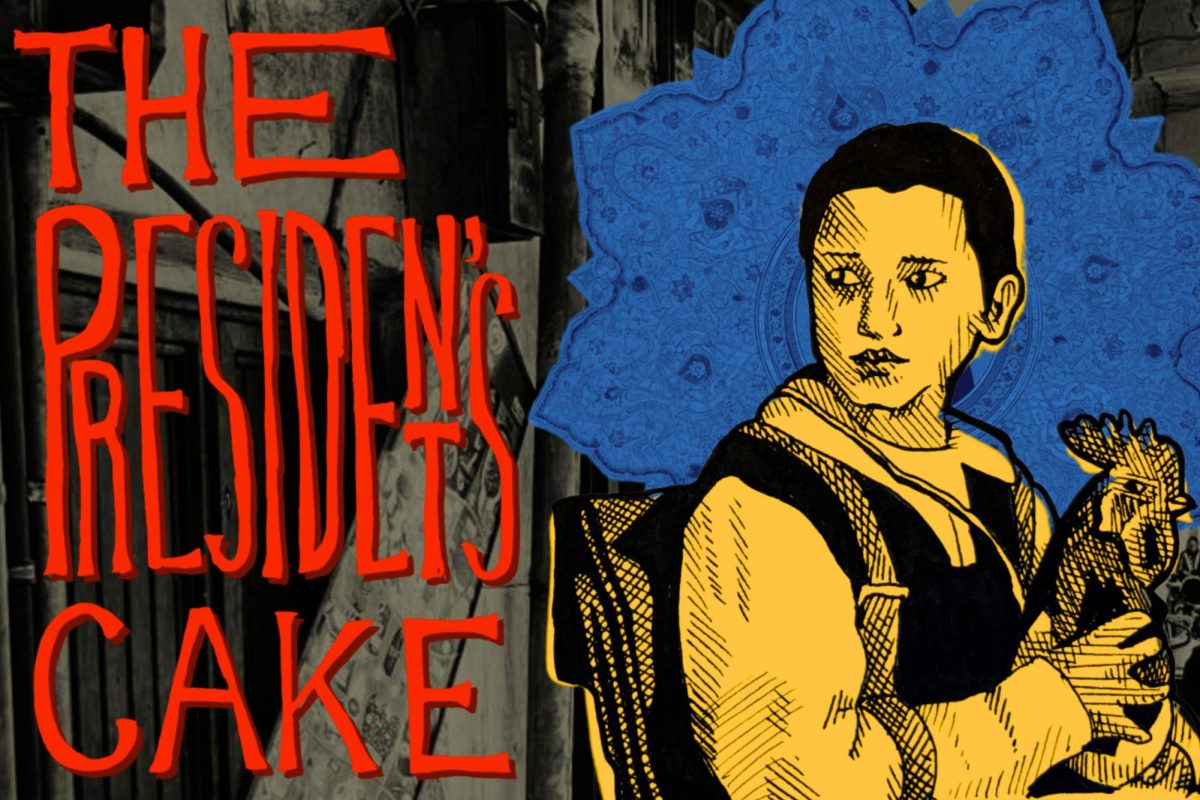
With a limited release Feb. 6, “The President’s Cake” follows 9-year-old Lamia (Baneen Ahmad Nayyef) as she attempts to gather ingredients for a cake in celebration of brutal Iraqi dictator Saddam Hussein’s birthday.
The film takes place in Iraq during the 1990s, when the United States imposed harsh economic sanctions on the nation at the height of the Gulf War. Basic food products and medical supplies are scarce, and much of the country is in poverty.
Despite this, Iraqis are forced to enthusiastically celebrate the president’s birthday. One student from each elementary school is randomly selected to bake a cake in honor of Hussein, facing punishment in the form of a beating if they fail to produce a cake by the next day.
The film follows Lamia on her journey to scrounge together the ingredients in order to complete the high-stakes task. Accompanied by her friend, Saeed (Sajad Mohamad Qasem), she faces a variety of obstacles along the way.
She is separated from her grandmother, who eventually passes away due to diabetes, as well as is temporarily arrested for theft before she is bailed out. Eventually, she is sexually harassed by a man who promises to give her baking powder in exchange for sexual favors.
In spite of all these challenges, Lamia manages to complete her task, but the completed cake is never revealed. Just as she presents it to her teacher, air raid alarms fill the air and the school is bombed. The film concludes with a clip of Hussein’s birthday party, where he blows out the candle of a lavishly decorated cake, smiling gleefully at the camera.
It is this closing shot that truly pulls the film together.
I was initially worried the storyline was at risk of falling flat — the difficulties of making this cake were only important to me when considering the historical context of Hussein’s regime — and the ending addressed that issue poignantly.
Director Hasan Hadi does an excellent job juxtaposing the natures of the two cakes: Lamia’s, crafted with immense struggle, and Hussein’s, a gross display of exorbitance. He emphasizes just how out of touch Hussein is to his people, while still being able to cause deep individual loss — in this case, with Lamia and the hardships she endures.
The film has been nominated for 12 awards and won 11. Most notably, it received the Caméra d’Or at the Cannes Film Festival, a prestigious honor given to the best feature film by a first-time director.
“The President’s Cake” served as Iraq’s official entry into the 98th Academy Awards, looking to receive a nomination for Best International Feature. Despite making the 15-film shortlist in the category, it fell just short of a nomination in this year’s stacked pool of foreign language films.
However, this was the furthest an Iraqi film has made it through Oscar voting and the first time a film from Iraq made the shortlist.
Lamia is played brilliantly by Nayyef, who puts on one of the best child-actor performances I’ve seen. Her naive yet stoic disposition allows her to vividly demonstrate the impact of dictatorship on the average citizen.
Alongside her, characters are motivated by a sense of fear as poverty governs their every action, and I felt like I could place myself in Hadi’s Iraq, with its haggling vendors and bustling cars. The realism of the setting was an undoubtedly strong point of the film.
Although I don’t believe the film tries to comment on any modern issues beyond its historical source material, the themes in the film can be applied to those in power today.
Government leaders hold galas and erect ballrooms while their policies negatively impact the lives of common citizens. If “The President’s Cake” makes one thing clear, it’s that oppression and extravagance can coexist, widening the gap between the masses and those in control.
Email: [email protected]
X: @peng54829
Related Stories:
— 98th Oscar nominations introduce new competition amidst a sea of familiarity
— Sekerci: Could the Iraq War have ended with less violence?