On Jan. 30, the Illinois Accountability Commission released its initial report documenting alleged violence and misconduct committed by federal agents throughout the Trump administration’s Operation Midway Blitz.
Governor JB Pritzker created the commission through Executive Order 2025-06, which he signed in October. The commission’s goal is to create a public record of the impact of federal agents and their “military-style operations throughout the Chicagoland area” during Operation Midway Blitz, according to the executive order.
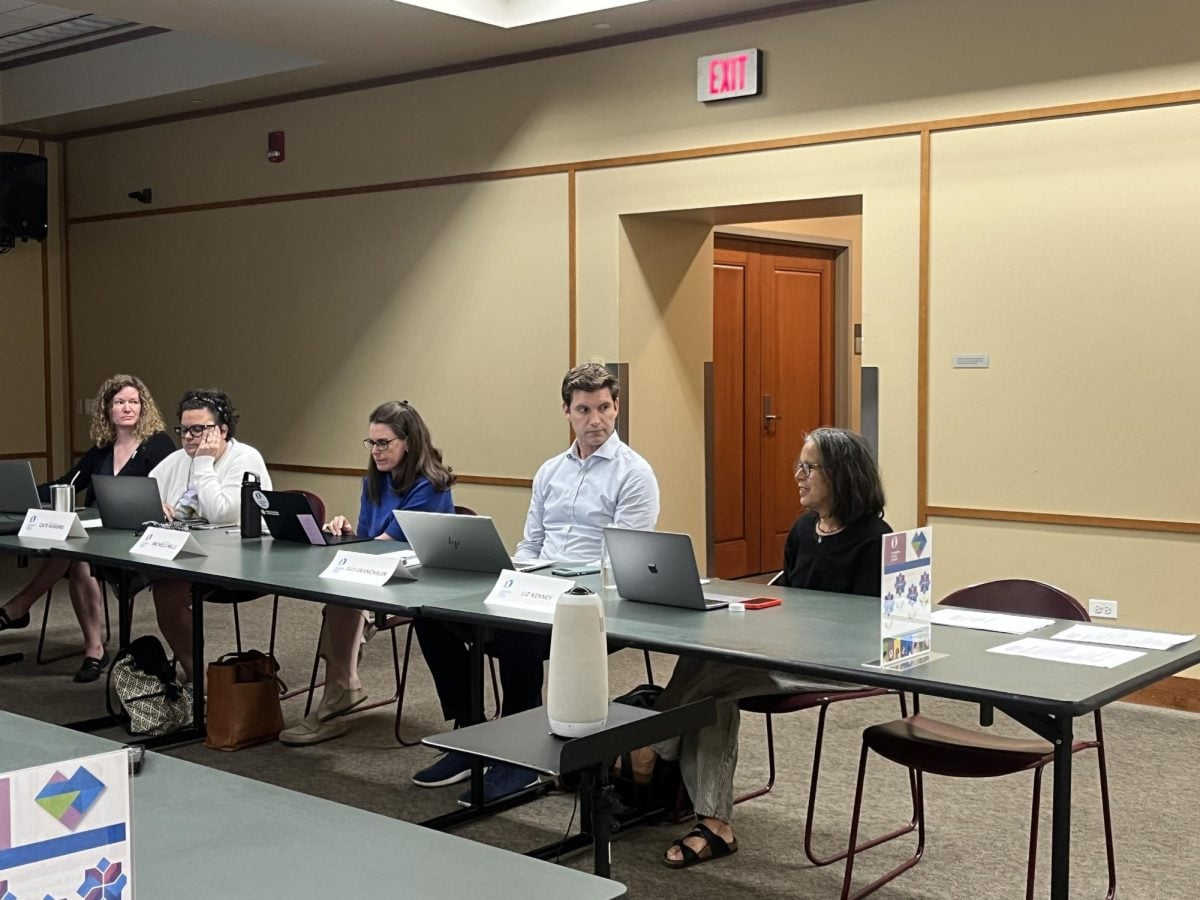
Former Federal Judge Rubén Castillo (Pritzker ’79), chair of the commission, pioneered its report and oversaw the commission’s two public hearings.
“It’s important to show that we’re just not going to accept this,” Castillo told The Daily. “We just refuse to do that, and ultimately, we’re gonna put together reports and evidence to turn over to people who are interested in prosecuting these cases and making changes in the law.”
He said the commission is documenting history so “this doesn’t ever get repeated.”
The initial report stated it aims to answer “How did we get here?” and lay the groundwork for the commission’s conclusions, which are scheduled to be released no later than April 30.
The commission has collected videotapes, interviewed witnesses and heard testimony in December, according to the report. The group is still searching for eyewitnesses of federal immigration enforcement and has launched an online portal to gather additional testimony and videos for investigators.
The report argued the Trump administration has targeted Illinois and Chicago because of their “long history of welcoming and supporting immigrant communities” and accused the administration of intentionally misleading the public.
“The Commissioners, whose members include former federal prosecutors and judges, acknowledge that these are grave accusations to level against the federal government. They do not make them lightly,” the initial report reads. “American democracy, however, hangs in the balance.”
The report mentions Evanston multiple times, including when describing the commission’s Dec. 18 hearing, during which investigators showed videos of protesters being teargassed to Dr. Rohini Haar, an adjunct professor of epidemiology at the University of California, Berkeley.
Testifying to the commission, Haar reportedly criticized federal agents’ decision to deploy “chemical irritants” in Evanston on Oct. 31, finding their use “unjustified and inconsistent with safe practices.”
Castillo added that commissioners have interviewed witnesses from Evanston who were teargassed for the group’s final report.
Northbrook resident Lee Goodman has been intermittently protesting near the Immigration and Customs Enforcement detention facility in Broadview, Illinois, since July 2025.
In September, Goodman said he was teargassed by ICE. Federal agents allegedly deployed teargas and chemical irritants from the facility’s roof toward a fence behind which Goodman and other protesters stood. He said the protesters were peaceful, not trying to storm the gates or climb the fence, and that he consistently witnessed aggressive tactics among federal agents at Broadview.
“There’s no reason to treat us the way that the feds were treating us,” Goodman said. “It was counterproductive. All it was doing was antagonizing and infuriating people and making them feel upset and sometimes afraid.”
Goodman said the commission has the potential to hold agents accountable and is “vitally important.”
But Executive Director of Evanston Latinos Ricardo Villalobos said his community isn’t looking for a report. Instead, it’s looking for action.
“The idea of forming an accountability committee, I think, for folks, doesn’t really resonate deeply because we haven’t seen any action thus far in reaction to the violence,” Villalobos said.
He said the report might not positively impact the community because trust in the government is low, and those that have been affected by ICE feel like they’ve been “diminished by all administrations.”
Villalobos said he hopes the government will focus on supporting communities negatively impacted by Operation Midway Blitz and rebuilding trust in government.
“If all it is is identifying what we already know is against the law and cruel and inhumane, we already know that — we’ve seen it,” Villalobos said.
Castillo argued the commission will go further than just documenting injustice, adding that the evidence it gathers will be turned over to those interested in building legal cases. The committee will also propose state legislation empowering community members to take legal action against federal agents, he said.
The initial report was released six days after the fatal shooting of protester Alex Pretti by Customs and Border Protection agents in Minneapolis. Castillo said he’s been contacted by authorities from Minneapolis who want to create a similar initiative to document the actions of federal agents in their community.
The commission will continue to investigate and hold public hearings leading up to the release of its final report. Castillo said that document will include more testimony and outline the economic and mental health impacts of Operation Midway Blitz.
Ultimately, Villalobos considers the commission’s work insufficient.
“I think that the damage is so deep,” he said. “There is so much more that needs to happen.”
Email: [email protected]
Related Stories:
—Evanston leaders, lawyers recommend best practices for encounters with immigration enforcement
—‘Life or death for our democracy’: North Shore activists protest ICE on I-94 overpasses