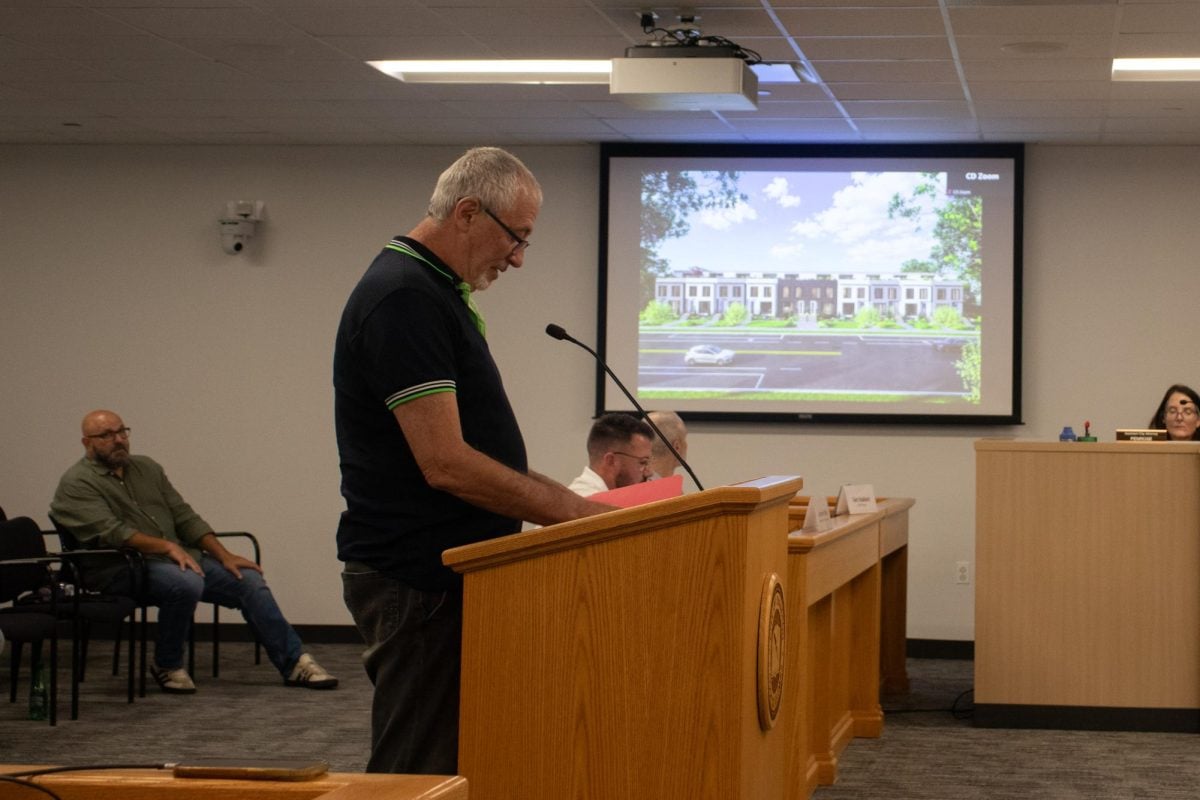
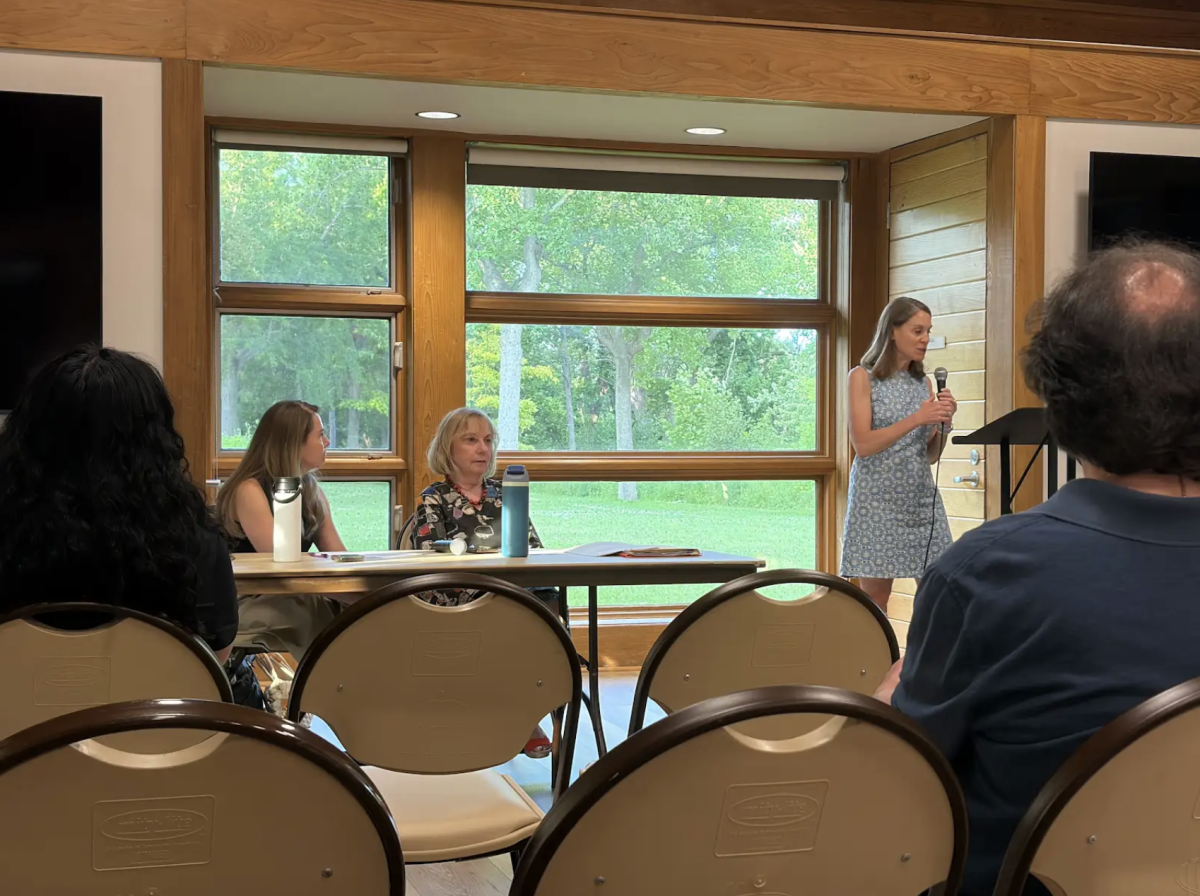
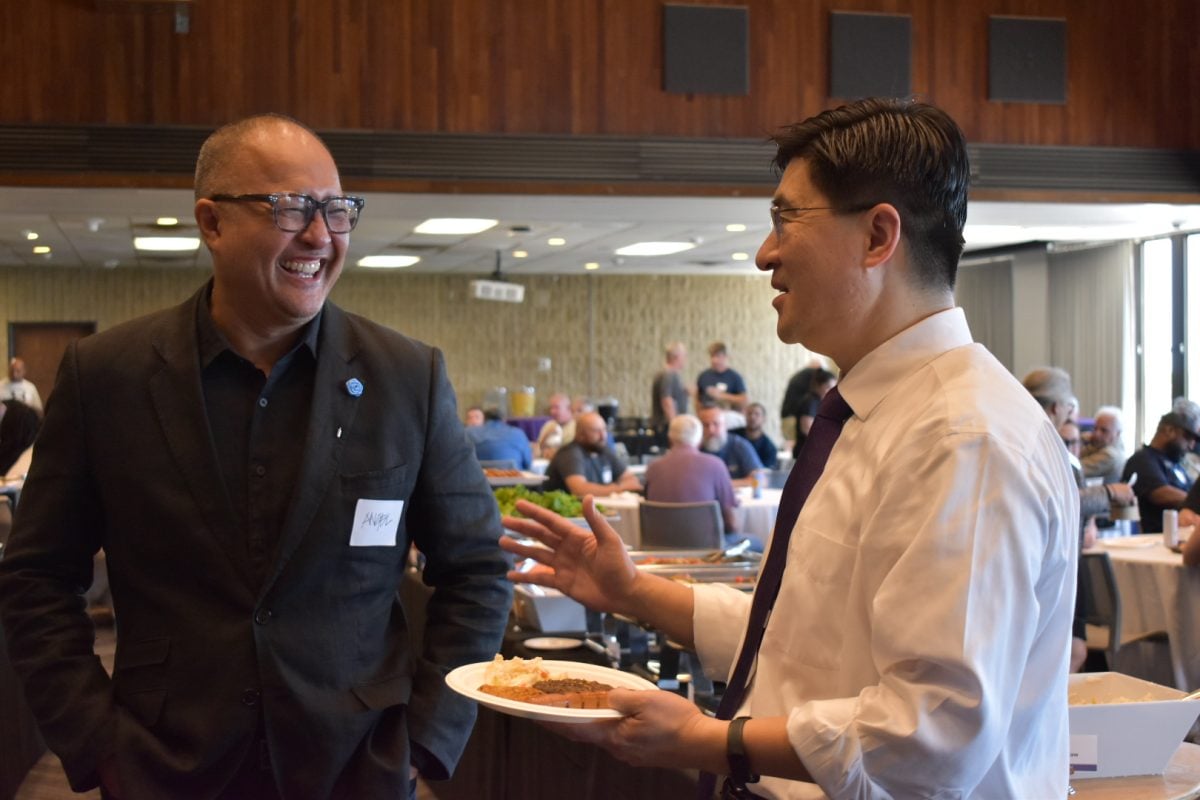
Following increased federal immigration enforcement in Evanston over the past week, the city hosted a Community Preparedness & Empowerment Seminar Wednesday evening to connect residents with immigration resources and advocacy tools.
The city’s approach married Mayor Daniel Biss’ “activism and government” philosophy in handling the local effects of the Trump administration’s Midway Blitz immigration crackdown in the Chicago area. At the start of the session, he affirmed the city’s commitment to protecting community members from federal immigration agents and being “un-government-y” by acting fast.
He cited the city’s recent moratorium on its gas-powered leaf blower ordinance as an example of implementing residents’ suggestions to protect the community. The moratorium was implemented to help ensure landscapers’ safety after Immigration and Customs Enforcement’s targeting of landscapers in Evanston on Tuesday.
“I can’t promise you that every suggestion that we got is going to be effectuated within 24 hours, but we were going to really be trying to do everything we possibly can,” Biss said.
Over 100 residents attended the meeting, with the majority opting to watch the session over Zoom. At one point, a city staff member said that Zoom attendance was full, and community members could access a recording of the meeting on the city’s YouTube channel.
The seminar featured Chicago-based immigration attorney Enrique Espinoza, a certified “Know Your Rights” trainer from the Illinois Coalition for Immigrant and Refugee Rights, and community members with knowledge of immigration resources from the James B. Moran Center for Youth Advocacy and Sanctuary Evanston.
Here’s a breakdown of key recommendations from the seminar for encounters with ICE.
What do you do if you are approached by an ICE agent?
Espinoza subdivided his recommendations based on individuals’ legal status in the U.S. or lack thereof. He recommended that individuals without legal status exercise their constitutional right to remain silent, no matter the circumstance.
“The more information you’re providing to them, you’re giving them more ammunition to create a case against you,” Espinoza said.
He made the distinction that individuals are not given a court-appointed attorney in immigration court. Instead, they should have a plan to talk to an attorney when transferred to a detention facility.
For those who have legal status, Espinoza said to immediately identify yourself as a legal permanent resident or a U.S. citizen. By law, U.S. permanent residents must carry their Permanent Resident Cards, or Green Cards, with them at all times, lest they be charged with a fine, which happened this month in Chicago.
In contrast, citizens by birth or naturalization are not required to carry their documents — including birth certificates, certificates of naturalization or passports — with them.
“By law, it’s not needed,” Espinoza said. “If it makes you feel more safe, be my guest.”
What if you are handed a warrant?
Espinoza also emphasized the difference between an administrative and judicial warrant. Administrative warrants are issued by ICE, while a judicial warrant is an official court order signed by a judge that gives officers the right to enter private property, whether that be a business or a home. A judicial warrant is more difficult to obtain.
“Your house is your sanctuary,” Espinoza said. “It’s private property. If you’re a business owner, business is your sanctuary. You decide who comes in and who comes out.”
ICE has attempted to use administrative warrants to enter private spaces, Espinoza said, so it is critical that the individual asks to see the warrant to verify that it has a judge’s signature. He stressed that residents should ask agents to slide the warrant under the door or show it through a window. If the agents don’t have a judicial warrant, they can legally be denied access to the property.
What if you’re a bystander during an arrest?
Espinoza emphasized that community members should record immigration operations so that lawyers can determine exactly what occurred during the arrest and identify potential violations committed by immigration officers.
Multiple speakers stressed the importance of recording horizontally to capture as much of the scene as possible, as well as focusing on whether the officers are masked and have a warrant.
“Remain calm because eventually, when this all comes out (or) where there’s a change of administration, there’s going to be some lawsuits perhaps because we are gathering evidence that is showing that some individuals are violating constitutional rights,” Espinoza said.
It can also be helpful to ask the individual facing arrest their name, age and country of origin while recording. These identifiers can help loved ones and lawyers track people within the immigration system, Espinoza said. He added that this is especially important because people can be moved to different detention centers within a short amount of time.
Evanston resident and Evanston/Skokie School District 65 social worker Allie Harned also advised against posting videos on social media, as that could endanger other family members and be “re-traumatizing” to the immigrant community.
Instead, she advised emailing the video to different immigrant rights and legal organizations so lawyers can use the information to communicate with the family and build a case. Such emails should also include the location, time and date of the incident, she said.
What if your family is worried about separation?
Emma Soglin, an immigration-focused legal fellow at the Moran Center, advised families to have a written safety plan in place and kept in a safe, secure and accessible location.
She also recommended families with children under the age of 18 fill out an Illinois temporary guardianship form. Neither document requires an attorney to complete.
Soglin’s template family plan begins with choosing an emergency contact, which she said should be someone “who is attentive (and) is likely to pick up their cell phone at any hour of the morning, day or night.” She recommended families have their children memorize their emergency contact’s phone number.
Then, she recommended families find a temporary guardian — a different person from the emergency contact — who would be in charge of making day-to-day decisions about the child’s care and well-being. The temporary guardian must fulfill criteria, including being an adult living in Illinois, consenting to the guardianship and preferably having legal immigration status.
“It should be someone that the family trusts, and ideally, someone that has a relationship with the child,” Soglin said.
Soglin suggested that families should compile key information, including identification and medical, financial and property records. Copies of that information should be shared with an emergency contact and the temporary guardian, she added. Soglin recommended that families keep the originals in a secure location and keep copies accessible, as well as have copies available on their phones.
Although the Moran Center offers temporary guardianship forms in English and Spanish, only forms in English are legally binding in Illinois, according to Soglin. She added that they must be renewed annually after the triggering event — like a parent’s detention — and should be filed with the child’s schools.
What if you want to be more involved in community support?
Towards the end of the meeting, several community members asked about ways to get more involved with immigrant support services and volunteering groups, including organizations like Sanctuary Evanston and Latino Union.
Espinoza cautioned that even if volunteers are acting within the law, there is always risk involved. Federal enforcement can arrest citizens and legal permanent residents who obstruct immigration operations. Referencing a recent ICE operation in Chicago where two U.S. citizens were detained, Espinoza noted that citizens can also be impacted by the immigration crackdown.
“If you think that this is something that is only impacting immigrants, you’re wrong,” Espinoza said. “This is impacting the entire community, whether you’re an immigrant or not, whether you’re documented or not.”
Besides reporting ICE activity, some speakers pointed out that community members can donate to pro-immigrant organizations that are in need of financial support or contribute to mutual aid efforts.
Throughout the night, there was acknowledgement of the potential risks for legal residents, but speakers also reinforced the value of a strong and connected community.
“Not everyone is at the same risk, and even the ones that are doing the right thing and acting within the boundaries of the law, we are all at risk,” Espinoza said. “But again, if we don’t do it, who is going to do it? It’s quite important that we remember that.”
Email: [email protected]
Email: [email protected]
Related Stories:
— WhistleMania brings Evanston community together to protect against ICE
— Federal immigration agents not welcome in Evanston, Biss says