A city bus running along Dodge Avenue every Sunday is a new sight for Evanston residents, and the addition is just one of the Regional Transportation Authority’s recent additions to the city’s public transportation.
“There’s people demanding more than just a 9-to-5 commuter service, but to be able to actually use it for other trips at all times a day,” said Rob Keding, Evanston Transit Alliance’s communications chair.
These changes, however, may be short lived. The RTA — the agency that oversees all Chicago Transit Authority, Metra and Pace Suburban Bus services — is facing a $771 million budget shortfall for 2026. If funding issues are not ironed out in the Illinois General Assembly’s fall veto session this month, much of Evanston’s public transportation could be cut, according to the RTA.
In June, the CTA announced it would expand services for three bus lines. Among those lines was Route #93, which runs from Davis Station in downtown Evanston to Kimball Station in Chicago. The bus line began Sunday service on Aug. 17, and in December, the route will be extended another nearly five miles to Logan Square Station.
In a written statement, the CTA said Route #93 has the highest average ridership of all Evanston bus routes and filled a “more than a mile-long gap in Sunday transit service,” making it an ideal candidate for expansion.
This new expansion primarily serves Evanston’s 5th Ward and Chicago’s North Side.
Metra also rolled out service changes to its Union Pacific North Line last month. Chicago and Waukegan stations now have hourly service on weekdays, and the line runs 15 trains each on Saturdays and Sundays, up from 11 and three trains, respectively.
These expansions meet the growing demand for UP-N service that Metra identified in its January 2025 Ridership Trends report.
For Keding and other residents, the UP-N and Route #93 expansions have made everyday tasks easier.
“I was using the Metra UP North service on the first day of the new schedule to run some errands in Edgewater, which is really a trip that would have been difficult to make for myself or for others without having those extra trains on Sunday,” Kering said.
However, since ridership decreased during the COVID-19 pandemic, the RTA has relied on federal relief funds to maintain its services. These reserves will dry up in 2026, leaving the RTA on the edge of a $771 million fiscal cliff if it cannot secure state funding this fall.
The RTA’s plan to address what it calls the “doomsday scenario” includes cuts to nearly 40% of the region’s public transportation. A March RTA news release stated that the CTA would expect to cut at least half of its eight rail lines, but the organization has yet to announce which lines would be on the chopping block.
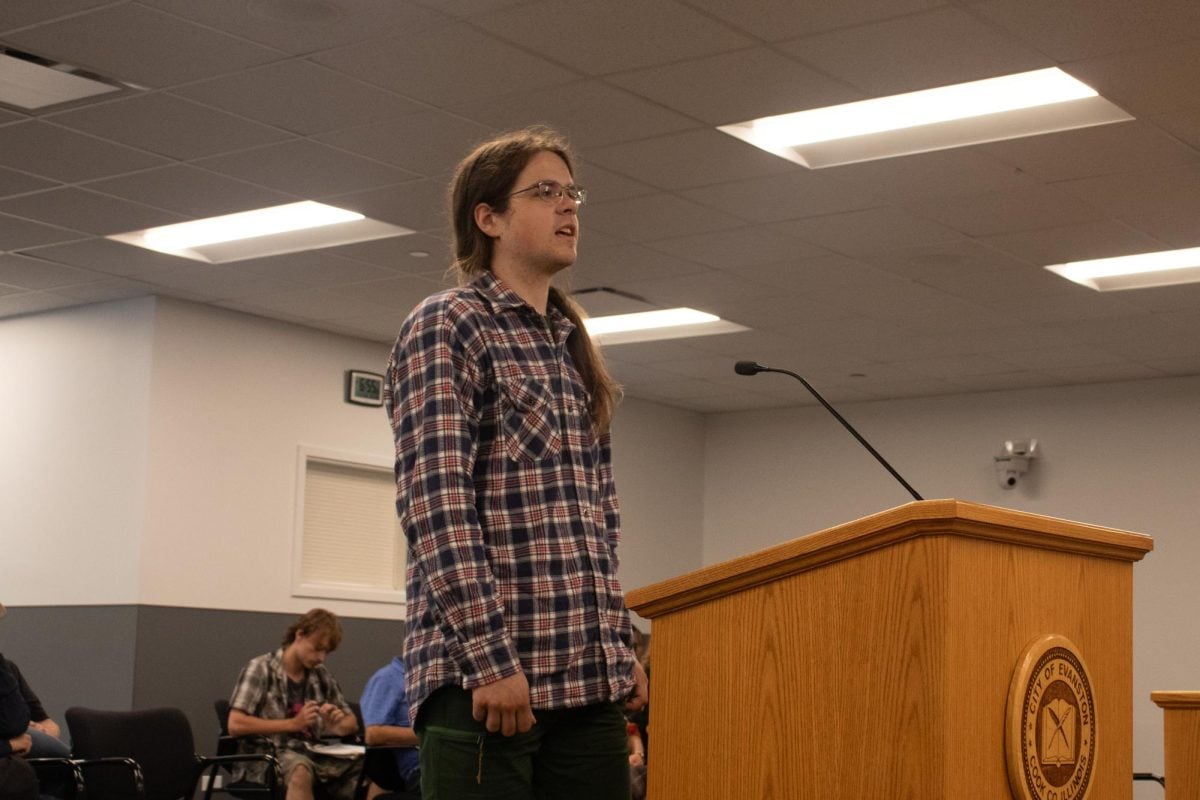
Rob Keding urges state lawmakers to act before potential transit cuts impact the Evanston community.
Monica Riley, a private chef who commutes from Chicago to Evanston daily, said potential changes to UP-N would drastically impact her everyday life.
“If I relied on the Red Line to the Purple Line, it would be two hours each way for me,” she said. “So that would be really messed up.”
All planned cuts would also eliminate federally-required paratransit service, the accessible transportation option that operates within three-fourths of a mile from any transit service.
University of Illinois Chicago junior Eric Kasule uses the Purple and Red lines frequently to travel from Evanston to campus.
Proposed cuts to CTA rail lines, he explained, would make commuting much more stressful.
“With the budget decrease, it’s going to be pretty tight and you’re going to have to really plan ahead and reconfigure your transportation,” he said.
Eric Kasule discusses how CTA changes could alter his daily commute.
As the Illinois General Assembly’s fall veto session creeps closer, the RTA is taking matters into its own hands. In late August, the board unanimously voted to transfer $74 million from the Metra and Pace budgets to the CTA, which is the transit agency expected to hit the fiscal cliff first.
It has also proposed implementing fare increases throughout the region to raise revenue. Nevertheless, the planning for “doomsday” cuts is well underway, with the RTA considering all possible scenarios before it releases its final regional transit budget in November.
Email: [email protected]
Related Stories:
—Illinois lawmakers introduce Chicago area transit reform bills as fiscal cliff looms
—State legislators, CMAP present preliminary plan to address Chicago transit fiscal cliff
—U.S. Transportation Secretary Sean Duffy threatens CTA federal funding, listing safety concerns