Welcome to “Heavenston” — or so the saying goes. Nestled just north of Chicago, your new home has long been considered a utopian community: tree-lined streets, lakefront mansions and a famously liberal electorate.
Once a hotbed of abolitionist sentiment and temperance activism (shoutout Frances Willard), Evanston has also been irrevocably shaped by settler colonialism, segregation and persistent economic inequality. Ultimately, to understand Evanston is to wrestle with these contradictions by exploring the city, its people and their stories — or, better yet, reporting on them!
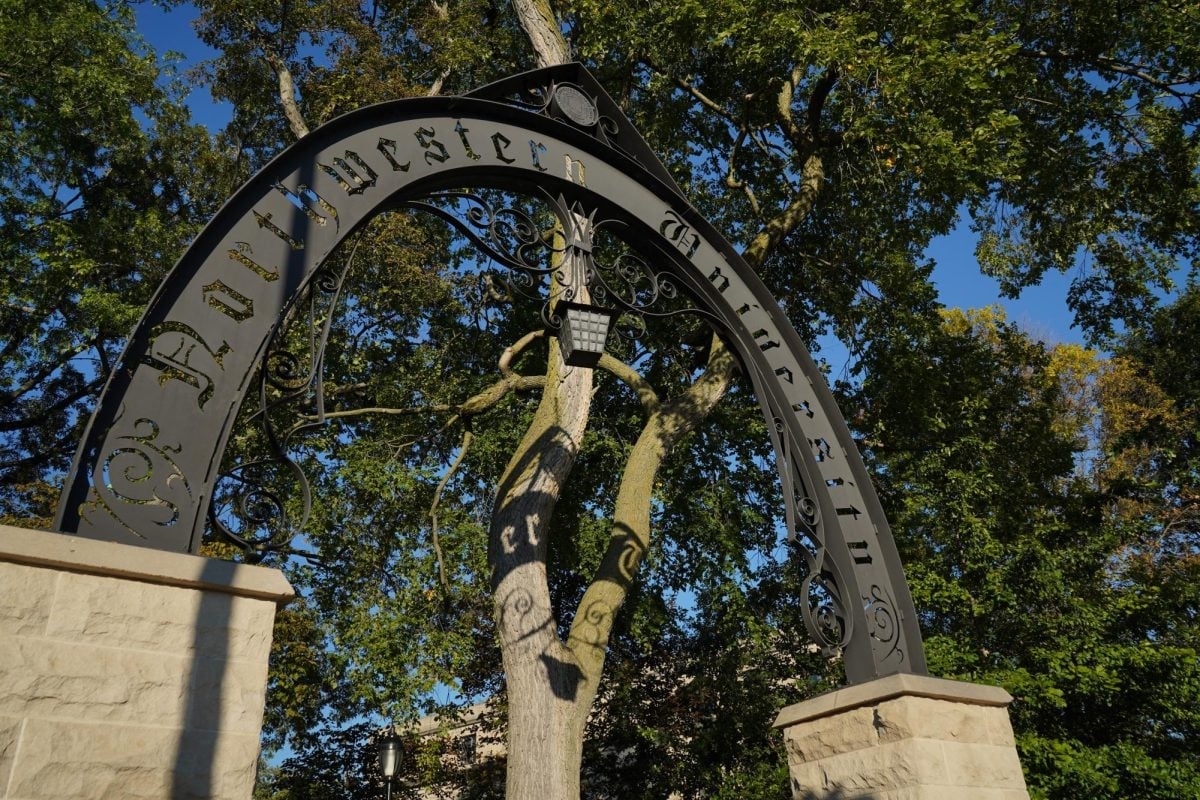
The city sits on the homelands of the Potawatomi, Ojibwe and Odawa peoples as well as the Menominee, Miami and Ho-Chunk nations, whose displacement made Evanston’s founding possible. But Northwestern actually predates the city’s incorporation — and both were established by its namesake, John Evans, a Methodist leader and politician who co-founded the University in 1851.
Evans went on to serve as the territorial governor of Colorado, where he bore responsibility for the 1864 Sand Creek Massacre in which U.S. soldiers slaughtered hundreds of Indigenous people, including many women, children and elders. Though Evans denied wrongdoing, historical investigations — including one conducted by NU itself — found him culpable in the massacre’s lead-up and aftermath.
During the Civil War, the town fought for abolition, and between 1860 and 1870, Evanston’s population quadrupled, driven by a postwar boom and NU’s growing influence.
Around this same time, a law passed banning the sale of alcohol within a four-mile radius of campus. The restriction helped turn Evanston into a national hub for the prohibitionist movement and the Women’s Christian Temperance Union — one of the most powerful women-led political organizations in American history. City Council passed a liquor ordinance in 1972, finally allowing some businesses to sell alcohol.
In the 20th century, redlining and other discriminatory housing policies pushed the city’s Black residents into areas like the 5th Ward, where they were systematically denied resources afforded to other neighborhoods. Evanston closed the ward’s only elementary school in 1967, and for decades afterward, Black students were bused across the city — a policy many activists considered more burdensome than beneficial. After years of community advocacy, plans for a new school in the 5th Ward were finally approved in 2022.
In 2019, Evanston became the first U.S. city to launch a publicly funded reparations program for Black residents, beginning with housing grants to those impacted by discriminatory policies. Funded by the city’s cannabis tax, the initiative has been praised as a potential model for other municipalities but also criticized for its limited scope.
NU’s relationship with Evanston has long been contentious. As a tax-exempt institution occupying a large swath of prime lakefront land, the University has often clashed with Evanston residents over its expansion and influence.
In the mid-20th century, local resistance to NU’s growth helped drive the construction of the Lakefill we know and love — an artificial addition to the shoreline allowing the University to expand eastward into Lake Michigan rather than further into residential neighborhoods.
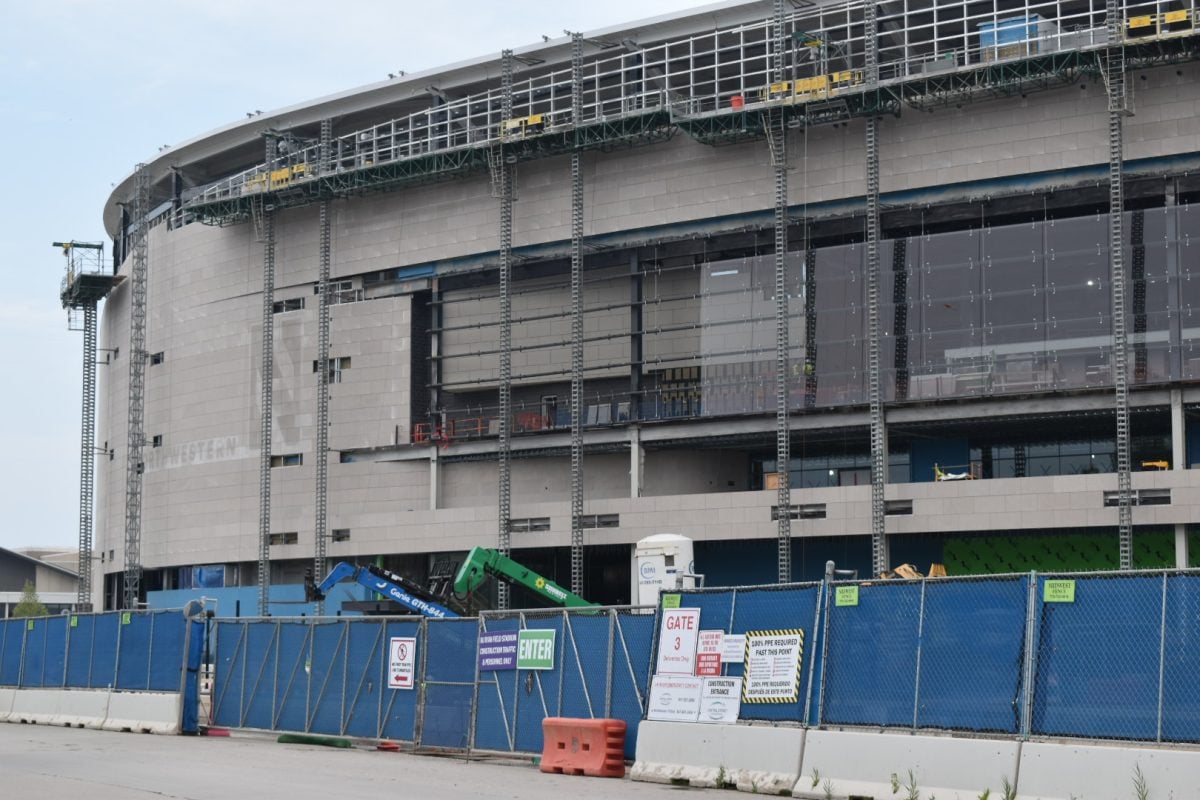
Decades later, the embattled town-gown dynamic reemerged with the renovation and rezoning of Ryan Field, NU’s football stadium in the 7th Ward. Many residents expressed concerns about traffic, noise and the University’s plans to host concerts at the venue, but the project eventually passed City Council — with Mayor Daniel Biss casting the tiebreaking vote.
Email: [email protected]
X: @jdowb2005
Related Stories:
— Focus group: Three Evanston residents talk housing, reparations and education
— Indivisible Evanston rallies North Shore residents for ‘No Kings’ protest
— Gallery: ‘No Kings’ protests take Evanston, Chicago by storm