As Illinois legislators consider a bill that would allow renters to use small solar panels under certain conditions, Evanston representatives and activists say the technology offers clear benefits.
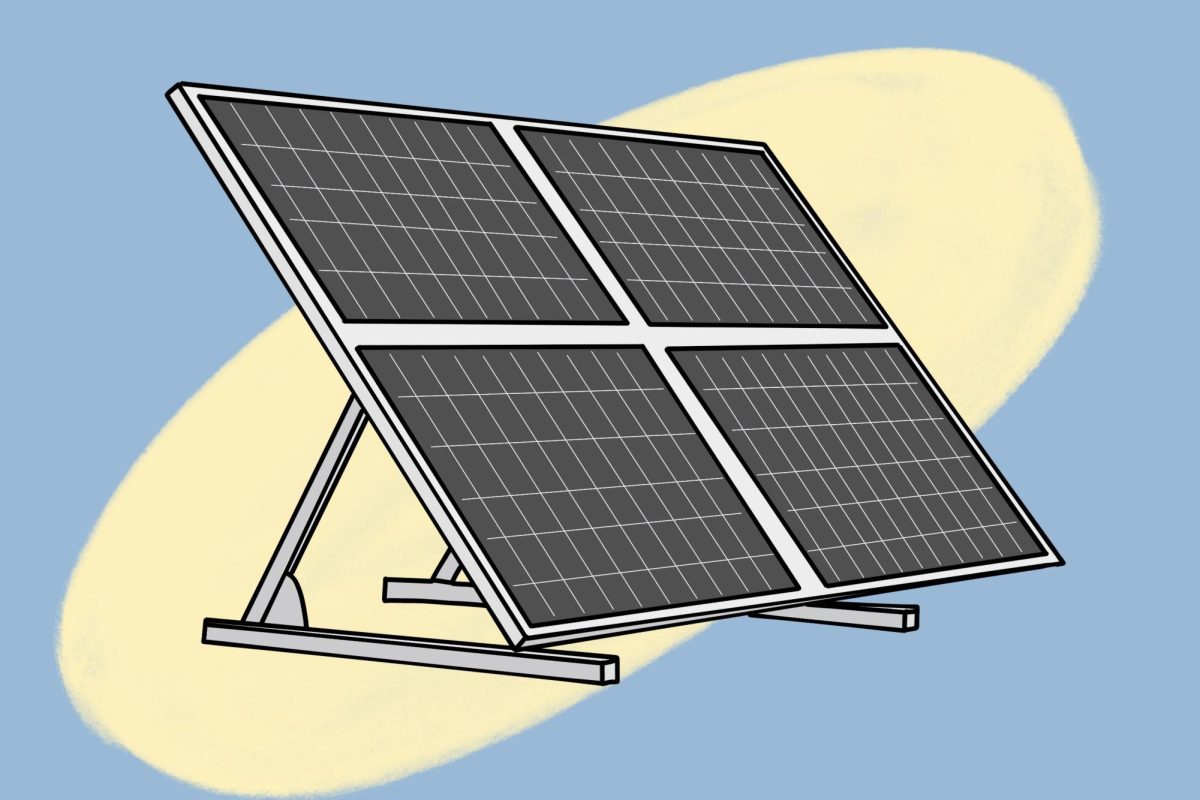
Senate Bill 3104, sometimes referred to as the Plug-In Illinois Act, would allow renters to use plug-in solar energy systems if the maximum power output is 391 watts or less.
Ald. Jonathan Nieuwsma (4th) said Illinois has a history of passing legislation that has made solar energy “a more viable option.” He pointed to the 2016 Future Energy Jobs Act as an example.
“This Plug-In Illinois Act is building on that momentum and will help to expand the list of the universe of potential solar users to apartment buildings, condo owners and single family homes that might not have enough unshaded rooftop to do a big system on their own roof,” Nieuwsma said.
T. Manning, education and outreach coordinator at Climate Action Evanston, said because of small solar panels’ convenience and cost-effectiveness, he thinks they are a “no brainer of an idea.”
While rooftop solar can cost thousands of dollars, a smaller plug-in solar panel could cost only a few hundred dollars.
“The fact that you don’t need to hire anyone, that you can literally just take it out of the box and plug it in and it starts to work, is obviously game changing,” Manning said. “It’s accessible, it’s affordable.”
In addition, other than the upfront cost of solar panels, it costs nothing to maintain them, said Joel Freeman, a board member of Climate Action Evanston.
According to U.S. Census survey data, more than 40% of Evanston households are renters as of 2024. Ald. Shawn Iles (3rd) said that despite this “huge percentage,” Evanston can do more to support renters. He added the bill would give them an option to do so.
“Evanston has a bad habit of forgetting renters,” Iles said. “If you can figure out a way to add to our renewable energy goals and save yourself some money, it’s kind of a win-win thing. So it’s sort of the city’s responsibility to make sure that people are aware of these options.”
While prices for rent, gas and groceries are rising, Iles said the bill would help Evanston renters offset costs. According to the Evanston Housing Gap Analysis, released in September 2025, 48% of renter households are cost-burdened, meaning they spend more than 30% of their income on rent and other housing costs.
Evanston resident Paula Scholl said the proposed bill was “practical.” She added that she thinks the provisions currently included in the act address any potential safety issues.
For example, Scholl said the bill currently mandates that any solar panel device must be listed by UL, formerly known as Underwriters Laboratories, a company which tests electrical products.
Iles said he expects the bill to be popular in Evanston, as the city has passed numerous “progressive” initiatives. City Council passed the Climate Action and Resilience Plan in 2018, which declared Evanston’s goal to use 100% renewable energy by 2030.
“In my experience, it is important to Evanstonians to see themselves as a leader in these efforts,” Iles said.
Email: [email protected]
Related Stories:
— Evanston businesses go green with renewable energy plans, support from city, local organizations
— NU researchers develop highly efficient tandem solar cell including perovskite material
— Trienens Institute seeks solutions amid renewable energy transition