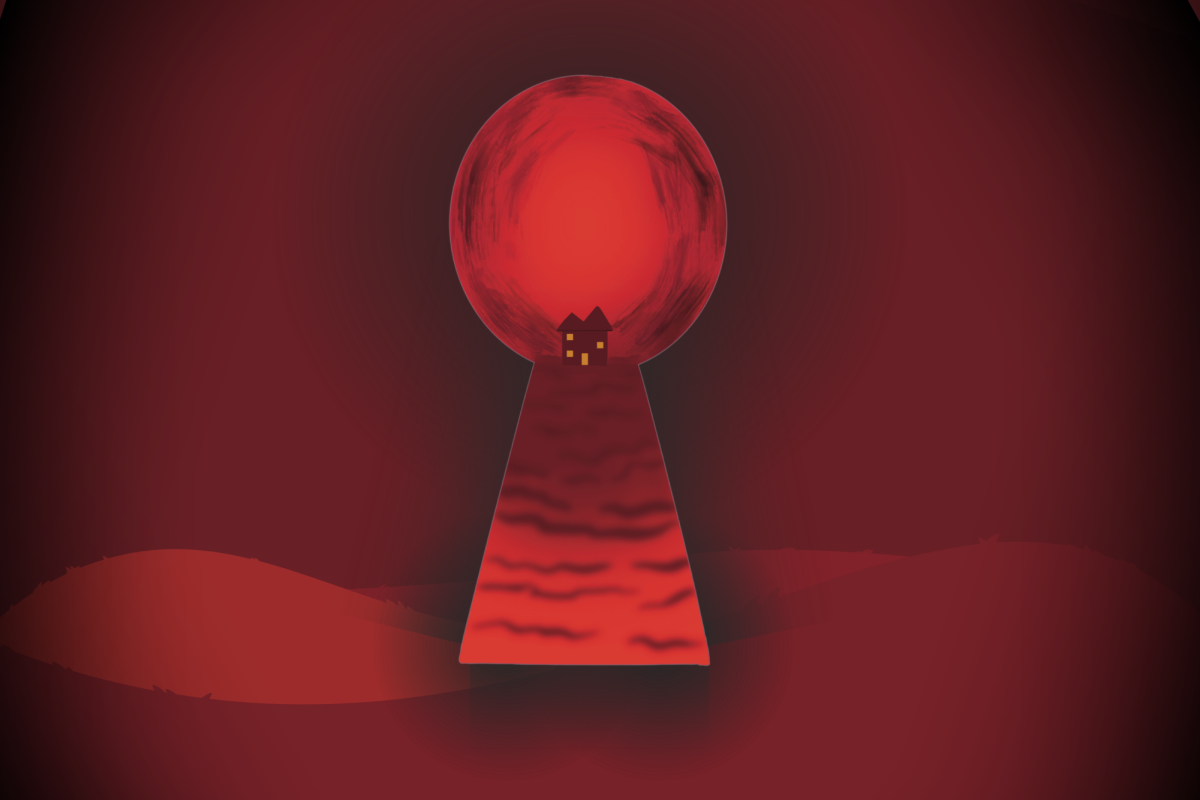
Six struggling writers, a stormy Scottish island, zero contact with the outside world, a fleeting opportunity for literary glory and an eventual bloody murder. This is the basic premise of “The Ending Writes Itself.”
The novel presents itself like any stereotypical Agatha Christie or Arthur Conan Doyle mystery, except it’s modern-day, and author Evelyn Clarke is not an established mystery writer. Instead, the moniker combines the names of two modern literary figures: bestselling author V.E. Schwab, and screenwriter and author Cat Clarke. Under a pen name, the two joined forces to brave the uncharted genre together.
The duo wastes no time setting the scene; six writers, across a variety of genres including horror, romance, young adult and mystery, are invited to a remote Scottish island under the pretense of an exclusive literary retreat hosted by the elusive Arthur Fletch, a famed thriller writer.
Upon arrival, it quickly becomes clear that this is no ordinary gathering. Fletch is absent, the rules of the salon are confusing and the weekend’s true purpose emerges: each writer must compete to craft the ending to Fletch’s unfinished final manuscript over the course of 72 hours, with a career-altering reward hanging in the balance. As if the stakes couldn’t get any higher, people soon start to drop dead.
The novel isn’t a typical mystery, and at times it feels like Clarke has bitten off a little more than she can chew. The chapters alternate between the six authors’ perspectives, causing the tone to constantly pivot. One moment offers the dry wit of horror writer Kenzo, while the next has the girlish innocence of resident YA author Millie.
A broader commentary on the modern-day book industry functions as a throughline. Both Schwab and Clarke have deep experience with the trials and biases that exist in the publishing and literary worlds, and the novel’s many references to the genre’s tropes, including the struggles of midlist authors and the threat of artificial intelligence, at times border on excessive.
Ultimately, the inclusion of modern issues serves to confront the traditional mystery stereotypes that the novel leans back on. Simultaneously, these references add complex layers to the characters themselves. Their ambition, insecurity and desperation turn into narrative fuel that heightens the tension and allows the reader unfiltered access into the complexities of the industry.
I’m a huge fan of a good murder mystery, so I was most engaged when the murder mystery began to unfold in its latter half. The scene is well set, the narrative is seamless and the twists and eventual reveal unfold satisfyingly.
Will the novel revolutionize the mystery genre or reshape the publishing industry? No. But it doesn’t need to and proves to be appropriately fun, thrilling and appealing to anyone, whether they’re familiar with the intimacies of what it’s like to be an author or otherwise.
Email: [email protected]
Related Stories:
— Medill alum Carly Schwartz advocates for self-love, mental health rehabilitation in memoir
— George Saunders’ ‘Vigil’ is a transformative meditation on death, afterlife, legacy
— NU alum Alice Evelyn Yang draws on early inspirations, family history in debut novel