Some Evanston/Skokie District 65 parents have expressed disappointment about the Board of Education’s recent approval of the purchase of 1,231 iPads for students.
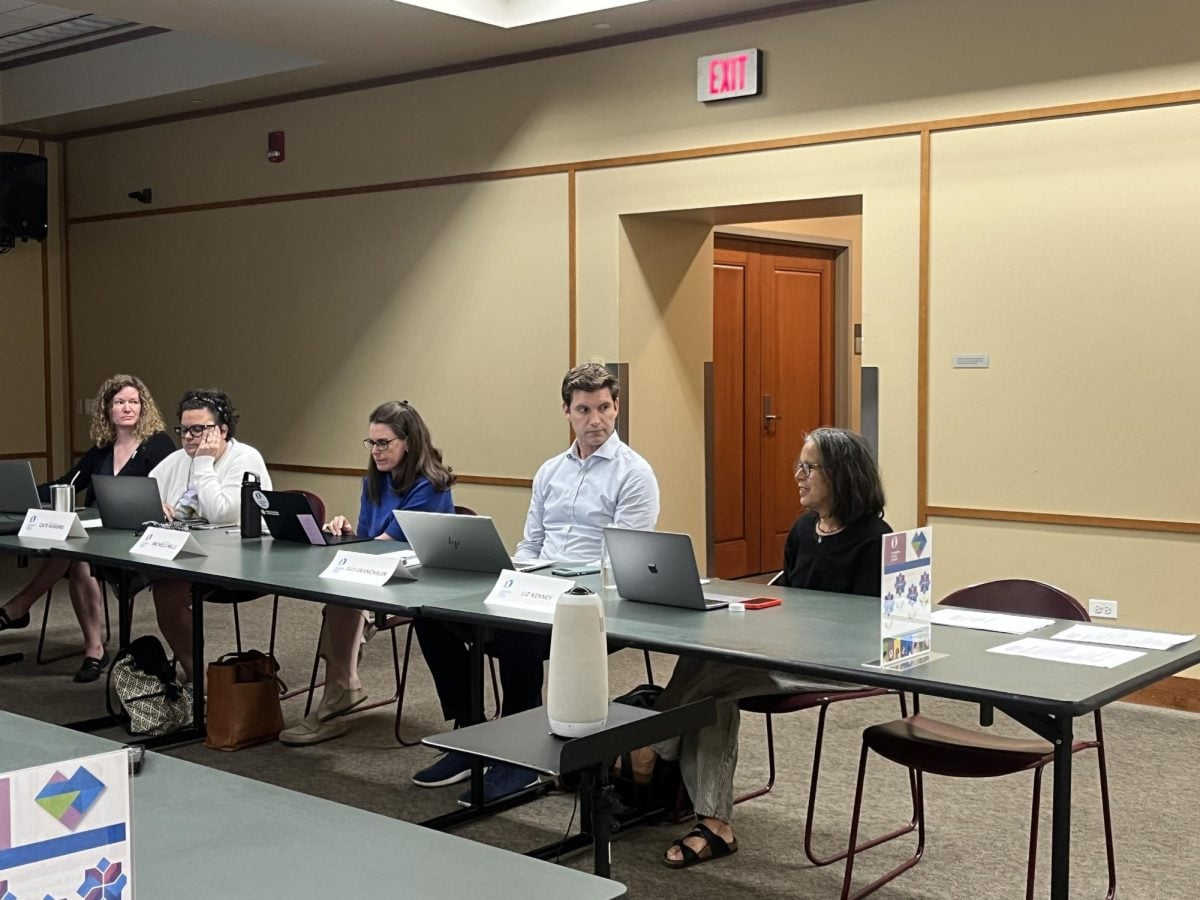
On March 23, the board approved an about $528,279 purchase of the iPads and accompanying keyboard cases to replace its aging fleet in a 5-2 decision. Board members Maria Opdycke and Chris Van Nostrand voted against the purchase, while others agreed that the board should continue the conversation about District 65’s policy to provide an iPad to every K-8 student.
Sixth Ward resident Michael Dice, the parent of two Lincolnwood Elementary School students, spoke against the iPad purchase at a March 9 board meeting, and told The Daily he was “disappointed but not surprised” at the board’s vote to approve the purchase.
“These kids have the rest of their lives to be addicted to their screens,” Dice said. “Why do we need to start that right now?”
At the March 9 board meeting, Elena Cáceres, the district’s executive director of technology, proposed a purchase of 1,300 iPads, drawing protest from some community members.
Cáceres returned at the March 23 board meeting with two possible alternatives to the purchase, including shared iPad carts between some grades. The original plan to purchase 1,300 iPads was amended to 1,231 iPads and cost the least, according to a slideshow presented at the meeting.
The decision to approve the purchase came as the board continues to discuss ways to reduce the district’s spending by $10 to $15 million as part of the last phase in its Structural Deficit Reduction Plan.
Seventh Ward resident Rachel Waldinger, a Lincolnwood parent of three, said she was disappointed that the board didn’t understand the parents’ desire to reevaluate the district’s technology policies.
“This purchase doesn’t seem like it’ll change anything or that there will be any change to the policy,” Waldinger said. “That’s what’s a concern because the current policy — the current status quo — is harmful to students.”
Screen Sense Evanston, a coalition of Evanston parents concerned about technology use in schools, has questioned the district’s classroom screen policy. The group circulated a petition that calls for no iPads during free time, a daily maximum classroom screen time limit for each grade, the prioritization of non-screen-based education and the removal of all non-education applications on school iPads. At the time of publication, the petition had 1,279 signatures.
Washington Elementary School parent of three Zoran Tasic is a member of the coalition and said there was not enough evidence to support the use of iPads in schools.
“Now that people are objecting to the use of iPads, the administration’s response is ‘Well, we have to be really slow and thoughtful about this,’” Tasic said. “Well, there was nothing slow and thoughtful about how they implemented them.”
While the district has chosen to maintain its current iPad policy, some board members hope to reevaluate District 65’s technology policies in the coming meetings.
At the March 23 meeting, board member Andrew Wymer said he wanted the board to work on a community-driven strategic plan to address parental concerns by embedding changes into a district five-year strategic plan.
Even so, some parents are still working to navigate screen usage between exposure at home and at school.
“It sets up a difficult relationship between our family and the schools, because I have to say I don’t agree with the use of screens,” Waldinger said.
Email: [email protected]
Related Stories:
— D65 board analyzes student technology plans, special education
— D65 parents push for reduced technology use
— District 65 to provide middle schoolers with iPads in technology program