This review contains spoilers.
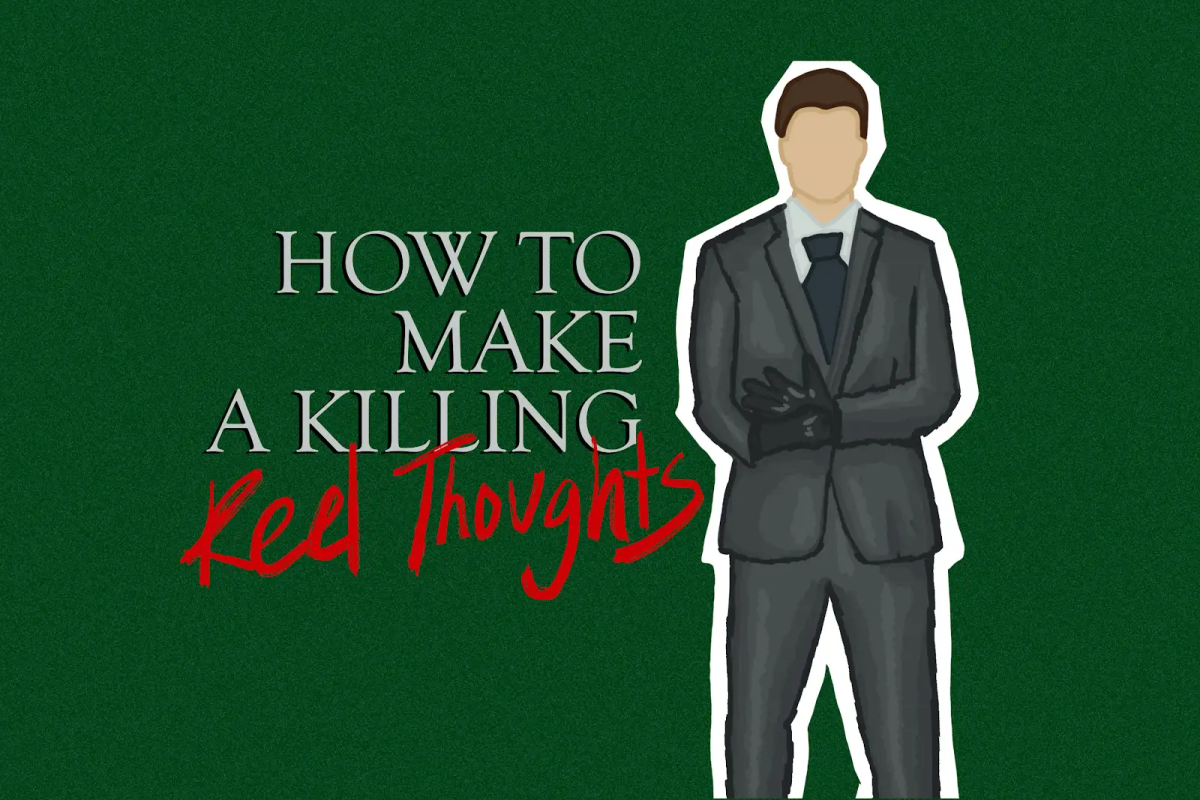
The adage goes, “money can’t buy happiness.” Director John Patton Ford’s “How to Make a Killing” makes a tremendous attempt to debunk this piece of sage advice. While entertaining, the film struggles to achieve its grandiose goal primarily due to its one-dimensional characters and overly ambitious theme.
The film follows Becket Redfellow (Glen Powell), the son of the disgraced daughter of the Redfellow wealthy dynasty. Becket’s mother dies when he is still young, but her final words encourage Becket to pursue the “right kind of life.”
Once Becket is older and frustrated by his state of life, he devises a plan to kill off the family members ahead of him in the line of inheritance and get his just desserts.
The film features an expansive cast. In addition to Becket, there are seven Redfellows, as well as two love interests. Fitting seven individual murder plots is a difficult feat for a film with an hour and forty-five-minute runtime — an attempt that ultimately fails.
The length of the film is on the shorter end, and having to cram so much content into it meant sacrificing character development. Becket gets the closest to any semblance of a multi-dimensional character, but even in the role of the underdog, it is difficult to root for him because of his arrogance and materialistic passion.
Since the story is told from Becket’s point of view, the relatives standing between him and the inheritance are purely villainized. It would have been nice to have further insight into why the cousins are the way they are. Some of them were extraordinarily entertaining to watch, though.
Becket’s cousin Noah Redfellow (Zach Woods) stole the scene from him, portraying an absurd, aspiring artist who had an obsession with film photography. He brought the much-needed comedic relief to a dark comedy that had thus far inspired few chuckles.
The highlight of the film by far was Margaret Qualley, who played Julia, the childhood sweetheart of Becket. She re-enters his life and helps fuel his murderous journey. Julia is conniving, smart and witty, making her a fun, well-rounded character.
About halfway through the film, her sweet personality dissipates, and she blackmails Becket amidst her husband’s financial struggle. Her arc was another one of the few moments where a character was conveyed as multi-faceted.
Regarding the theme, it’s clear that it’s an “eat the rich” narrative. It comments on how nepotism and exorbitant amounts of wealth are not conducive to the betterment of society. But it fails to have an impact when Becket, who originally resents the wealthy, becomes one of them.
There’s a brief moment where it seems like Becket’s climb to the top of the socioeconomic ladder will come with consequences after he is imprisoned and charged with the murder of Julia’s husband. Yet, this moment becomes moot when it is revealed that he is falsely accused, and he winds up being released.
While Becket deserved to face consequences, he got away scot-free, indicative of the wealthy’s easy ability to evade crimes that would crucify those outside of their class.
“How to Make a Killing” is an entertaining and quick watch. But it does not make a strong enough argument to flip the classic adage on its head. If there were more time spent on character building and interweaving the theme more effectively, it would have been far more fulfilling.
Email: [email protected]
Related Stories:
— Reel Thoughts: ‘Crime 101’ is a high-intensity ride from start to finish
— Reel Thoughts: ‘Wuthering Heights’ is not the withering mess it’s made out to be
— Reel Thoughts: Baz Luhrmann’s ‘EPiC’ explores Elvis’ throne in new musical documentary