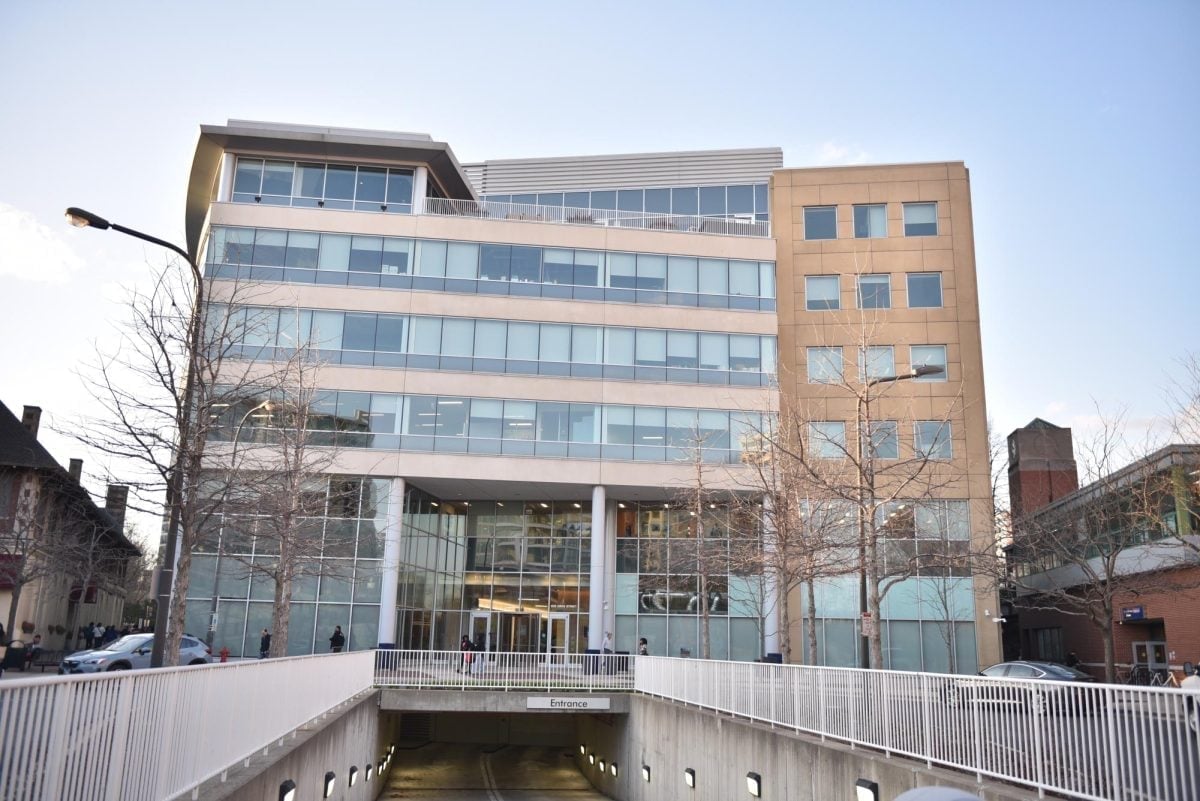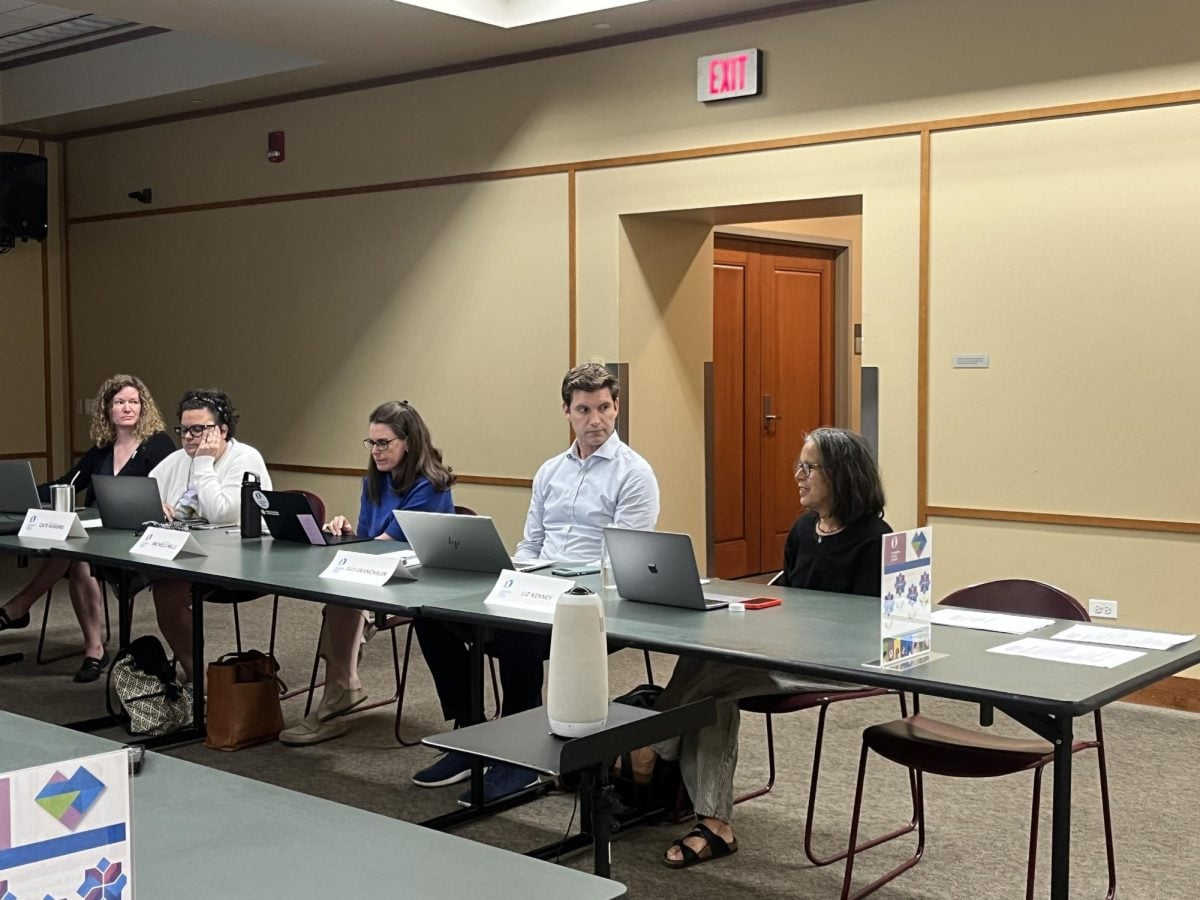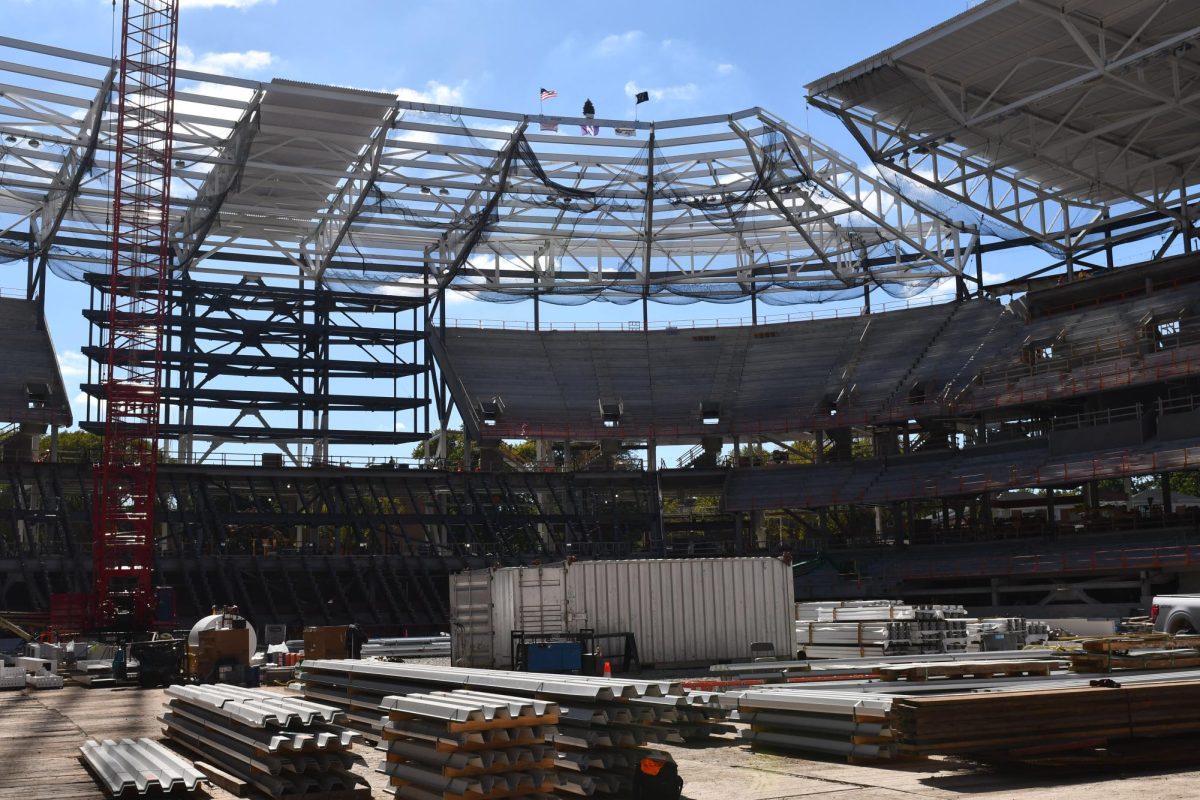
At a virtual 7th Ward meeting on Monday night, community members debated the Chicago Stars’ unique use permit application to host professional soccer matches at Northwestern’s Ryan Field, which is nearing completion, from 2027 for up to five years.
The Stars are scheduled to play 15 games at Martin Stadium during the 2026 season, but current zoning regulations prevent NU’s forthcoming facility from hosting professional sports.
Debate over the Stars’ potential relocation to the 7th Ward dominated the meeting, with Ald. Parielle Davis (7th) proclaiming she is “very unlikely” to support the team’s unique use permit application.
In a Feb. 9 email to 7th Ward residents, Davis wrote that she supported NU’s request to extend construction hours but noted her position was not “an endorsement of nonstop construction.”
Instead, Davis wrote she recognized the city was “boxed” into approving working hours of up to 16 a day, six days a week, to maintain funding.
Davis described existing construction as “an extraordinary burden” for the neighborhood.
Given city promises to residents in the area, she wrote that she does not plan to support the Stars’ application to play at Ryan Field, emphasizing that her opposition is “not about women’s soccer.”
“It is about whether a tax-exempt educational institution engaging in for-profit activity should continue to add new impacts to a neighborhood that has already absorbed years of construction and expanded stadium use,” the councilmember wrote.
Davis said a 2024 Memorandum of Understanding between the city and NU outlines at least four deliverables for the Ryan Field Community Advisory Council — a concert operations plan, a traffic management plan, a security plan and a sustainability plan — all of which must be submitted six months before Ryan Field hosts its first event.
The stadium’s first event is currently scheduled to be an October NU football game, which would make the deliverables due in April.
During public comment, 7th Ward resident Frank Hill asked what the difference between a Stars and NU game would be. In response, Davis argued one involves collegiate athletics and the other is a professional sporting event.
“It is my belief that if you are going to engage in nonprofit activities, that’s fine,” Davis said. “But if you are going to be engaging in for-profit activities, you should be paying taxes.”
Later, 7th Ward Resident Jill Graham echoed Davis, questioning why NU doesn’t have to pay property taxes when renting out the field to “a profit-making business like the Stars.”
Graham said she was previously part of a church that was required to pay property taxes when renting out commercial spaces.
“It was a not-for-profit organization, but we paid property tax,” Graham said. “Because we were renting them out as rental income to the church, but those were commercial activities going on in those three little spaces.”
According to Davis, Illinois’ state charter asserts that because NU was established before the state itself, it cannot be taxed on any land it owns.
She called this legal situation “very strange” and “mind-boggling.”
“There’s only a handful of specific institutions that somehow have been caught up in this loophole where they don’t have to pay any property tax on any land that they own,” Davis said. “It makes sense from a business standpoint why Northwestern would hold on to that loophole.”
However, Davis noted the Stars would be paying entertainment tax on their tickets, which would contribute to the city’s tax revenue.
Other residents expressed concern that making exceptions to current zoning regulations prohibiting professional sports at Ryan Field would open the door for professional sports to continually enter Evanston, with one attendee adding it could turn the city into “a Wrigleyville.”
Seventh Ward resident Mary Rosinski criticized the possibility of professional sporting events in the city, noting that if NU wants to welcome the team, the area should become an “entertainment district.”
She pointed out that the owners of Wrigley Field and United Center pay hundreds of thousands of dollars in property taxes per acre. The Chicago Cubs pay about $2.7 million annually in property taxes on Wrigley Field, while the owners of United Center pay about $6.1 million.
“Right now, we’re subsidizing Northwestern students and faculty and everything that Northwestern uses,” Rosinski said. “Either you are going to be a university education and take that tax status, or you’re going to be professional entertainment, professional sports.”
Email: [email protected]
Bluesky: @yongyuhuang.bsky.social
Related Stories:
— Chicago Stars to play 15 games at NU’s Medicine Field at Martin Stadium
— Chicago Stars indicate plans to file for unique-use permit at Ryan Field
— NWSL’s Chicago Stars announce 2026 move to Northwestern Medicine Field