Faculty across Northwestern’s Evanston, Chicago and Qatar campuses expressed concerns over inter-campus governance and faculty representation at the first-ever Faculty Senate meeting in Qatar Wednesday morning.
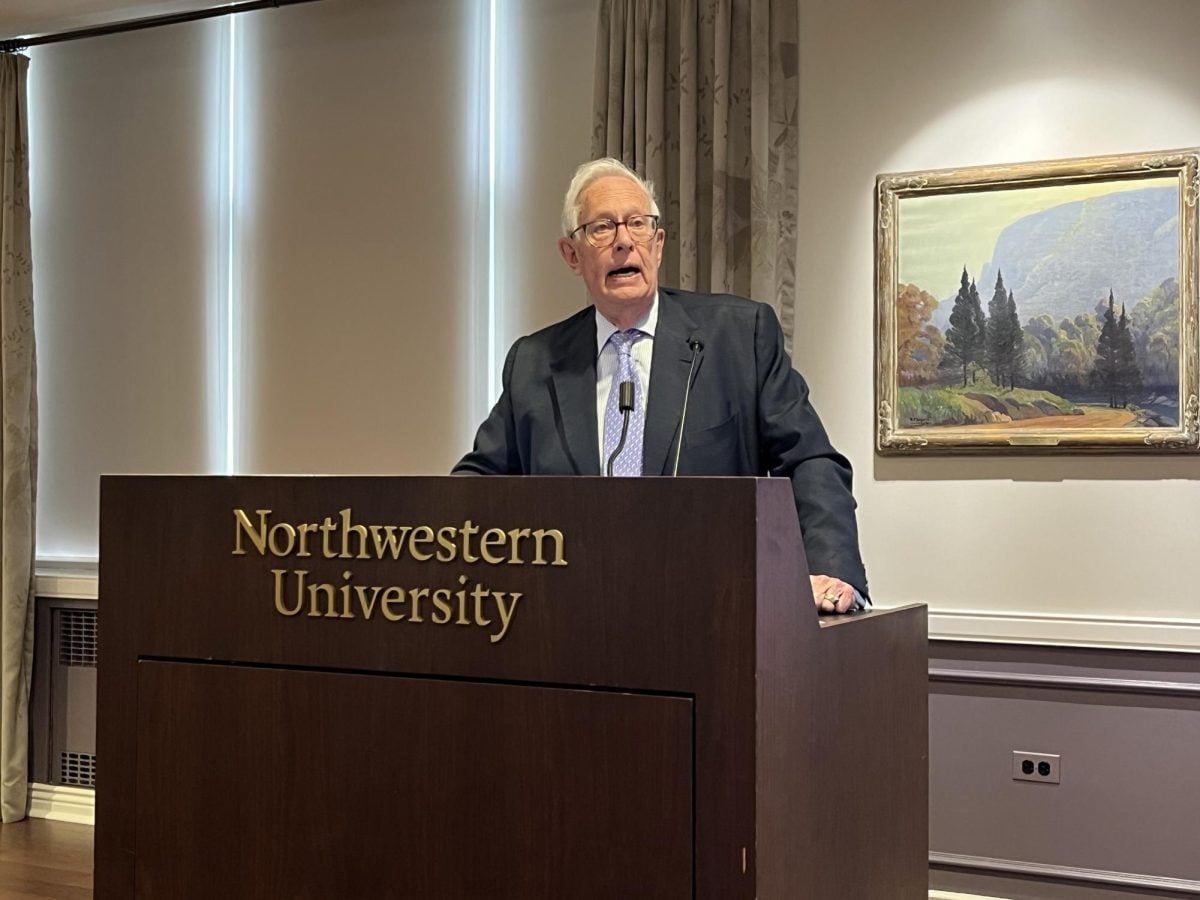
Faculty Senate President Ian Hurd led the meeting at Northwestern’s campus in Doha, Qatar, a time zone approximately nine hours ahead of CST. About 50 Evanston and Chicago faculty joined the call on Zoom.
Faculty raised questions on the relationship between the Evanston-based administration and faculty working on campuses in Chicago and Qatar. Some faculty based in Qatar said they feel a disconnect.
“Our sense of relations to Evanston and Chicago is confused by not knowing when our issues are the same issues as yours are,” NU-Q Faculty Council President and liberal arts Prof. Sam Meekings said.
NU-Q Communication Prof. Rana Kazkaz said because no NU-Q faculty are on NU’s presidential search committee, the campus is left unrepresented in the transition. She added that NU-Q faculty may be feeling “shy,” as Senate meetings are routinely held on the Evanston campus.
NU-Q Communication Prof. Joe Khalil said divisions between campuses are exacerbated by long distances and time differences. Faculty can benefit from removing those barriers and listening to each other’s experiences, Khalil said.
History Prof. Helen Tilley, who teaches at the Evanston campus, said “intellectual collaborations” across campuses are important and that faculty in the greater Chicago area should pay attention to the problems experienced by NU-Q regarding differences in working conditions across campuses.
“What can happen to one part of the campus can happen to all of us if we think about the lowest common denominator of faculty rights,” Tilley said.
As a solution to the disconnect between campuses, the Senate may consider the establishment of a separate committee to monitor inter-campus governance and enhance collaboration across the three campuses, philosophy Prof. Axel Mueller, who teaches at the Evanston campus, said.
During the second half of the meeting, faculty focused on the potential development of a new faculty-wide survey to poll their concerns.
The faculty survey committee has been pushing for a new faculty-wide survey for years, Committee Chair and SESP Prof. Danny Cohen said. The last faculty-wide survey was undertaken in 2015 and released in 2017.
“Given the current climate and various recent events at Northwestern, a survey is now feeling more urgent than ever,” Cohen said.
Cohen said the University would pay for an external faculty survey service — specifically Collaborative on Academic Careers in Higher Education — as a way to offload the work of creating and implementing the questionnaire.
Some faculty said the third party could ensure independent results in the data collection process.
Despite last year’s hopes that the University would pay for COACHE, the committee was recently told that it would be too costly to use an external survey due to budget constraints, Cohen said.
Instead, he suggested developing an internal survey based on the one distributed in March to NU’s Non-Tenure Eligible-specific faculty.
Faculty members were asked to write on a document what they wanted from a full faculty survey. Faculty expressed mixed goals, with some hoping the survey would reveal inequities in pay and responsibilities amongst academic units, while others shared disappointment with the University’s decision not to use the COACHE survey service.
Communication Prof. Thomas Billard wrote that they felt it was “embarrassing” for the administration not to pay for the COACHE service because it was too expensive. In a comment during the meeting, Billard said a survey would provide data that faculty could use to advocate for themselves.
“This survey will aim to expose ways that the University needs to further invest in and support its faculty, and likely to show ways that Northwestern is financially failing its faculty,” Billard said.
Some faculty expressed skepticism about the degree to which data from the faculty survey would be incorporated into University decision-making.
Billard said the University would not respond to anything less than falling behind other elite universities.
“There is, quite honestly, no point to doing a survey that we conduct ourselves, that the University can shelve as yet another kind of dust-collecting report somewhere,” Billard said.
In response to a question asking what issues faculty wanted the survey to address, a faculty member wrote in the document that they wanted the survey to address issues related to shared governance.
“It is clear that the administration and the (Board of Trustees) do not see faculty as partners,” the faculty member wrote in the document. “The extent to which our opinions are valued seems very low.”
A previous version of this story misattributed a written statement. The Daily regrets this error.
Email: [email protected]
X: @Summer_Huu
Email: [email protected]
Related Stories:
— Faculty question shared governance model following federal funding deal, switch to UnitedHealthcare
— Provost, CFO announce plan to reform University budget at Faculty Senate
— Qatar Foundation denies influencing NU decisions after Congressional hearing