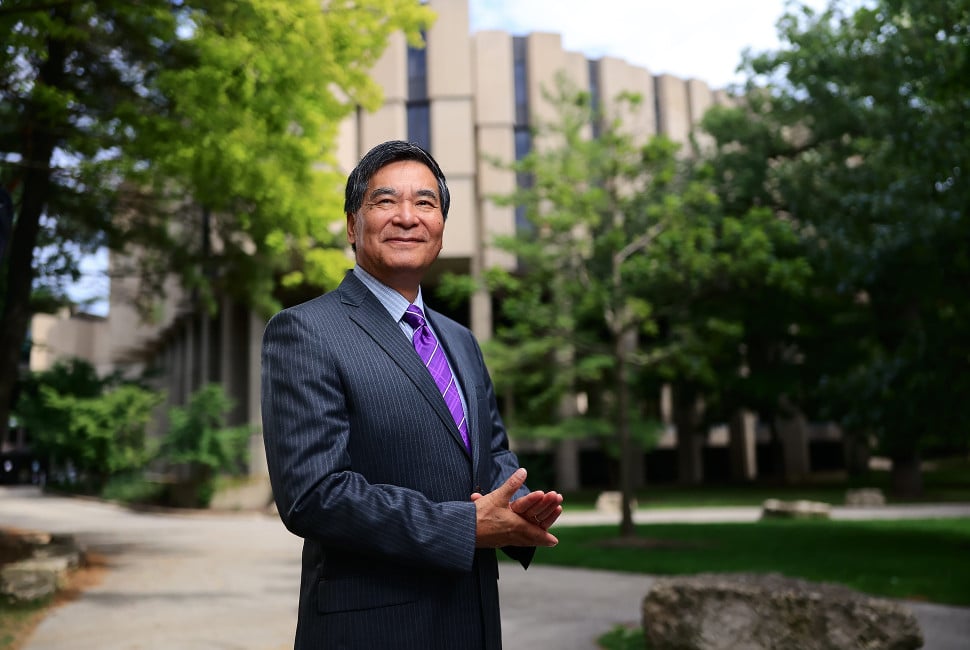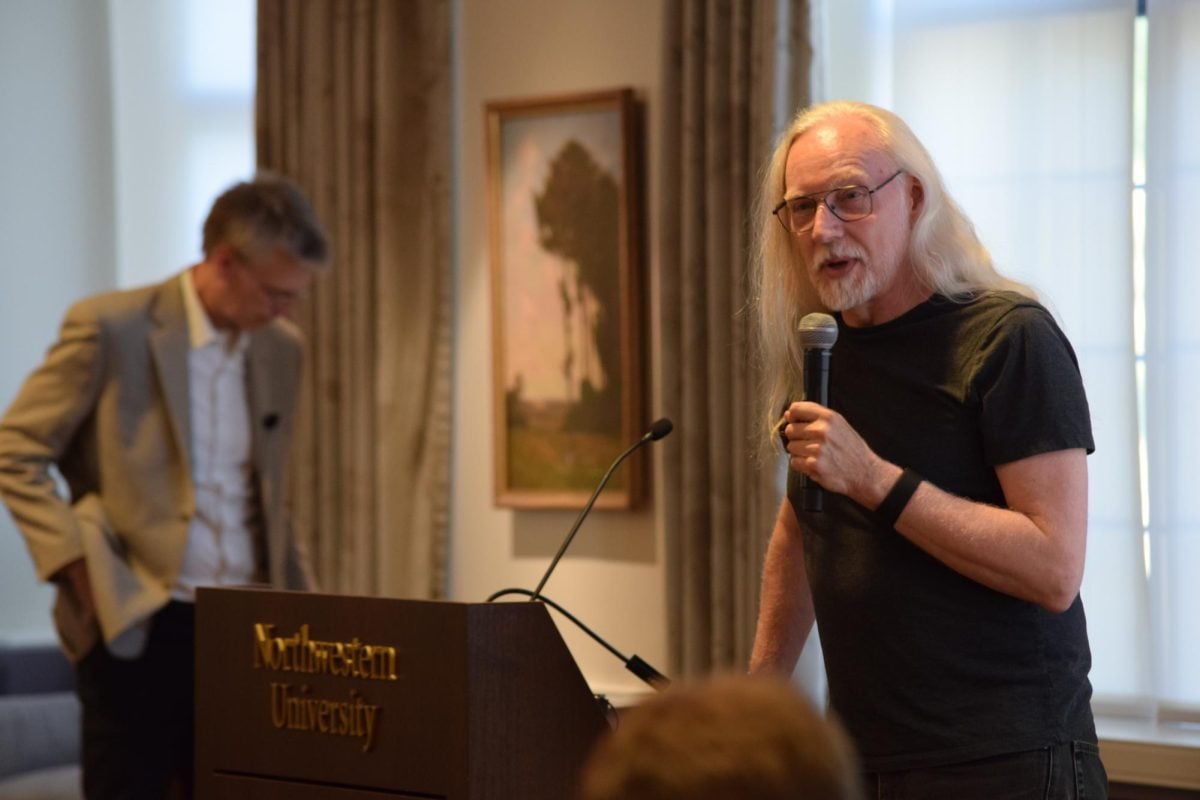
The Faculty Senate voted for McCormick Prof. Ian Horswill to serve as president-elect starting in August during its Wednesday meeting.
Under the Senate’s ranked-choice voting system, Horswill surpassed fellow nominees Feinberg Prof. Ana Maria Acosta and McCormick Prof. Seth Lichter. During his candidate speech, Horswill emphasized the need to move away from considering the Senate a legislative body, given that it does not harbor decision-making power on University operations.
“Although it’s very useful that we’re named the Faculty Senate, we are not a senate,” Horswill said.
Instead, Horswill said the Senate functions more like a “lobbying organization.”
To be the leader of an effective “lobbying organization,” Horswill said some of his main goals are to foster alliances with other groups on campus, including student and staff organizations, and engage directly with individuals possessing decision-making power on issues that impact faculty.
“We need to build bridges to the other constituencies of the University,” Horswill said. “I’m sure the administration really would not want me saying this, but maybe build bridges to the alumni, too.”
Horswill and Acosta, along with Faculty Senate Researcher Tricia England and Communication Prof. Catherine Fabian, also presented an interim salary report with data from the national American Association for University Professors Faculty Compensation Survey.
Horswill said the data presented was incomplete, as the preliminary report only had data from the University on tenure-track full and assistant professors. From the data they did have, Acosta said they noted salary changes over the years for this demographic in comparison to peer institutions.
Acosta said the data showed that NU’s salaries for tenure-track full and assistant professors “fall behind from the average.”
Fabian also shared analysis of non-tenure eligible salaries over the years, excluding 2026.
“This data was really helpful for us to determine low-income benchmarks and where our faculty sit relative to those markers and evaluate their position relative to job market comparators,” Fabian said.
Horswill said they expect to have a completed report in the fall.
Art history Prof. and current Faculty Senate President-Elect Rebecca Zorach, who will begin her term as president in August, announced several proposed changes to the Senate’s committee structure, including the addition of a Facilities and Sustainability Committee and Information Technology Committee.
The changes also include combining the Faculty Rights and Responsibilities Committee with the Handbook Committee and revamping the direction and names of several others.
Zorach said this will be the first time the Faculty Senate committee structure has changed. The adjustments will be implemented over the summer, she added.
“It’s responding really to the sort of experience of what has felt effective in the committee structure as it is and what has maybe felt a little bit less effective,” Zorach told The Daily.
Political science Prof. and Faculty Senate President Ian Hurd said Faculty Senate leadership is currently in conversation with the University on several recent initiatives, including the Senate’s May proposal to amend the Faculty Handbook, efforts to increase the salaries of the lowest-paid faculty members and the new budget model Provost Kathleen Hagerty and Vice President and Chief Financial Officer Amanda Distel presented to faculty in January.
Hurd also announced that classics Prof. Francesca Tataranni will represent faculty on a University-wide committee regarding artificial intelligence and teaching.
“This is a University-wide committee to think about the many dimensions of AI in the teaching environment and will hopefully pair neatly with work that the Senate is hoping to do next year on the same theme,” Hurd said.
Email: [email protected]
X: @Summer_Huu
Related Stories:
— Faculty Senate endorses Faculty Handbook amendments, discusses artificial intelligence policies
— Board of Trustees Chair Peter Barris discusses University finances at Faculty Senate
— Faculty question shared governance model following federal funding deal, switch to UnitedHealthcare