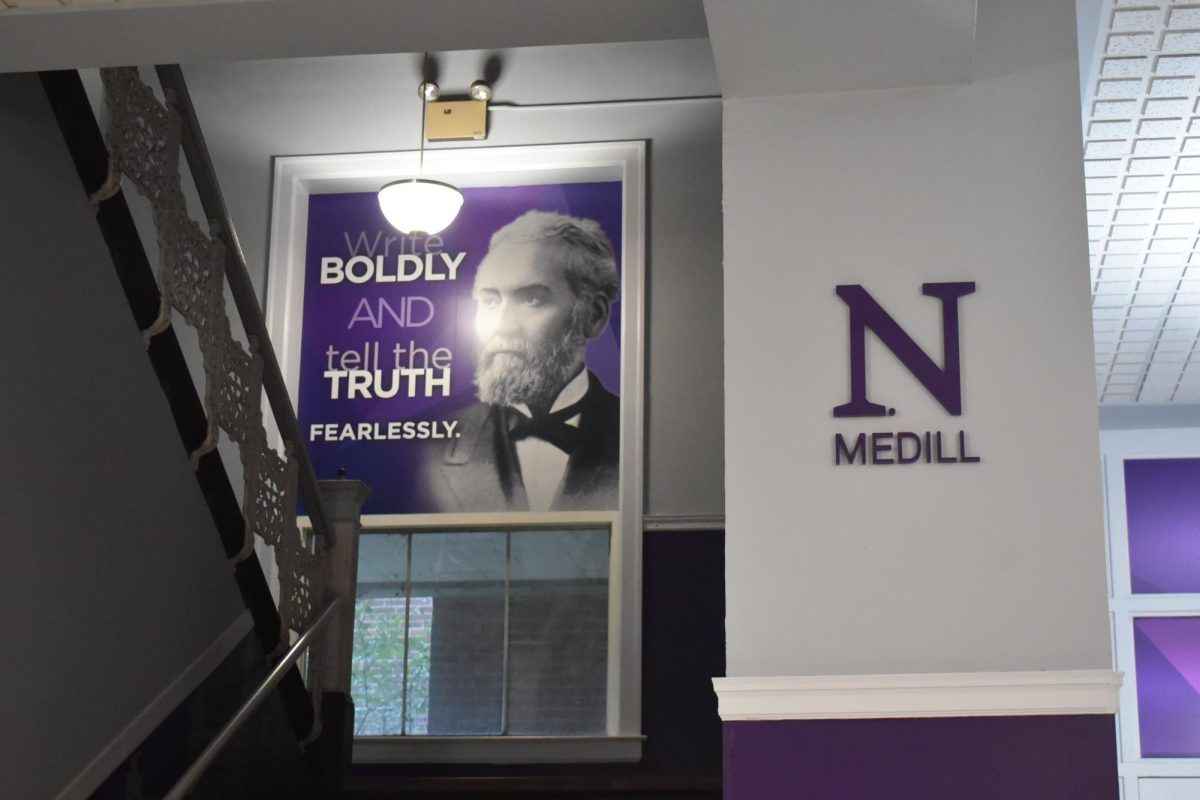
The Medill School of Journalism will join the Columbia Journalism School’s loan assistance campaign starting in 2026. The campaign will be available for graduate alumni who are working for a U.S. local news organization.
The Loan Repayment Assistance Program aims to support graduate alumni by repaying student loans they borrowed to fund their Medill education. Originating at Columbia, it is funded by the Knight Foundation.
Expansion of the program comes as local news organizations face increasing fiscal challenges. The 2025 Medill State of Local News Report, run by Medill’s Local News Initiative, found that the number of local newspapers continues to decline.
Julie Collins, Medill assistant dean of graduate admissions & financial aid, said LRAP allows local news organizations to recruit and retain journalists interested in working for them.
Collins said the program reflects Medill’s values of supporting local news journalism and “that there is somebody covering those stories.”
“It almost goes hand in hand,” Collins said. “We’re encouraging students to consider local news and public interest reporting as a career path, but we’re, in a way, supporting local news organizations that have top-tier journalists reporting for those news organizations. It’s a full circle.”
When a student graduates, Collins said they receive a notification about whether they are working for or have accepted a role at a local news organization that qualifies for LRAP, along with information about applications. Graduate alumni are eligible to apply within five years of their graduation date.
She also said the program aims to encourage graduate students to “broaden their lens” to local news organizations when it comes to job searches.
Mackenzie Warren (Medill ’00), interim executive director of the Local News Initiative, said LRAP combats limitations of “who can afford to be a journalist.”
“To get a classical journalism education at a place like Medill or Columbia, that’s an investment in your future,” Warren said. “If we can find ways to help see that investment pay itself back faster through things like the LRAP program, then that’s a good investment in journalism overall.”
Tarin Almanzar, the senior associate dean of admissions, financial aid and enrollment management at the Columbia Journalism School, said adding Medill as a partner was “a no-brainer,” as both schools often work together for recruiting.
Almanazar said she encourages prospective graduate journalism students to consider LRAP in their decision-making process, as it has been impactful for many Columbia graduates.
“One of the goals of the loan repayment assistance program is helping alums remain employed in places that they love, and they feel an affinity to,” Almanzar said. “Our numbers indicate that that’s been made possible.”
Brett Cione, director of LRAP at Columbia Journalism School, said that although local journalism pay is “not always great,” journalism schools can be expensive, and many students take out loans and end up with debt. He believes the program will support graduates who still wish to pursue local news journalism, which will benefit the journalism industry.
Cione also said he has heard from Columbia graduates who took jobs specifically because of LRAP.
“It has the potential to change somebody’s entire career trajectory,” Cione said. “It’s removing financial barriers to allow people to tell the stories that they want to tell, work in the places where they want to work and serve the communities that they want to serve.”
Email: [email protected]
Related Stories:
— Local news coverage continues to shrink, Medill State of Local News report finds
— Medill receives $3.6 million grant, announces plans for new local news hub
— Medill State of Local News Report shows alarming decline in local news