The sound of synchronized stomps filled Parkes Hall 122 during the Middle Eastern North African Student Association’s Dabke dance workshop Monday evening.
The event doubled as a fundraiser, with entry costing $5 per person. Ticket proceeds will go toward Gaza’s Roots, an on-the-ground initiative providing aid to people in Gaza, according to MENA’s Instagram post.
Dabke is a traditional folk dance popular in the Levant region of the Middle East. Chicago-based instructor Mary Mulcahey taught attendees the Lebanese style of the dance during Monday’s hour-long session.
And sound is crucial to the Dabke experience, according to Mulcahey. She said she has danced Dabke for 12 years and has taught for six.
“It’s not Dabke if you don’t hear a stomp,” Mulcahey said.
She told attendees Dabke did not begin as a dance. It started among construction workers, who stomped in a circle to level ground surfaces for building foundations.
Those fundamentals remain, although Mulcahey said Dabke is now usually performed at celebratory events. Monday’s routines involved students holding hands in a line or circle while dancing to Lebanese festival music.
The style was new to several students, including first-year McCormick Ph.D. candidate Emory Apodaca.
“It was honestly really nice to hold hands with people because it’s not really something you do in any kind of dance I’m used to,” Apodaca said. “The rhythm is so different, too. It’s like everybody’s on the same rhythm, as opposed to dancing with their own rhythm.”
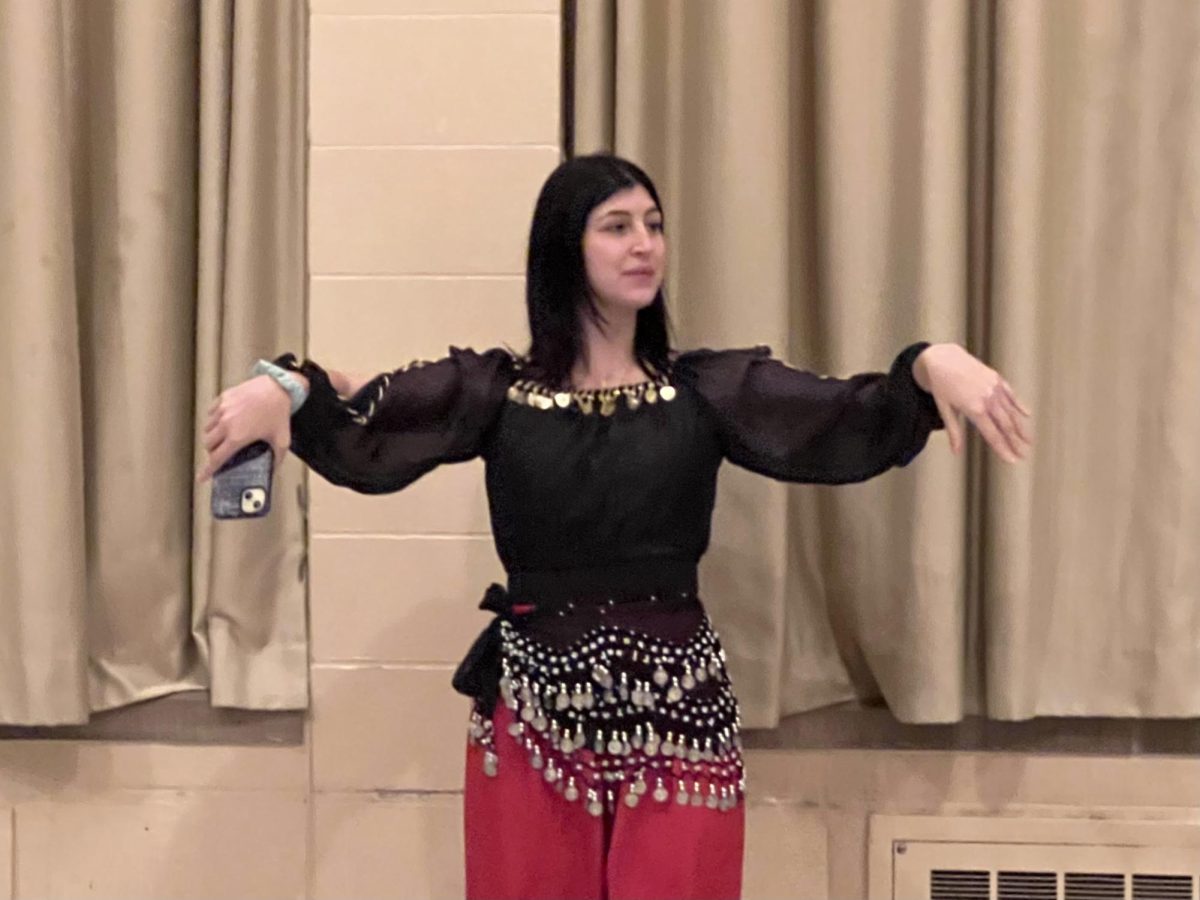
To keep everyone on beat, Mulcahey adorned her outfit with a coin belt that jingled with her movements. She also wore Converse high top sneakers, which she said is often her students’ footwear of choice for ankle support.
By the workshop’s end, Medill sophomore and former Daily staffer Mintesinot Sturm said his right leg was “very tired.”
“I’m Ethiopian, and a lot of our dances involve similar kinds of movements with legs and full-body workout,” he said. “So, definitely something I was able to connect with.”
Even when routines concluded, the room never fell silent. Applause erupted among dancers after every song. Mulcahey praised their progress throughout the evening and told them at the end of the workshop they could now dance at any Arab wedding or party.
Although countries have different styles of Dabke, she said the dance is ultimately a “very unifying force that we have in the Middle East.”
“Dabke is rooted in resilience,” Mulcahey said. “And if you can Dabke together, you can do anything together.”
Email: [email protected]
X: @desiree_luo
Related Stories:
— BlackBoard and MENA spotlight Sudanese youth voices with ‘Sudan, Remember Us’ screening