Director and writer Joachim Trier’s “Sentimental Value” gives consciousness to family homes as viewers watch generations come and go while members drift apart and reunite.
The film, released Nov. 7, stars Renate Reinsve, who acted in Trier’s 2021 film “The Worst Person in the World,” as well as Stellan Skarsgård and Elle Fanning. Though impeccably tasteful from the opening moments, the brilliance of Trier’s work with patterns of parallelism stuns in the final act of the film.
“Sentimental Value” follows an esteemed director, Gustav (Skarsgård) and his troubled relationship with his two daughters Nora (Reinsve) and Agnes (Inga Ibsdotter Lilleaas). Gustav returns to his daughters’ lives because he has an idea for a loosely autobiographical film to be shot in their childhood home, which has been in the family for generations.
Gustav, an out-of-touch relic of the 20th century film world, comes back expecting to be welcomed, but is met with reluctant inclusion by Agnes and outright resistance by Nora. However, with Nora and Gustav’s stubbornness, quick wit and self-destructive tendencies, it is clear that they are emotionally “wired” the same way and this, ironically, is what keeps them from getting along.
The family home is masterfully introduced as a character in itself and a montage tracks the house from the early 20th century to current day. In an interview with The Daily, the director described the pleasure of recreating the mini period pieces and, in particular, a 1960s party scene from the montage.
“To have the resources to create these time machine experiences of being in the past… I mean, you can’t beat that,” Trier said.
Trier pointed out the intrigue of the Borg sisters, though having grown up in the same house, harbor such different feelings for their father. Memories are murky, and experiences are shared or felt despite being apart — almost as if those who inhibit, or have inhibited the house (dead or alive) share a consciousness.
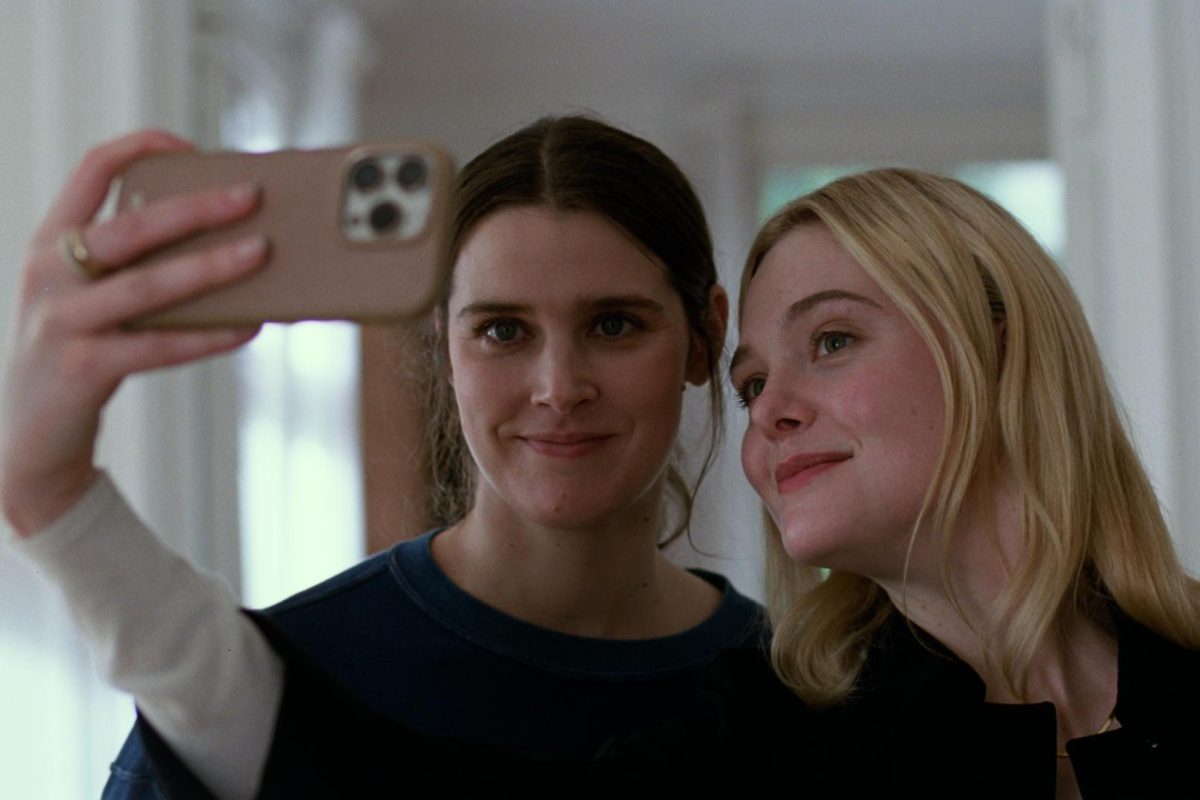
The film also examines duality: One particularly engrossing relationship portrayed is between Nora and Fanning’s Rachel, a peppy American actress Gustav slates to portray a Nora-type character in his film. In one scene, Rachel rehearses a pivotal monologue from Gustav’s screenplay, but the delivery falls flat. She proceeds to cut and dye her hair to be like Nora’s, meet with the daughter and practice a Norwegian accent. Still, the portrayal is not the right fit.
Trier pointed out the meta nature of Rachel’s role in Gustav’s film and Fanning’s role in his own film. Rachel is nervous about being good in a Norwegian film, and we, the American audience, share in her concern. But with Fanning’s strong performance in “Sentimental Value,” Trier said they “prove(d) that (Fanning) can actually be wonderful in Norwegian film.”
In one of the final scenes of the film, in a teary interaction with her sister, Nora reluctantly reads the monologue delivered by Rachel earlier. With her natural pauses and eyes swollen from crying, the monologue conveys its intended arresting emotion as it is delivered by its intended speaker. Reinsve’s stunning performance is understated but sweeping.
The film concludes with the ultimate meta moment of Nora playing the role written for her on set under her father’s direction after the wrap of a scene Gustav previously discussed with Rachel. Her portrayal acts as a parallel to a secret experience from Nora’s life that Gustav intuitively wrote. The scene (in Gustav’s film) cuts, and the father and daughter exchange thoughtful glances as the tender song “Cannock Chase” by Labi Siffre plays, ringing out the sentimental importance of the scene.
“Sentimental Value,” in its unbelievably lifelike performances, captures the angst and painful preparation that actors endure for performances on the stage or screen, and how performance intersects with real life.
Email: [email protected]
Twitter: @gracejw215
Related Stories:
— A&O and Neon host early screening of new film ‘Sentimental Value’ to mixed student reviews
— Reel Thoughts: Psychological thriller ‘Die My Love’ relies on big names, descends into a fever dream
— Reel Thoughts: ‘Bugonia’ is almost the film it wants to be