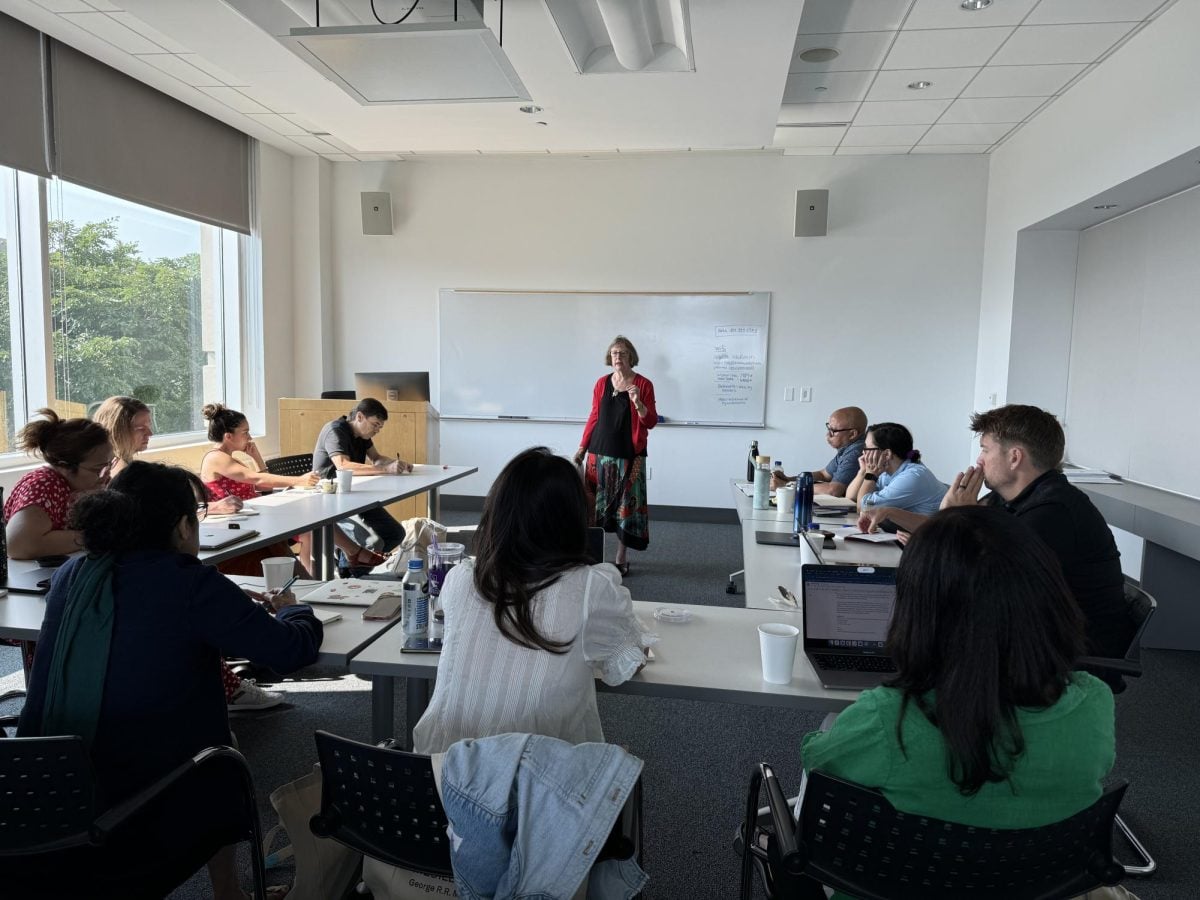
Tel Aviv University psychology and neuroscience Prof. Yair Bar-Haim outlined his innovative approach to trauma prevention and recovery amid ongoing war-related psychological stress in a talk at Norris University Center Monday evening. The event was organized by Northwestern’s Israel Innovation Project.
IIP Director Elie Rekhess said the program works to strengthen NU’s scientific and technological ties with Israeli universities through collaborative research, joint educational programs, entrepreneurial initiatives and public engagement.
Rekhess introduced Bar-Haim to the audience of approximately 50 and said he is a great example of the program’s goals.
“Professor Bar-Haim is translating science into effective, evidence-based treatment and prevention programs,” Rekhess said.
Bar-Haim studies war-related trauma and said he is motivated to find solutions to post-traumatic stress disorder, an illness that many soldiers face after their service.
“Pressure can lead to either breakdown or to innovation and adaptation,” Bar-Haim said. “In Israel, there are quite a lot of pressures.”
Bar-Haim designed Magen, a protocol adopted by the Israel Defense Forces that equips soldiers and medical teams to interrupt an amygdala hijack — when the brain’s emotional fear center disrupts cognitive processes like analysis, evaluation and creation.
The series of peer-to-peer steps, demonstrated through military training video clips shown to soldiers, aims to quickly restore cognitive control and prevent acute reactions. The Magen protocol was later adapted into the United States Army’s iCOVER-Med system.
Bar-Haim co-developed the mobile Combat Attention App, which has been tested in two recent Israeli military operations and trains soldiers to shift attention patterns linked to trauma vulnerability. He said early data shows reduced post-deployment PTSD rates among those who used the tool.
The most experimental component of his research, targeting neuro-modulation of trauma memories, relies on using magnetic stimulation to reactivate traumatic memories in the brain’s CA1 region.
“Memories evolve over time,” Bar-Haim said. “Every time we remember something, it’s open for updating.”
By electromagnetically disrupting memory recall, Bar-Haim said he seeks not to erase trauma but to “update” it. His recent findings show a decrease in general PTSD symptoms, specifically intrusive flashbacks.
The Israel-Hamas war and the enduring psychological impact of the Oct. 7 attack on Israel have escalated the need for trauma treatment research, Bar-Haim said.
Josh Andre, an audience member who served in the IDF from 2022 to 2024 and now works as a social worker in Northbrook, emphasized the importance of unit cohesion in reducing trauma during service.
“You don’t want to leave your friends,” Andre said. “You become so close that you feel like you can’t connect to anyone else, especially when you go through something that intense together.”
When asked about the pertinence of the MAGEN protocol described by Bar-Haim, Andre said that even if formal frameworks now exist to guide soldiers, many frontline reactions are intuitive.
In Israel, military service is required for Israeli citizens upon turning 18, with a minimum requirement of two to three years.
“The best prevention of PTSD is if you have an option not to go to war, don’t go,” Bar-Haim said. “If you are, however, faced with this reality, it affects a lot of people and their families, so the work we do on it is important.”
Email: [email protected]
Related Stories:
— Northwestern Hillel community celebrates release of Israeli hostages from Hamas with song and prayer
— Off-Campus: White House | Israel’s way forward after its two-year nightmare