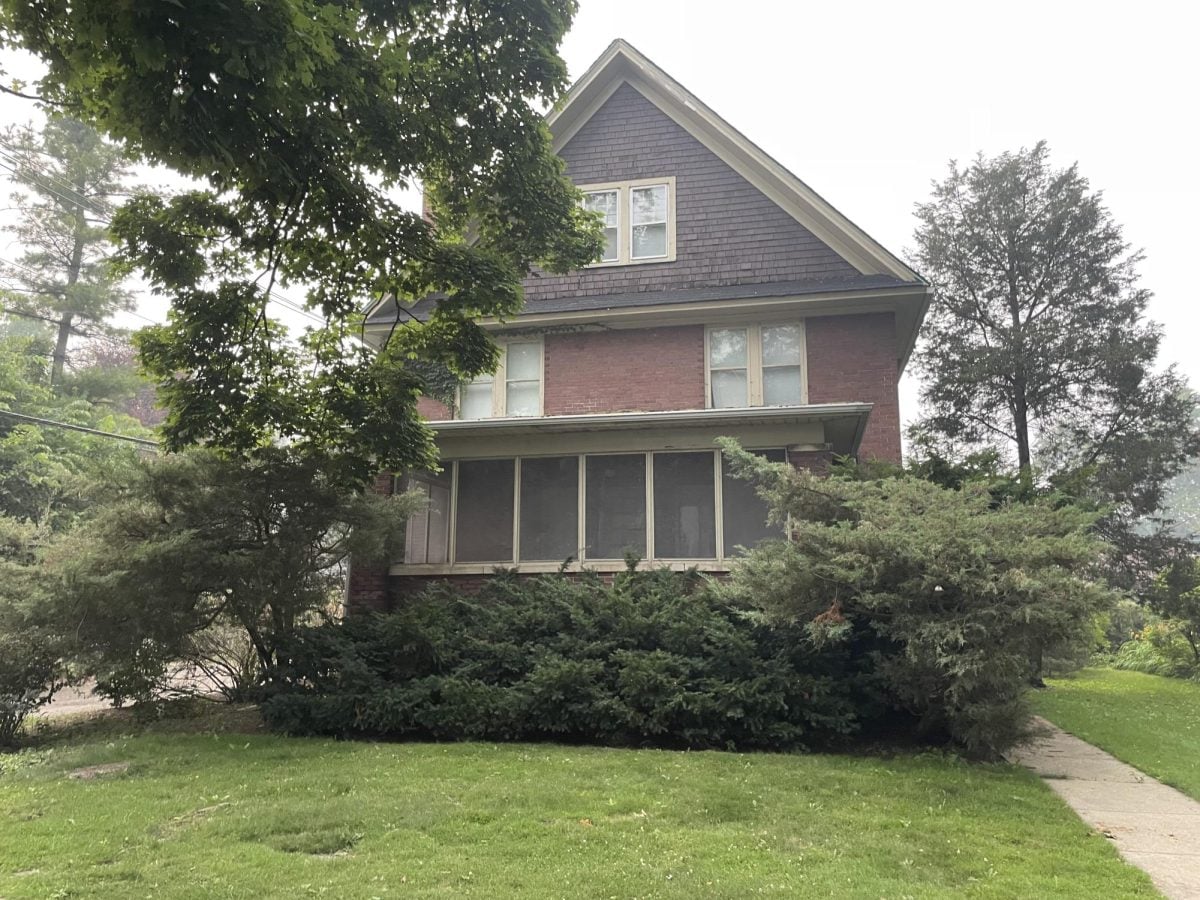
Growing up in Evanston, Libby Shafer hated the city’s grass lawns. They are overly manicured, which is “wasteful” and takes up too much space and energy, she said.
Now, the third-year plant biology and conservation Ph.D. student aims to change that with her Bees on the Block project — transforming underutilized lawns into nature ecosystems abounding with native plants and bees, while connecting neighbors to one another through collective environmental stewardship.
The plot to bring bees to Evanston’s blocks is a collaboration between Northwestern, Shafer and the Chicago Botanic Garden. The project studies how collective planting affects pollinator habitats and community engagement.
Participants will receive free native plants from the Botanic Garden to establish two small plots in their front yards with help from Shafer and her team. One of the participants’ plots will contain plant bulbs on the lawn, while another will contain seeds next to driveways to test plant survival.
Shafer said lawns “represent both an environmental problem and an opportunity,” citing the enormous amount of gas required for mowers to keep lawns short, water to keep them green and herbicides to prevent weeds.
“Research has shown that by growing native plants in your yard, you can actually make a difference,” she said. “They help sequester carbon, reduce stormwater runoff and support pollinators.”
Leslie Shad, the founder of Natural Habitat Evanston, said she hopes Bees on the Block will help change lawn culture. According to her, the “perfectly trimmed lawn aesthetic” comes from European estates and became the norm in the 1950s, to the detriment of the environment.
Shad said it would be fantastic to find plant species that propagate and germinate in lawns, since people can more easily convert their monoculture lawns into a diverse ecosystem by planting those species. A test experiment in a greenhouse before fully launching the project yielded the growth of an unexpected 34 out of 40 native species in the grass, Shafer said.
“There’s so much behavior change we’re hoping that’s coming with people adjusting to the climate issues,” she said. “This is an easy one.”
Eighty-five Evanston residents have applied to join so far, and Shafer added that she hopes to include four to ten blocks, with about five neighbors per block, along with control sites of individual gardens in her research.
Becky Barak, an assistant conservation scientist at Chicago Botanic Garden and adjunct professor at NU’s Plant Biology and Conservation program, advises Shafer on her work with Bees on the Block.
“There’s this whole menu of options that range from plants that look a lot like your regular lawn all the way to things that are diverse and have different wildflowers blooming in lawns,” Barak said.
Bees on the Block is particularly exciting because it provides the opportunity to “speak to homeowners directly,” Barak added. While collecting data about conservation is important, she said that what actually matters is “whether people are willing to make changes.”
To explore whether people are willing to have native plants in their lawns, Shafer will interview participants throughout the project. She said that she often draws on her undergraduate sociology degree from the University of Puget Sound, which helps her study people and translate that understanding into meaningful change.
“What people do in their yard makes a difference,” Shafer said. “I hope people can realize how much potential their yard spaces have for supporting the ecosystem and pollinators and that they can shift their perceptions of what they think is beautiful.”
Correction: A previous version of this story incorrectly stated where Libby Shafer completed her undergraduate degree. The Daily regrets this error.
Email: [email protected]
Related Stories:
— Evanston Host Plant Initiative works to save endangered bee species
— Everything Evanston: The buzz around rusty patched bumble bees
— Natural Habitat Evanston plants saplings for a greener, more biodiverse city