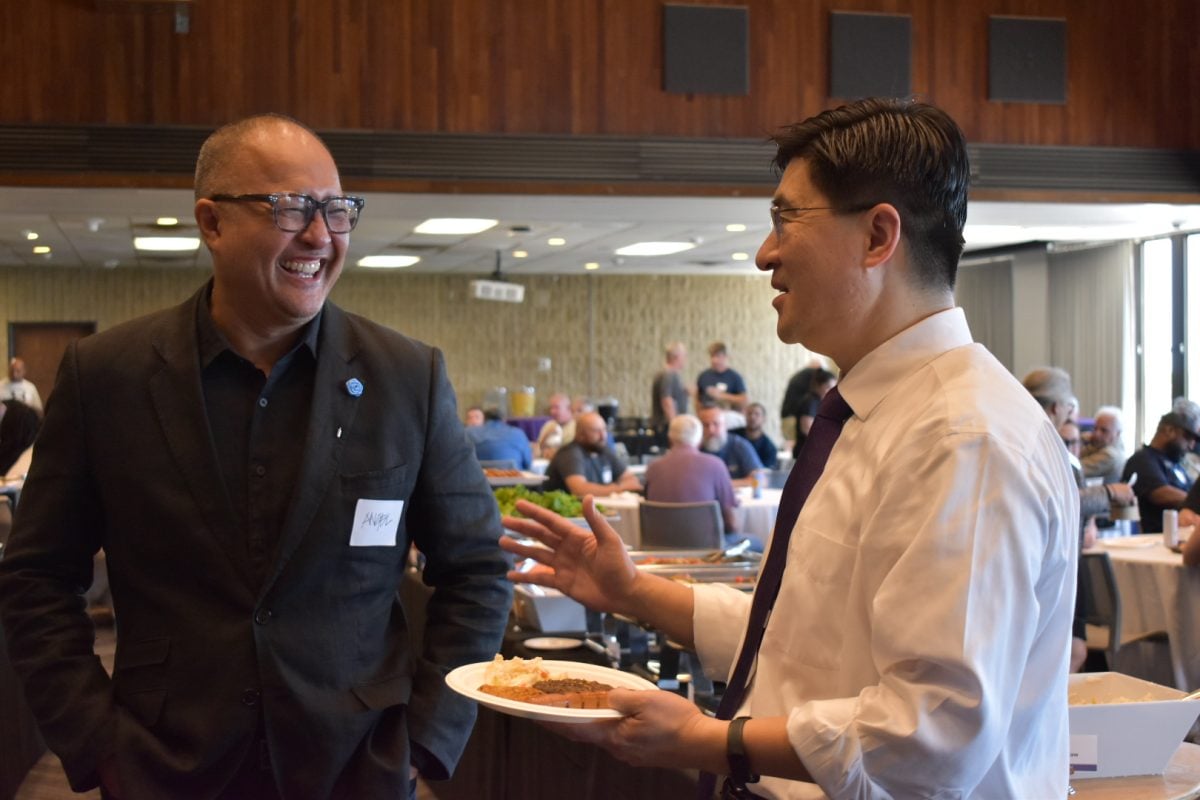
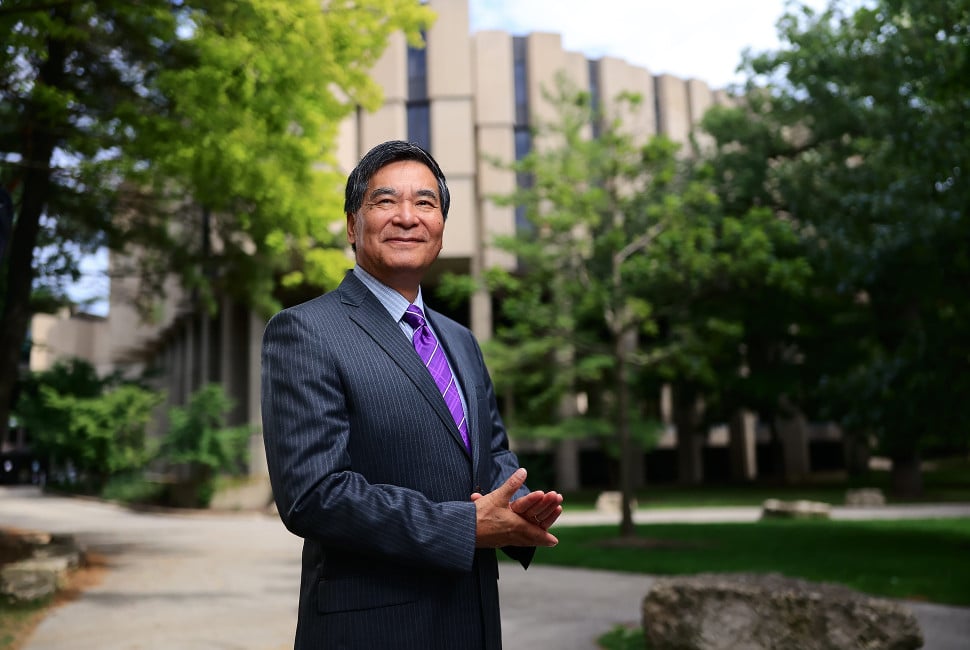
Dartmouth Prof. Brendan Nyhan spoke at Northwestern on Monday as an Institute for Policy Research visiting scholar. The political scientist discussed his research on how media challenging election fraud misinformation often fails to reach the public.
His research aimed to explain why high-profile misinformation, such as the belief of election fraud in the 2020 election, is so persistent and pervasive. Nyhan analyzed the web browsing history of study participants as the basis for his study.
The visiting scholar was introduced by political science Prof. Laurel Harbridge-Yong, the associate director of the IPR. Harbridge-Yong said Nyhan was selected by IPR due to his research on political misinformation and his interdisciplinary work towards bringing his research to the public.
“What I really appreciated was the ability to leverage this new data source that allows him to look beyond the level at which we might have previously been able to look at this question, by digging into the individual people and where they’re getting their numbers,” Harbidge-Yong said.
The Dartmouth professor began his talk by describing the “unprecedented attack” on the legitimacy of the American election process in the 2020 presidential election and how the belief in those claims has remained relatively sticky.
He brought up a Bright Line Watch study, which analyzed whether people think former President Joe Biden was the rightful winner of the 2020 election. The study showed that immediately after the 2020 election, only one in four Republicans said Biden was the rightful winner. According to Nyhan, these numbers did not budge significantly over years of increased media coverage on misinformation.
Nyhan said the false claim of election fraud in 2020 has been widely disproven and covered heavily, arguing that even people who do not follow the news should be exposed to content about the claim.
“If anything should be breaking through, anything should be reaching people,” Nyhan said. “It’s a story like this.”
His research found that the reason people retained misinformed beliefs about election fraud was due to an avoidance of or lack of exposure to media that challenged their perspective.
The research found no evidence of resistance to corrective information when people were exposed to it, suggesting that the problem is not that people reject corrections, but that they are “differentially inattentive” to them in the real world.
“A literature has emerged over the last 10-plus years that repeatedly and systematically shows that, conditional on exposure, fact-checking is effective,” Nyhan said. “People’s beliefs do tend to become more accurate when they encounter fact-checking or other forms of corrective information.”
Political science Prof. Alex Coppock said he attended the talk because Nyhan’s study was relevant to his own work in persuasion and how people’s attitudes change based on the kind of information they are exposed to.
Coppock praised Nyhan’s use of recent technology advancements in his research and expressed excitement about the precedent set for studying participants’ internet history.
“Nyhan is an internationally renowned scholar of misinformation, so I would not miss this talk,” Coppock said.
Email: [email protected]
X: @caylalc
Email: [email protected]
Related Stories:
— Two NU professors present unpublished research on well-being of Jewish college students
— U.S. climate advisor says ‘dispense the gloom and doom’ around climate change at NU Kellogg lecture
— Prof. Kate Weisshaar presents research on gender inequality in the workplace at IPR colloquium