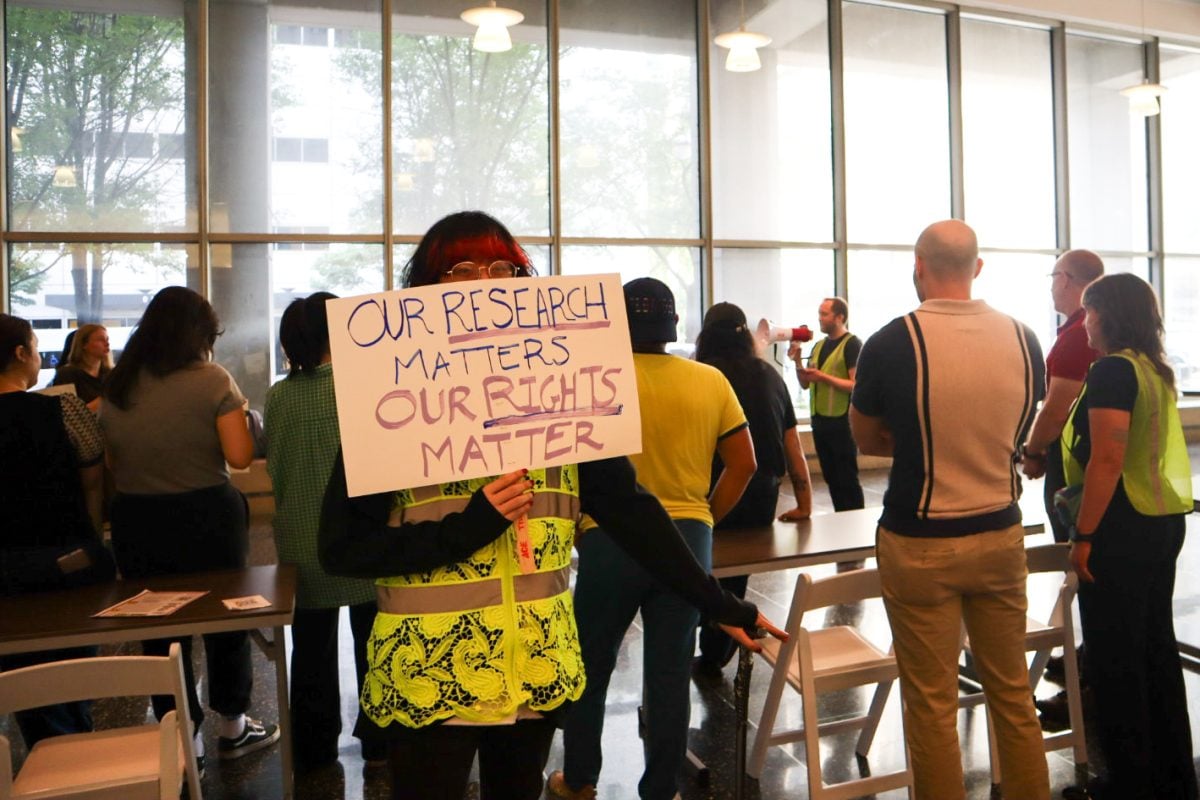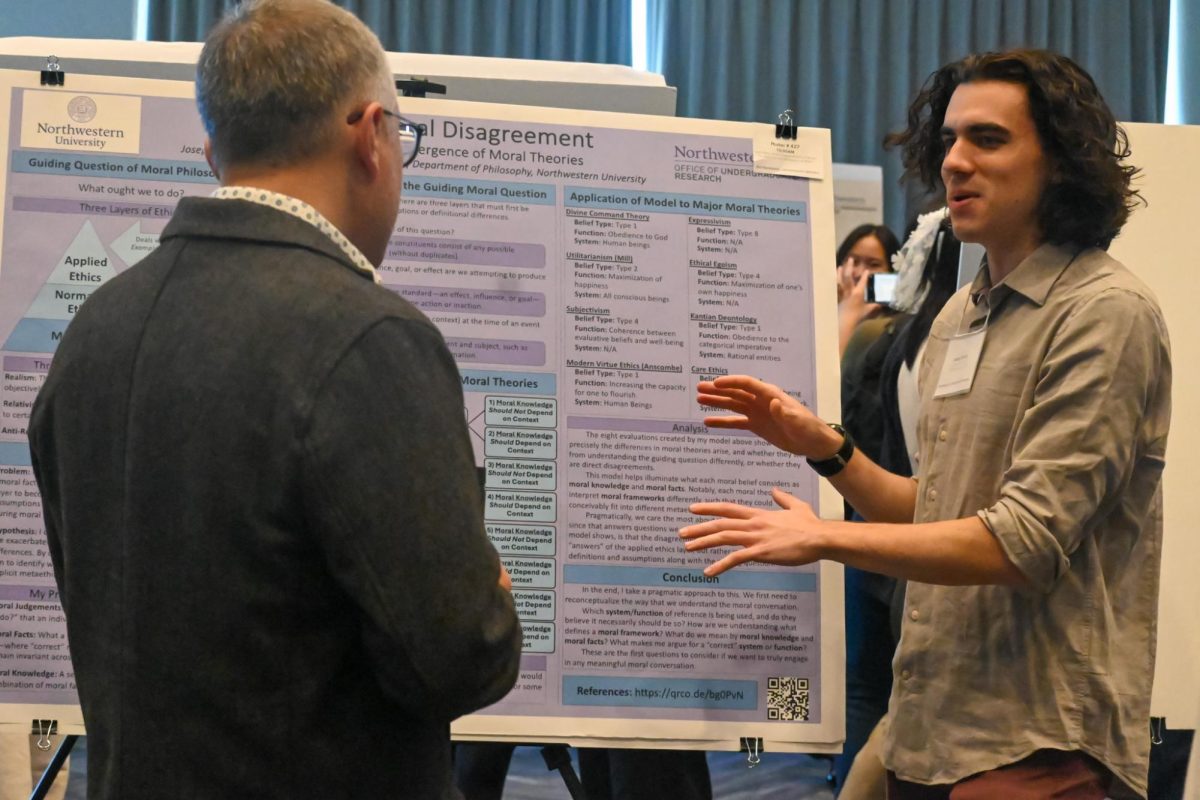
Northwestern’s Office of Undergraduate Research hosted its annual Undergraduate Research & Arts Exposition at Norris University Center on Friday.
The exposition, co-sponsored by the Northwestern Undergraduate Research Journal, was an opportunity for students across research disciplines to share their work, according to Weinberg sophomore and incoming NURJ Editor in Chief Aparnaa Ananthakrishnan.
The event featured more than 200 presentations, featuring topics such as American history, neuropsychiatric diseases and marine life.
“(When I was presenting), the person next to me had done research on music history in the United States,” Ananthakrishnan said. “Mine was in STEM … It’s really, really cool — the fact that you can have so many people who are interested in such different things to show their findings.”
Friday’s event was divided into four hour-and-a-half sessions of oral and poster presentations. During poster presentation sessions, undergraduates stood by their poster as attendees walked around. Researchers delivered oral presentations for 8 to 10 minutes to a larger audience.
Ananthakrishnan presented her poster in the morning on the role of macrophages — white blood cells that kill microorganisms — in mediating chronic rejection of heart transplantation.
“I’m very proud of the work I’ve put in with my research, and it’s amazing to present my findings with faculty and other students on campus,” Ananthakrishnan said.
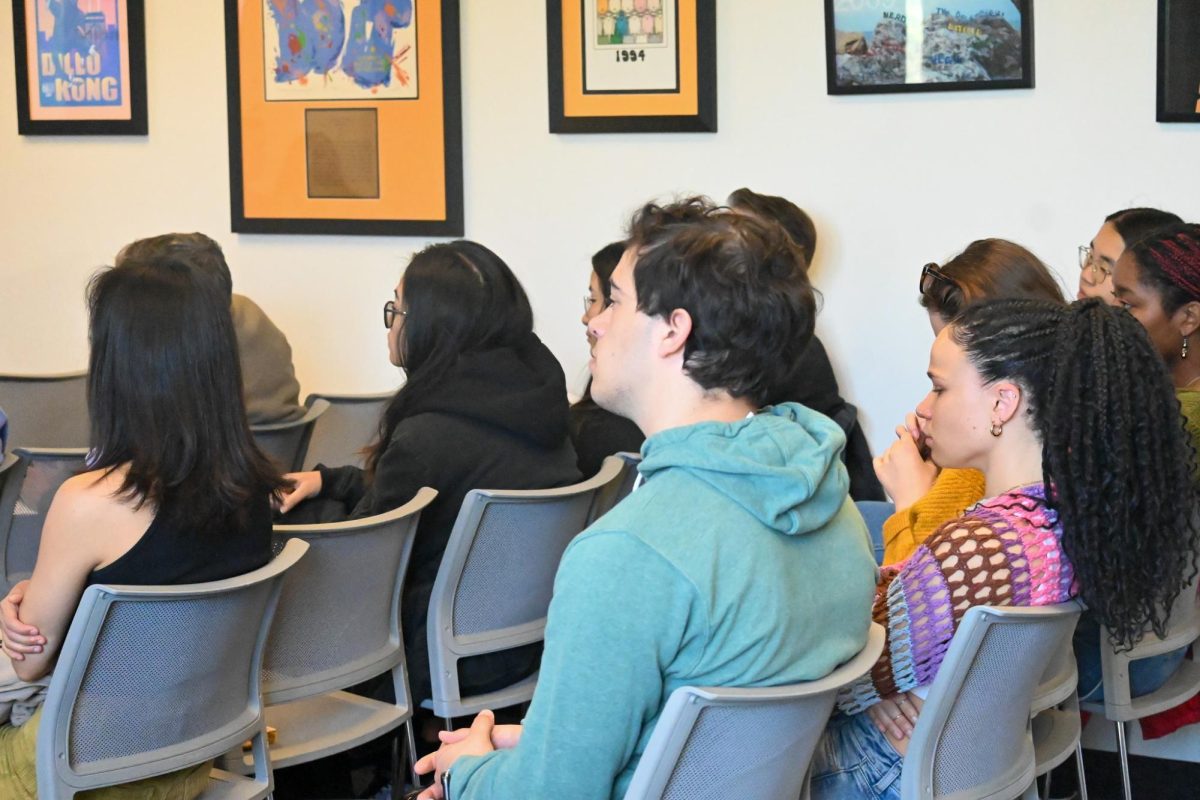
NU undergraduates could submit presentations under many project types, including senior theses, classwork and extracurricular activities.
Weinberg senior Neha Gupta studied national protocols for psychiatric care for emergency medical services. The topic was inspired by her experience as an emergency medical technician.
Gupta began her research project independently and a lab she works at paired her with a mentor.
“My biggest takeaway from doing research is: If you take initiative and really care about a topic and you show up, someone’s going to want to help you,” Gupta said.
By participating in the exposition, undergraduates not only received feedback on their presentations and findings but also cultivated their future career paths.
Gupta said her research experience and preparation for the exposition contributed to her decision to work at the National Institutes of Health after graduating.
NU undergraduates and the presenters’ friends and families — many possessing no research background — attended the exposition.
Weinberg sophomore Zach Long, who focused his research on improving the sustainability of propylene production, said he presented at another symposium months ago where he had an audience of mostly judges. In contrast, at Friday’s exposition, he spoke to many more students, one of his professors and even a patent lawyer.
Long said he enjoyed the opportunity to talk to both professionals in the field and educate peers less familiar with the complexities of research.
“(Presenting at the exposition) has been really fulfilling,” Long said. “When I’m in the lab, it’s hard to realize the bigger picture. … When I hear people that are excited about what I’ve done and want to ask questions about it, it makes it all worth it.”
Email: [email protected]
Related Stories:
— Biosensor research at Northwestern detects water contaminants in Chicagoland area
— Northwestern receives $25 million donation to kickstart new mental health research institute