Six years ago, Evanston tied its landmark municipal reparations program to a novel revenue source: a tax on recreational cannabis. However, the promised revenue has failed to materialize.
In 2019, Evanston passed a 3% tax on cannabis sales, with the first $10 million in revenue earmarked for reparations to the city’s Black community for decades of racial housing discrimination.
Initial projections suggested the tax could generate about $1 million per year. Instead, it has produced closer to $100,000 — about a tenth of what the city anticipated — said former Ald. Robin Rue Simmons (5th), one of the architects of the city’s reparations program and a member of the Evanston Reparations Committee.
The city has previously declined to disclose the revenue generated by its cannabis tax, citing an Illinois law designed to protect tax confidentiality for businesses.
In 2022, Evanston committed another $10 million to reparations from its real estate transfer tax, which has provided the bulk of the program’s funding and ensured the city meets its $1 million annual commitment.
The city has used the funds to provide $25,000 housing grants to eligible residents and their direct descendants. So far, it has distributed $6.4 million in grants to at least 250 residents, according to data published in 2025 by the Reparations Committee.
In February, the city approved payments to 44 more eligible residents.
Despite the tax’s underperformance, using cannabis to fund reparations carried symbolic weight, Rue Simmons said. Data she obtained from the Evanston Police Department showed Black residents accounted for 71% of marijuana arrests, despite making up around 15% of the city’s population, she added.
“Because of the overpolicing in Black communities, the war on drugs and well-documented information on disparities in policing as it relates to marijuana, it was a very fitting tax revenue to use to repair harm,” Rue Simmons said.
In practice, this has not translated into significant revenue. Sales at Evanston’s two dispensaries have been lower than expected due to competition from neighboring municipalities and Michigan, where cannabis prices are lower, Rue Simmons said.
She added that Zen Leaf, one of the city’s two dispensaries, told her that the tax was hurting its sales. Zen Leaf declined to comment for this story.
OKAY Cannabis, the city’s other dispensary, consistently underperforms compared to its sister locations in neighboring municipalities such as Niles and Wadsworth, said Ashley Tolbert, the store’s general manager. OKAY’s parent company owns a location in Wadsworth that makes “triple” what Tolbert’s store does, she said.
However, Tolbert doesn’t blame Evanston’s cannabis tax. She said her customers do not mind paying a little more when they know that the money goes toward a good cause.
Instead, she attributed her store’s lower sales to Evanston’s zoning laws. While Illinois permits dispensaries to operate from 6 a.m. to 10 p.m., Evanston restricts them from 10 a.m. to 8 p.m. The city could increase its cannabis tax revenue by extending its operating hours for dispensaries, Tolbert said.
“People like to buy cannabis at all times of the day,” Tolbert said.
Another issue affecting the city’s cannabis tax is the prevalence of Delta-8, a THC extract often sold in smoke shops and CBD stores outside the state’s system of licensed dispensaries. Delta-8, typically sold in vapes and edibles, is marketed as a less potent alternative to marijuana. Most importantly, it is not subject to Evanston’s cannabis tax.
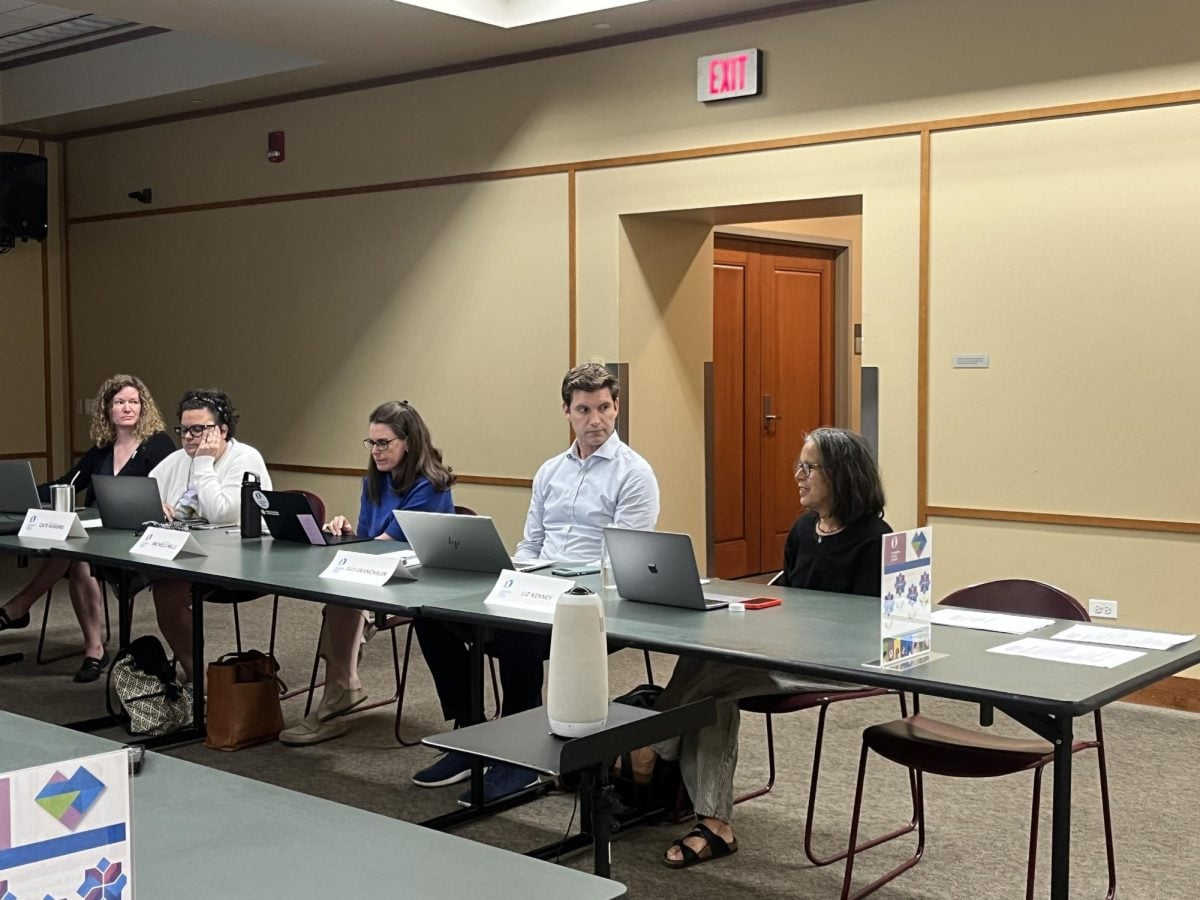
Some city officials have recently floated taxing Delta-8 at the same level as cannabis to raise more revenue for reparations. The Reparations Committee voted Thursday to officially recommend that the city tax Delta-8, even as the U.S. Congress seems likely to ban hemp-derived products, including Delta-8.
Rue Simmons said taxing Delta-8 would only incrementally expand the city’s reparations fund, not enough to close the funding gap currently being filled by the real estate transfer tax.
“The revenue wouldn’t be astronomical, but it would be revenue nonetheless, and more opportunity for us to deliver repair,” Rue Simmons said.
This new tax would affect a range of businesses that are not licensed as dispensaries, including Green Bay Smoke Shop in Evanston, which relies on Delta-8 for 30% of its revenue, according to the store’s owner, Muhammad Arsalan.
Arsalan said his prices are already higher than the city’s dispensaries, and a Delta-8 tax could force him to let go of his two employees.
The question of how best to raise revenue highlights a deeper flaw in the city’s reparations program, according to economists who spoke to The Daily.
SESP Prof. John Olson said the shortfall represents a fundamental problem with excise taxes — also known as “sin taxes” — a type of sales tax that targets specific goods like cigarettes, soda or cannabis. Excise taxes create opportunities for “leakage,” Olson said, meaning consumers will buy alternative products or shop elsewhere to avoid the tax.
“Excise taxes generally are unstable forms of revenue,” Olson said. “Prices fluctuate. And so if you want to have a permanent or semi-permanent policy, then you would want to have a stable, more permanent funding mechanism for that.”
Kellogg Prof. Therese McGuire, an expert on public finance who sits on the city’s Finance and Budget Committee, questioned the funding structure itself.
She called the earmarking of tax revenues for specific expenditures a public policy “bugaboo” that she teaches her Kellogg MBA students to avoid.
“You should try to raise revenues for anybody — the city of Evanston or the state of Illinois — in the most efficient, equitable, simple way you can,” McGuire said. “And then you’ve got a pot of money and spend it the way your residents most want it to be spent.”
Whether the city manages to expand its cannabis tax base, Olson said he thinks “most economists” would agree that a “more broad-based, more stable” revenue source would be better economically for the city.
The city declined to comment on the status of the fund or the cannabis tax, citing an ongoing lawsuit by conservative activist group Judicial Watch against the reparations program.
“At the end of the day, the city has to make money as well,” Arsalan said.
Email: [email protected]
X: @MaxTuretzky
Related Stories:
— Lawsuit against Evanston’s reparations program allowed to proceed
— Reparations Committee passes recommendation to establish Delta-8 tax
— Reparations Committee announces 44 new payments, explores Delta-8 tax