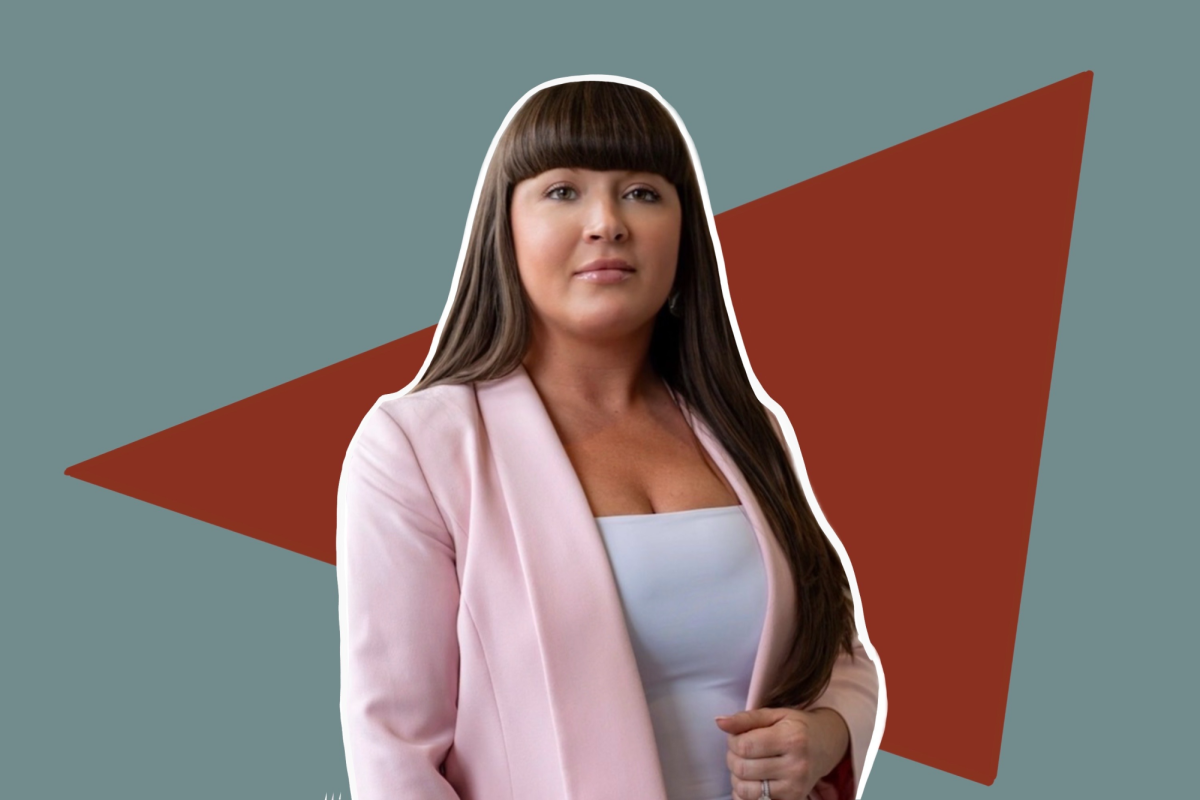
University of California, Santa Cruz Prof. Caitlin Keliiaa presented on the Bay Area Outing Program at the Center for Native American and Indigenous Research’s Winter Quarter keynote Thursday evening.
Held in Kresge Centennial Hall, the keynote centered on Keliiaa’s 2024 book, “Refusing Settler Domesticity: Native Women’s Labor and Resistance in the Bay Area Outing Program,” and her work uncovering the program’s history.
“Even that is still the tip of the iceberg,” Keliiaa said. “There’s so much more that we need to know out there about the extent of the federal Indian boarding school system.”
The Bay Area Outing Program, which gained traction in 1918 and ended in 1942, was a federally-funded initiative in which over 1,000 Native American girls and women were recruited from U.S-Indian boarding schools to work as live-in housemaids in homes across the San Francisco Bay Area region.
Keliiaa said the program placed them in households through formal labor contracts that framed the work as educational training while requiring them to perform domestic labor for low wages. These wages were often further reduced by deductions sent back to boarding schools and controlled by administrators, she added.
“This is absolutely labor exploitation,” Keliiaa said. “This is child labor, no matter how pretty you try to make it with a contract.”
To write her book, Keliiaa said she combed through thousands of archival files documenting Native American girls who participated in the program.
Keliiaa said she first encountered the records while in her Ph.D. program at University of California, Berkeley, when she had initially planned to continue language research based on her master’s thesis. Instead, the files — which detailed the girls’ placements, wages, tribal affiliations and correspondence with administrators — led her to shift her focus to uncovering the history of the program.
“When I saw these files, I was like, ‘There’s such a story here, and I really want to tell it,’” Keliiaa said. “That’s what you see today. That is the bulk of this book, and it really took me on a journey I never expected, but something that I since felt was really important, that their story needed to be out there, that people needed to hear it.”
Event organizer and CNAIR Program Assistant Michaela Marchi, who is Italian, Filipina and Isleta Pueblo, said they invited Keliiaa to speak because her book was previously discussed in a book club sponsored by the center.
“This is the first year that we are following our book club selections with bringing the authors in,” Marchi said. “It’s a really nice approach to elevating their work because it gives our community a chance to engage a little further and to continue the conversation with them in a deeper, more meaningful way.”
The event was part of CNAIR’s yearlong programming theme of Indigenous feminisms and was followed by a Q&A and reception.
Second-year Ph.D. student in sociology Katie Taylor, who identifies as Muscogee Creek, is a part of the Native American and Indigenous Studies Cluster of her degree curriculum.
Taylor said she appreciated learning about an aspect of Native American boarding school history she had not encountered before.
“Growing up Native, you hear so much about boarding school history,” Taylor said. “There’s so much that has been written about it. I just learned what the Outing Program was for the first time a month ago, and that feels so crazy to learn about the scale of it. It’s really mindblowing.”
Taylor added that conversations like Keliiaa’s keynote are important as the U.S. continues to reckon with the legacy of federal boarding schools.
Keliiaa said research on outing programs remains limited, and the system is likely far extended beyond what historians currently know.
“I’m just talking about one outing program in the entirety of the scope of outing in the United States,” Keliiaa said. “This is where I’m like, ‘So much more work has to be done about these programs.’”
Email: [email protected]
Related Stories:
— Northwestern scholars celebrate Indigenous knowledge, heritage at research presentation
— Center for Native American and Indigenous Research hosts 6th annual symposium