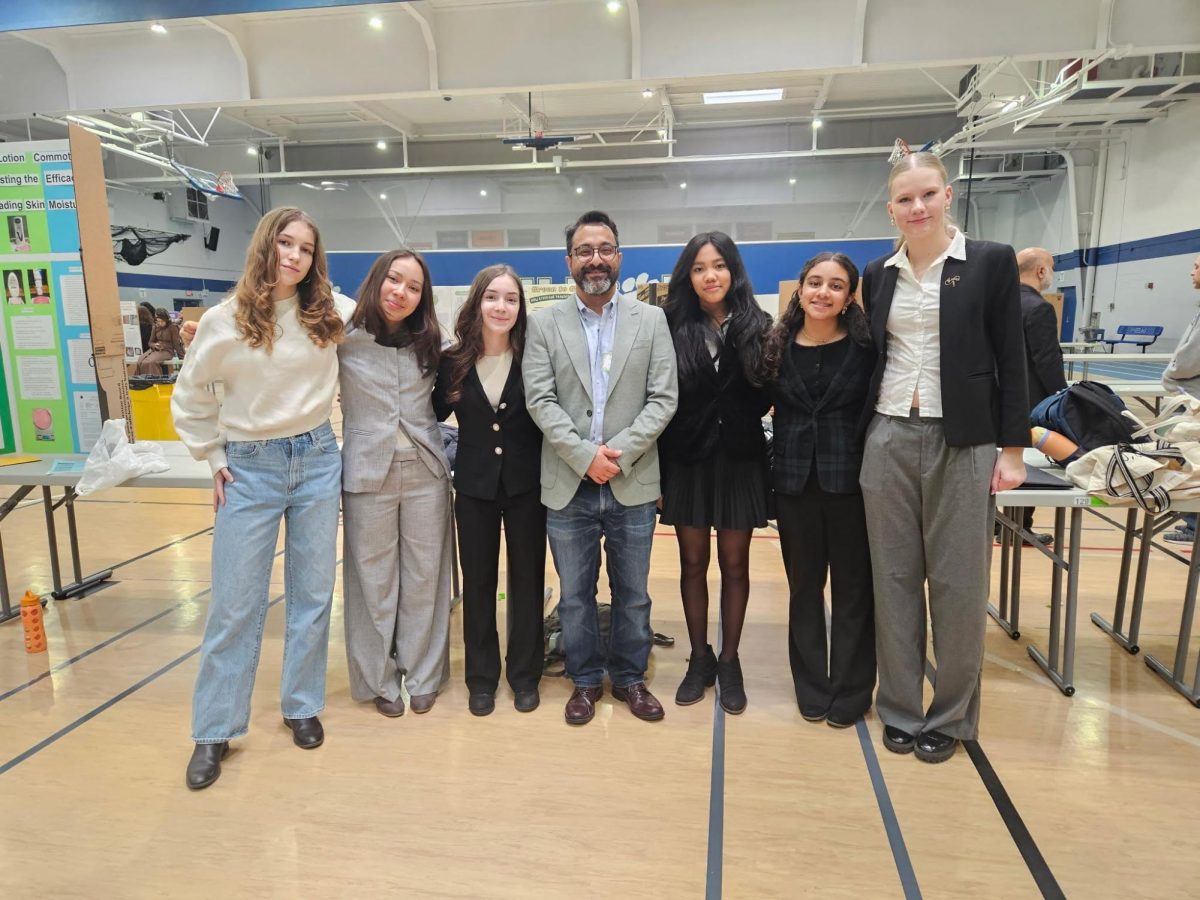
When Anuj Chopra, a middle school science teacher at Pope John XXIII School, was growing up in India, his parents always emphasized the importance of education. Now he’s made teaching others his life’s mission.
“We were always told that education is the only way to change your destiny,” Chopra said.
Chopra is one of 30 finalists for the 2026 Golden Apple Award for Excellence in Teaching. The statewide award recognizes “outstanding teachers for having lasting, positive effects on students’ lives and school communities,” according to a Feb. 25 news release from the Golden Apple Foundation.
With more than 15 years of teaching experience, Chopra said he aims to “inspire curiosity” and “build confidence” in each of his students.
Alan Mather, the president of the Golden Apple Foundation, said Chopra emulates the “engagement” the group looks for in teachers.
“When we say hands-on learning, it’s really getting students to understand the relevance of that content or that subject area to their lives,” Mather said. “I think what Dr. Chopra has done so well is to make learning relevant.”
Chopra moved to the U.S. in 2021. He worked as an adjunct lecturer at Northwestern before finding his “passion” for teaching young minds.
Teaching his son at home inspired him to teach children when they’re “starting their journey,” Chopra said.
“I thought that makes a bigger imprint and makes their careers better at a young age than training the undergraduate kids who already know what they want to do,” he said. “I felt like this was more rewarding.”
In his classroom, Chopra said he prioritizes curiosity and works with students to better understand which concepts are difficult for young learners.
For students with learning differences, Chopra said he adapts to their needs by providing additional support, including supplying diagrams and encouraging students to use art to demonstrate their “scientific skills using different other means.”
“We basically tell ourselves, as well to everyone, that being autistic, having ADHD or being dyslexic is not a restraint. It’s not a problem,” Chopra said. “Einstein had dyslexia. These specially-able brains changed the entire world, and we see that in them.”
Chopra said he makes sure to educate his middle school students about the importance of diverse voices, especially in scientific history.
Mary Maloney, the principal of Pope John XXIII School, hired Chopra when he first started at the middle school in 2023. She said he “elevates the level of actual science.”
“He truly is a scientist, and he is a teacher, and that’s a rare and wonderful combination to find,” Maloney said. “Our students are very lucky to have access to the content that he’s providing. He helps them to understand very complex, scientific concepts.”
Chopra said it is rewarding to witness his students apply classroom learning to their everyday lives. After a lesson on climate change and energy conservation, for example, he noted that many of his students began turning off the lights at home. These implementations, Chopra said, give him hope to “build a community which thinks scientifically.”
Above all, Chopra said he strives to guarantee his students “learn and go with the confidence for their next journey.”
“What keeps me motivated is their smile,” Chopra said. “It’s all about their smile. When they go from the classroom and say, ‘Thank you, Dr. Chopra,’ and when they say, ‘I got it. I learned it,’ that is something special. I’ll never forget that warmness.”
Email: [email protected]
Related Stories:
— Kindergarten teacher Meghan Rice honored with Golden Apple Award
— ETHS English teacher Anita Thawani Bucio encourages inclusive, equitable learning spaces