Content Warning: This review includes graphic content and spoilers.
Two years ago, I heard little Hind Rajab’s voice for the first time.
It’s hard to describe what that moment felt like. Following Palestinian journalists on social media meant bearing witness to constant carnage, and, at the time, it had been over a year of blood feeds almost daily. I’d become numb to seeing death through the screen.
But for some reason, this little girl’s story felt different.
On Jan. 29, 2024, 5-year-old Hind and her aunt, uncle and four cousins attempted to flee the Tel al-Hawa neighborhood in Gaza City after the Israeli Defense Forces ordered their evacuation. Before they could escape, an Israeli tank fired at their car in broad daylight, killing everyone inside but Hind and her 15-year-old cousin, Layan.
The Palestine Red Crescent Society, a Palestinian National Society that provides humanitarian aid, was made aware of their whereabouts by a relative in Germany and was able to call Layan. She was killed while on the phone, leaving Hind alone and surrounded by her dead family for hours.
Recordings of Hind’s following phone call with the PRCS garnered international attention and sparked widespread shock. Ultimately, that call — her voice — survived the wreckage; she did not.
Hind was five years old when she was killed by the IDF. The car she was found in had 335 bullet holes.
“The Voice of Hind Rajab,” a 2025 film written and directed by Tunisian filmmaker Kaouther Ben Hania, recounts the harrowing hours before her death as the PRCS attempted to rescue Hind. The film was distributed to U.S. audiences in December.
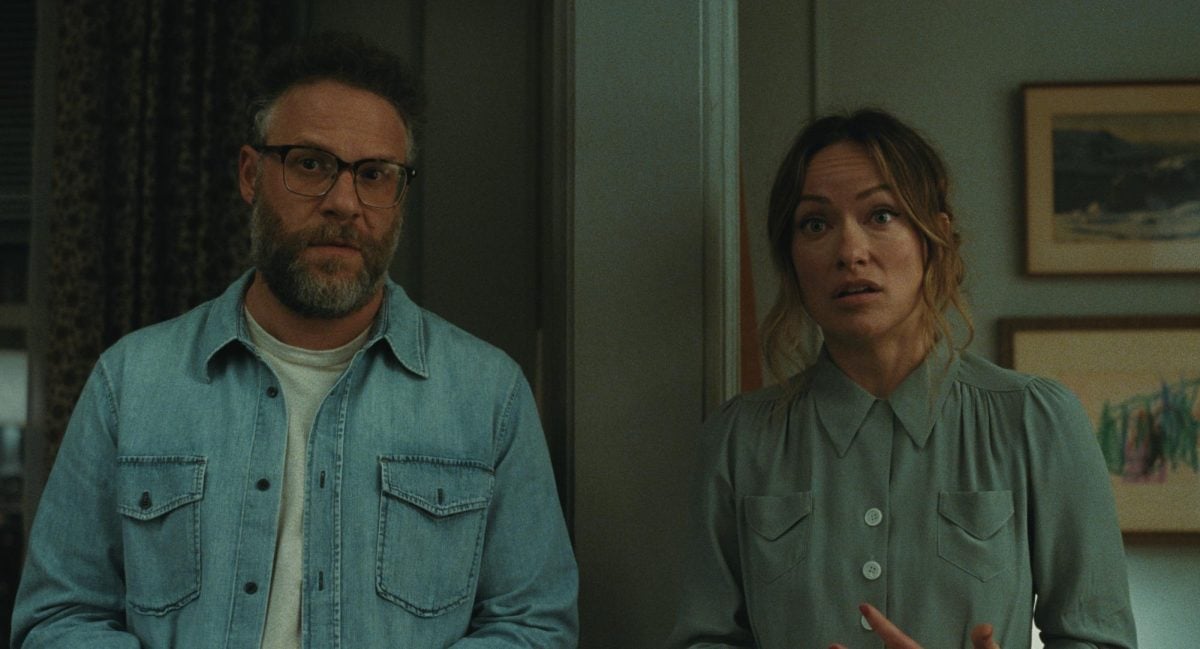
The film begins with dispatcher Omar Alqam (Motaz Malhees), who makes the initial call from the PRCS emergency center in Ramallah, West Bank. He is the first to speak to Layan and later to Hind. What follows is hours of grueling stress and building dread as the possibility of saving her dwindles.
This film, however, is more than a dramatization of real events. Real recordings of Hind’s voice play side by side with the actors representing emergency workers. The file numbers of the recordings are displayed in the top right corner of the screen.
The first recording played in the film is of Layan screaming, “They’re shooting at us!” Real gunfire and explosions are scattered throughout the calls.
Of course, the fear in Hind’s voice is suffocating. Her cries for help, her fear as night fell and her genuine confusion as to why nobody can come save her break the viewer. But moments like when she tells Omar she’s in the butterfly class in her preschool or when she recites verses from the Quran remind me of her innocence.
The brilliance of this film lies in its directorial choices. The film isn’t bloody, as the entire movie is set at the Ramallah call center. Viewers never see Hind nor Gaza. Yet, the violence is inescapable. Even if you avert your gaze, you can still hear her terror.
There is no comfort in telling yourself this is just a movie. There is no fourth wall; Hind is the entirety of this film. Every time she speaks is a reminder that she was once alive. It’s as though you are on the call with her. The most devastating part is knowing her voice will soon be gone, that she will be killed before she finds relief.
In that way, this film refuses to let you deny Hind her story. You are unable to cast her off as a statistic, an unfortunate casualty or an arbitrary victim of war. Her death was cruel and avoidable, not random.
At one point in the film, the worker’s supervisor, Mahdi M. Aljamal (Amer Hlehel), and several others begin saving the phone call recordings to share with the media. When Hind says she’s hurt, Mahdi tells one of the workers to publish that she said so. This pushes Omar over the edge, prompting him to pull up his social media and scroll through the countless images of rubble and of “children’s bodies ripped apart on the side of the road.”
“Do you really think the voice of a terrified little girl will spark their empathy?” Omar asks. He makes a good point: Why would a child’s voice shock the world’s conscience when two years of carnage hadn’t? I’m still not sure.
At the end of the film, you see the car Hind and her family were in. You see the bullet holes and the blurred bodies. You see the familiar carnage. Yet, you hear nothing. The silence is consuming. And as the quiet continues, you realize this isn’t just Hind’s silence.
She is one of the over 20,000 children killed in Gaza from October 2023 to early February 2026, according to the United Nations Children’s Fund. She wasn’t an anomaly. The silence at the end of the movie is the silence of every one of 20,000 children. Each one once had a voice; each one was more than collateral damage.
If you haven’t heard her voice yet, I encourage you to watch this film or listen to those phone calls.
Email: [email protected]
Related Stories:
— Palestine Week opens with art building, keffiyeh history lesson
— Pro-Palestine students, Evanston community members commemorate Nakba Remembrance Day with vigil