Supplying Narcan at the library is a “no-brainer,” according to Ellen Riggsbee, the marketing and communications manager for the Evanston Public Library.
“For Evanston and many public libraries in Chicago, we see this need in our spaces,” Riggsbee said. “We see vulnerable populations coming in and out of our doors every day.”
Since 2023, Evanston has provided Narcan supplies in EPL’s Main Library, the Robert Crown Community Center, the Evanston Ecology Center, the Levy Senior Center and the Fleetwood-Jourdain Community Center. The city installed the five emergency opioid overdose boxes in response to an increase in overdoses and deaths during the coronavirus pandemic.
Now, EPL is expanding its services to “provide care to the community” in response to a recent Illinois law, Riggsbee said.
Effective in January, the Illinois Local Library Act was amended to require all public libraries to “maintain a supply of opioid antagonists.” They specifically have to carry naloxone, commonly known as Narcan, and have at least one Narcan-trained library personnel available at all times.
The new state law did not introduce a new concept to Evanston libraries, but instead expanded its resources, Riggsbee said.
Public libraries in Evanston now have naloxone available on each floor as well as a full staff trained to administer the medication. Prior to the law, Narcan was only offered on the first floor of the libraries.
“I think our staff is relieved to be trained in this response, knowing that we have this method to help people, if we can. I mean, they’re all about helping people — that’s what their jobs are,” Riggsbee said. “The more training we can provide them and tools to use in emergency situations, I think the happier everybody is.”
While the staff knows how to identify and respond to an overdose, Riggsbee said calling 911 is always the library’s first response.
Natalie Larson, coalition coordinator at PEER Services, a non-profit focused on substance use prevention, said that harm reduction tools should be “accessible to everyone.”
“A lot of people think that, ‘Oh, I don’t see it, so it’s not happening where I live.’ But something that we really like to emphasize is that opioid overdoses can and do happen to anyone, anywhere, at any time,” Larson said.
There were 157 opioid-related overdoses from 2021 to 2025 in Evanston, with a decreasing number occurring every year, according to Evanston Fire Department records obtained through a Freedom of Information Act request from The Daily.
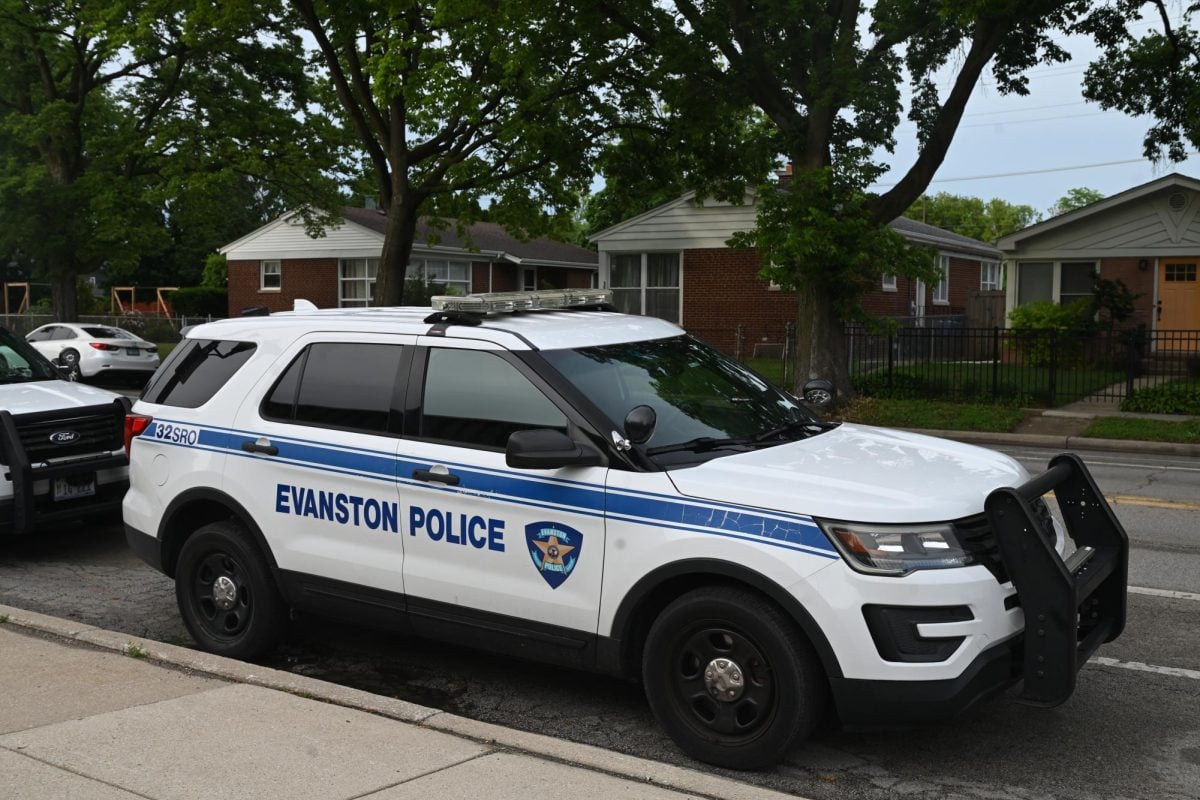
Evanston Police Department Cmdr. Ryan Glew said opioid-confirmed overdoses spiked in 2020 and 2021, but rates have declined since then, alongside national rates. In Evanston, Glew said, opioids appear to account for 73% of substance overdoses, mirroring the nationwide trend of 76%, as reported by the National Center for Drug Abuse Statistics.
Still, Larson said these numbers are “severely under-reported.”
“A lot of the reason why they are under-reported across the U.S. is because we don’t have a clear system nationally for EMS, for departments of public health to put the information on overdoses into one platform.”
Larson cited a study published in the February 2025 edition of Annals of Epidemiology, claiming that opioid involvement in drug-related deaths was underestimated nationally by 20 to 35 %.
Glew said EPD’s response team’s method for classifying opioid overdoses is “not gospel.”
“Opioid use is determined by self-report toxicology. Or, if there was a death, we would get a medical examiner,” he said.
Glew added that the department also uses paramedics’ observations and effective symptom reversal using Narcan as signals of opioid overdoses.
In an effort to improve overdose documentation, in January, the Illinois General Assembly passed legislation sponsored by State Sen. Laura Fine (D-Glenview) that aims to strengthen Illinois’ opioid overdose reporting standards.
The bill introduced the Overdose Detection Mapping Application Program to first responders’ procedures. The online platform is designed to procedurally improve overdose reporting by requiring officials to log suspected overdoses directly to the site.
Evanston set up an ODMAP account in late 2018, but hasn’t reported any numbers in “some time,” according to a city staff member responding to The Daily’s FOIA request.
Without a widespread national system, Larson said opioid overdose rates look different from state to state due to varied standards. She said Illinois’ new law is a “phenomenal thing.”
“This bill will significantly increase our accuracy in reporting, at least across Illinois,” she said. “Illinois can serve as a model for other states and other counties for them to standardize their reporting mechanisms.”
Larson said PEER Services has been working to expand access to harm reduction materials and increase substance abuse prevention education for youth and community members across the city.
In the past, Larson said the nonprofit has hosted Narcan training at Evanston Township High School and distributed Narcan to community fridges in Evanston. Still, Larson said further change is needed on the legislative end.
“What we need to focus on is not only just increasing access, but also removing that stigma by getting policymakers’ support of bills such as these,” Larson said. “I think policymakers have a huge impact on our public opinion and the stigma around opioid overdoses.”
Email:[email protected]
Related Stories:
— State legislature aims to strengthen standards for reporting opioid overdoses
— Northwestern-led research team finds backslide in national overdose decline through data dashboard