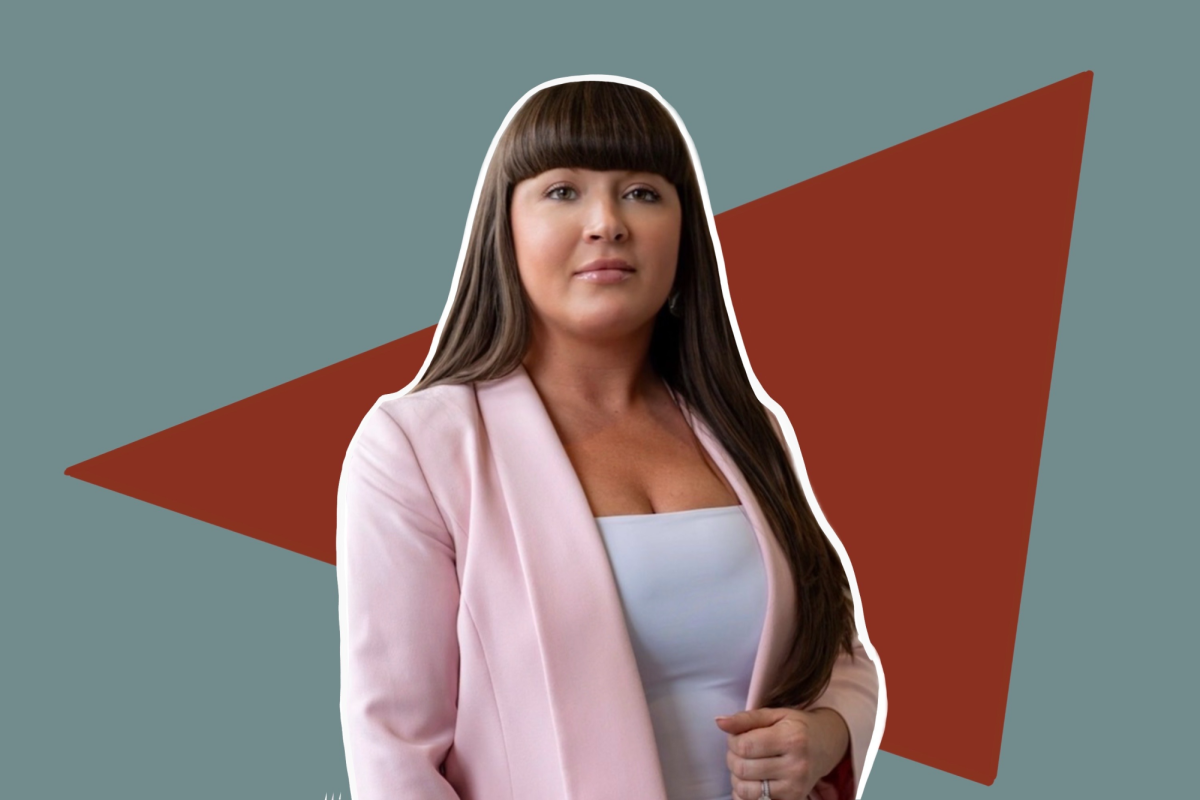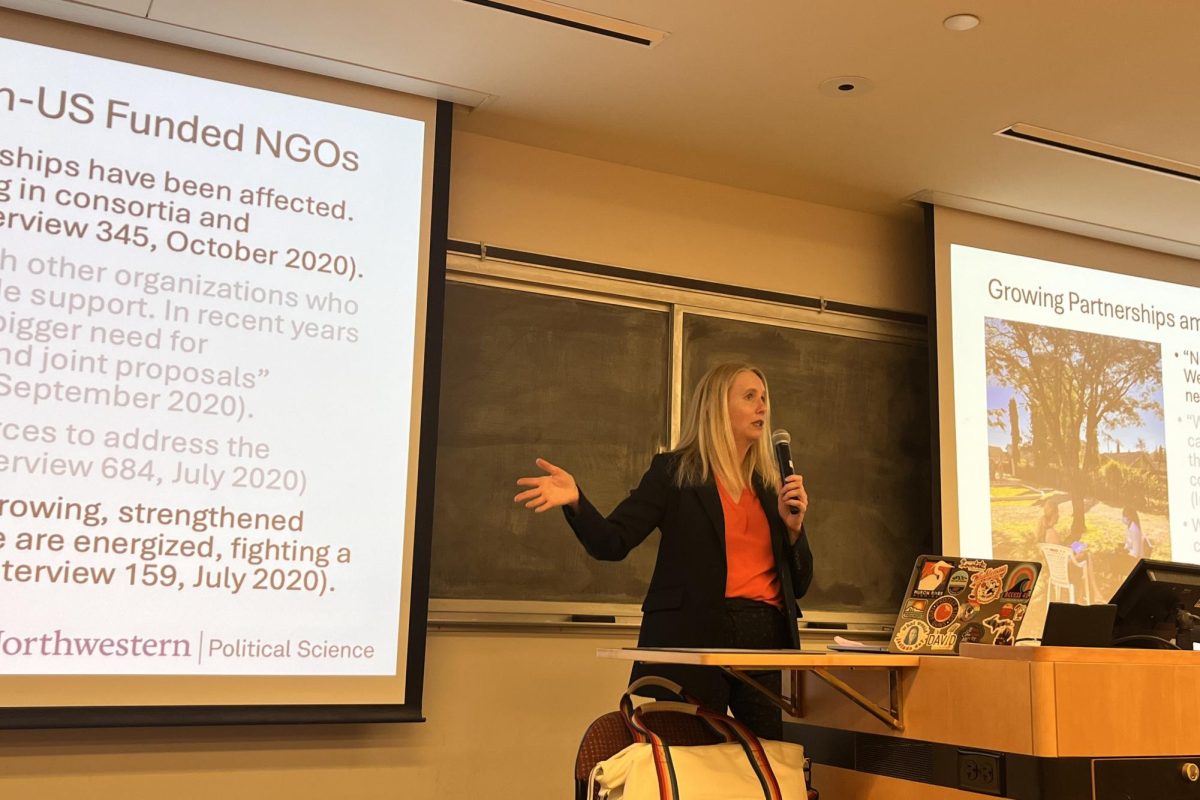
Northwestern political science and global health studies postdoctoral scholar Kelly Hunter talked about the impact of U.S. foreign aid policy on women’s sexual and reproductive health in Kenya in a Friday event hosted by the Program in Global Health Studies.
Hunter discussed how the State Department’s absorption of USAID on July 1, as well as the Global Gag Rule, affected Kenya’s sexual and reproductive health. Hunter said U.S. aid contributed to 25% of Kenya’s health budget, highlighting how the loss of the department affected the country.
“This withdrawal of USAID has a huge impact on these countries that rely on the U.S. for a lot of their government budget,” Hunter said.
Anthropology Prof. Peter Locke, who is also the co-director of undergraduate studies for the Program in Global Health Studies introduced Hunter.
He explained the nature of her work to an audience of students and faculty, describing how she uses qualitative and quantitative data to explore the impact of policy on women’s sexual and reproductive health in low to middle income areas.
“Dr. Hunter’s research highlights the interconnectedness of gender, health and international politics,” Locke said. “(It) shows that changes to health care access produce life altering results.”
The presentation then shifted focus on to the U.S.’ 1984 Global Gag Rule, which restricted U.S. foreign aid from going to NGOs that perform or promote abortions, even with non-U.S. funding.
“We call that an exogenous shock,” Hunter said. “This means that it is a funding decision that is made domestically, within the U.S., but it impacts what’s going on the ground in the low and middle income countries that receive the funding.”
She said the United States’ recent Global Gag Rule particularly affected inter-Nongovernmental Organization relationships in Kenya, leaving NGOs to scramble against each other for continued fiscal support — and to seek non-U.S. funding because of the rule.
She added that sexual and reproductive health NGOs have strong relationships with the Kenyan government, citing constitutional protections like the legalization of abortion.
“So we’re talking about an area (where) having funds withdrawn for abortion would actually make a difference,” Hunter said. “Because there are abortions occurring in Kenya, there is also growing support for sexual and reproductive health.”
Weinberg first-year Kelia Naranjo-Champion attended the event due to her interest in global health, which she developed after taking one of Locke’s courses.
She described how the study has opened her eyes to the diverse living situations experienced by people of different backgrounds.
“When you look at health through a broader lens, you get to learn about different lived experiences across the globe that people can relate to,” Naranjo-Champion said.
To close, Hunter said other NGOs may react similarly to how NGOs in Kenya have responded to the USAID shutdown and the Trump administration’s implementation of the Global Gag Rule.
She said the NGOs she interviewed began introducing “innovative” money-making initiatives.
“They have a lot of energizing ideas, and they’re not down for the count,” Hunter said. “They are in this, and they are committed, and they are finding a way through.”
Email: [email protected]
Bluesky: @lucaskubovchik.bsky.social
Related Stories:
— Experts present research findings on Ukrainian public opinion
— Northwestern Prof. Elizabeth Shakman Hurd talks American border religion in new book