Neuroscientist Kevin Hellman initially came to Endeavor Health’s Evanston Hospital to research chronic pain in the brain stem. In 2013, he collaborated with researchers from the Gynecology Research Lab to produce a paper revealing menstrual pain as one of the biggest risk factors for developing chronic pelvic pain.
“I decided at that point that I really needed to dedicate my career, my scientific career, to figuring out what causes menstrual pain (and) what we can do to treat it,” Hellman said.
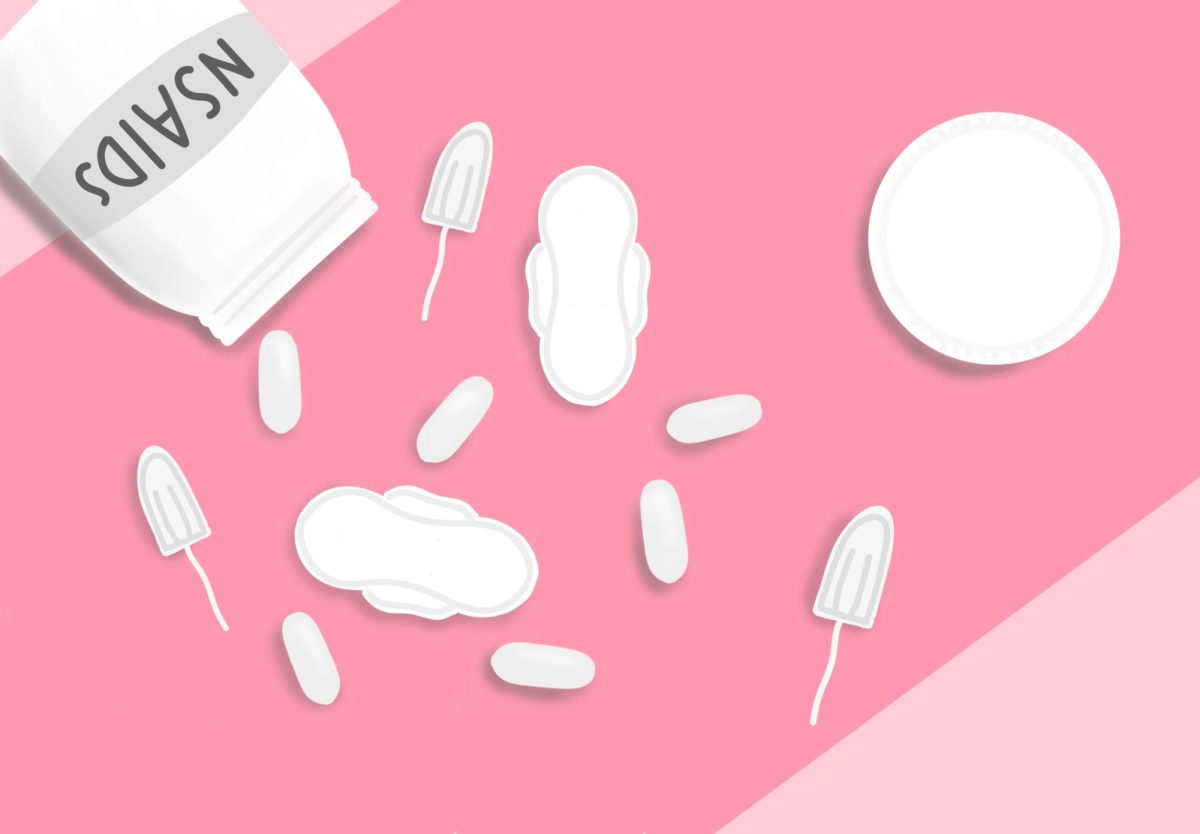
Today, Hellman is the principal investigator and co-director of the research lab’s ongoing NSAID HEAL study, which tests whether nonsteroidal anti-inflammatory drugs like ibuprofen and aspirin taken for short-term menstrual pain can prevent long-term menstrual pain and the development of chronic pelvic pain.
The research study began in April and is expected to run until July 2030.
The Gynecology Research Lab was founded in 2004 by co-director Dr. Frank Tu, who was invited by Evanston Hospital to begin more studies exploring the causes of pelvic pain disorders.
Tu estimates that pelvic pain disorders affect “as many as 25% of women” in the U.S. during their reproductive years. Through the lab’s research, he aims to reduce the chances for women to develop a “persistent” pelvic pain disorder.
NSAID HEAL is specifically testing whether taking Aleve, an NSAID containing naproxen sodium, before one’s period begins can reduce menstrual pain long-term.
“We’re gonna know whether this strategy of pre-treating menstrual pain is really a guideline recommendation,” Hellman said.
In a randomized controlled trial, the study assigned about 300 participants either Aleve or a placebo to take right before their periods alongside Tylenol as a back-up painkiller in smart pill capsules. The research team then assessed participants in different risk factors for menstrual and chronic pain through questionnaires and sensory tests before and after the trial.
This, combined with the frequency at which participants take both of their pills, will allow the team to conclude whether participants who pre-dosed naproxen sodium reported reduced levels of menstrual and chronic pelvic pain over a year.
Tu, the co-investigator of the NSAID-Heal Study, explained the study also investigates why NSAIDs may be ineffective for certain individuals. A Gynecology Research Lab paper from 2020 found that about 39% of individuals experience menstrual pains unresponsive to NSAIDs.
Tu said the research team wants to know which individuals are not responding to the drug to make treatments “more personalized” and “spur a better understanding of what causes menstrual pain.”
During the medication period, participants also provide menstrual fluid samples for the research team to test drug absorption rates and what other inflammatory molecules may be present in their uterus. NSAIDs reduce the production of prostaglandin, one of several observed molecules that may cause uterine pain.
The sensory tests, Hellman said, allow the team to measure respondents’ brain activities while undergoing pain sensitivity, light sensitivity and reflex testing before and after the study period. Hellman said tracking changes after participants take the medications will allow the team to better understand why some people experience more menstrual pains and a higher risk of developing chronic pain than others.
“We believe that there is a brain mechanism involved,” Hellman said. “NSAIDs may have limited helpfulness in a person that has their brain wired differently. That could be one of the reasons.”
The study is partially funded by the National Institute of Health’s Helping to End Long-term Addiction Initiative. The HEAL Initiative funds research addressing opioid use disorder and drug overdoses, as well as the prevention and management of pain.
Hellman and Tu both emphasized how menstrual pains can actively disrupt individuals from doing everyday tasks.
Weinberg first-year Vicky Khvan said during her period, she often has had to take higher doses of painkillers than recommended to get through her day.
“I don’t think there’s anything I can necessarily do about it,” Khvan said. “It’s just kind of been this way my whole life.”
Khvan added she has missed over 100 days of school due to cramps since getting her first period around 5th grade.
Tu said that he hopes people understand the need for more research and support around chronic pelvic pain and how it’s more than “just pain a few days a month.”
“When you talk to these people about it, it’s not just this thing for a few days,” Tu said. “There needs to be better research to make sure that we’re doing meaningful treatments for the right people.”
Email: [email protected]
Related Stories:
— Northwestern researchers explore unusual orgasm symptoms in new study
— Advocates and opponents consider next steps after ‘medical aid in dying’ legalized in Illinois
— Oakton College brings new opportunities for healthcare education to Evanston Hospital