Last updated Feb. 3 at 8:24 p.m.
Northwestern trustee Michael Sacks slammed Mayor Daniel Biss in text messages with former University President Michael Schill in April 2024 for refusing to send Evanston Police Department officers to make arrests and clear the pro-Palestinian encampment on Deering Meadow, according to a Wednesday letter to Biss from U.S. Rep. Tim Walberg (R-Mich.).
In the letter, Walberg, chair of the House Committee on Education and Workforce, asked Biss to provide the committee with more information about how the city is responding to alleged antisemitism on campus.
“Considering your recent interest in campus conduct and antidiscrimination efforts at Northwestern, the Committee requests a briefing on, in your words, ‘local law-enforcement coordination’ when it comes to antisemitic activity on college campuses in Evanston,” Walberg wrote to Biss.
Walberg’s letter to Biss, a frontrunner in the crowded Democratic field to represent Illinois’ 9th Congressional District, comes less than 50 days before the March 17 primary election.
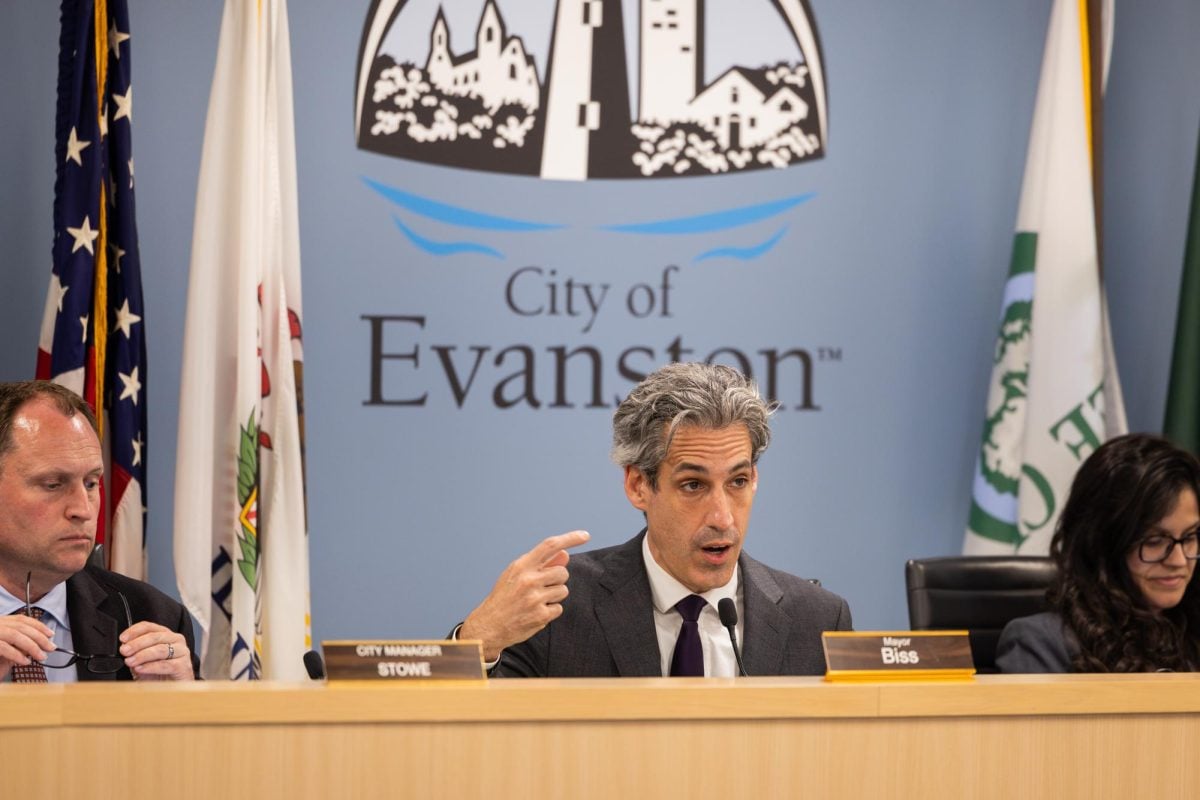
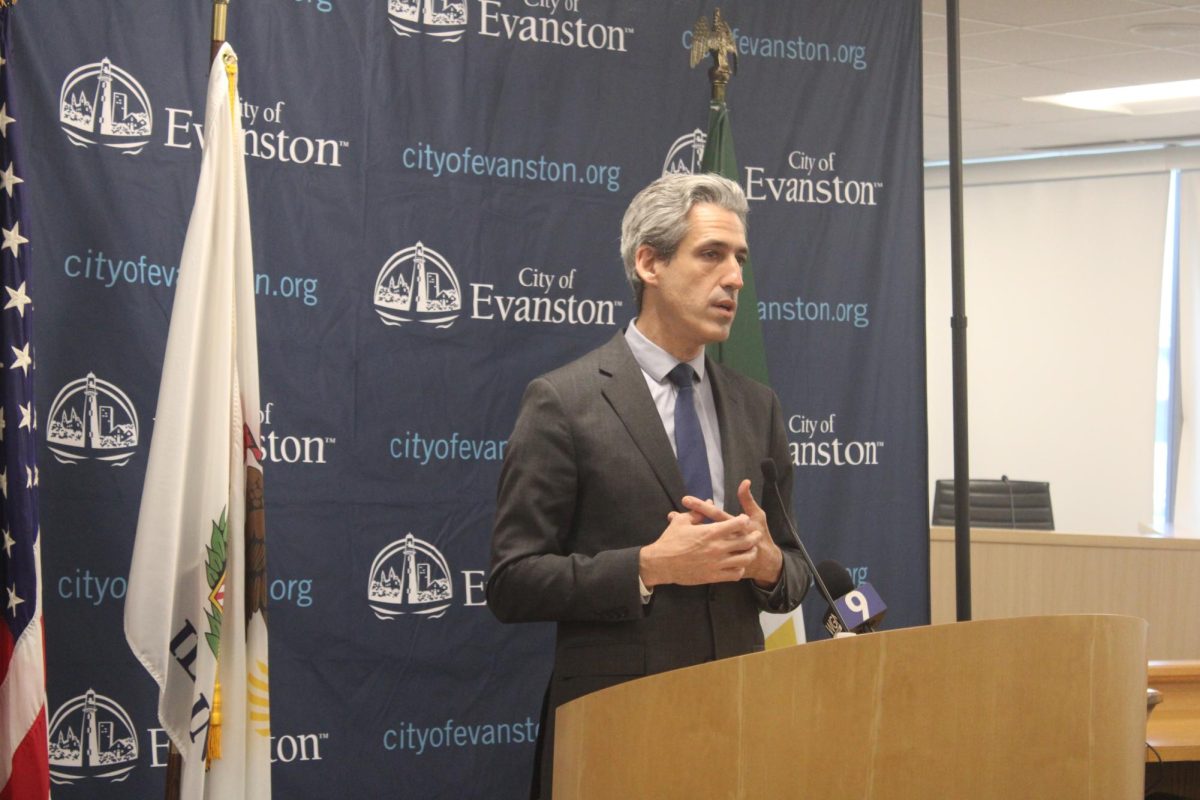
At a Thursday morning news conference at City Hall, Biss called the letter “a dishonest political attack.”
“But we are here today because that attack is an effort to go at the right to peacefully protest. This is an effort to use the very real danger of antisemitism to advance a political agenda,” Biss said. “I will say that personally, as a Jewish person, as a grandson of Holocaust survivors, I find it deeply, deeply offensive.”
Text messages attached to the letter show that on April 26, 2024, Schill wrote to NU’s Board of Trustees Chair Peter Barris that a plan “to arrest and put on probation” those at the April 25 to 29, 2024 encampment had been paused because NU had “too few police to safely get this done.”
In an interview conducted by investigators for the committee in August and publicly released in September, Schill said the University was “counting on the city of Evanston to make their policemen and women available,” citing an agreement between the city and NU.
“What happened was, that night, Thursday night, the mayor of Evanston called me and said he would not be sending in the police. I said to him, ‘We have a mutual aid agreement.’ He said, ‘You know, you can sue me if you want,’” Schill said during the interview. “So we lost the ability to use force to remove the tents.”
In an emailed statement to The Daily in September, Biss wrote that “it was clear there was no immediate threat to demonstrators or the broader community” and argued sending EPD officers to clear the tents “would have been inappropriate, unwarranted, and undemocratic.”
At the news conference, Biss again defended his decision not to intervene.
“After meticulously assessing the situation through the lens of public safety and the right to peaceful protest, we came to that conclusion,” Biss said. “We believed at the time it was the right decision. I believe today it was the right decision.”
The mayor said he was “in constant conversation and alignment” with City Manager Luke Stowe, senior EPD officials and others “throughout that multi-day period,” adding EPD officials warned sending city police officers to the encampment “might further inflame the situation.”
Biss also noted administrators and student demonstrators eventually reached an agreement to end the encampment peacefully. That agreement was terminated in November when NU struck a deal with the Trump administration to restore at least $790 million of frozen federal funds — a deal Biss and several other Evanston Democrats condemned.
Newly released text messages, attached to Walberg’s letter, show that Sacks sharply criticized the mayor’s decision in April 2024.
“Just off the phone with Michael Sacks. He guessed that Biss wouldn’t provide police support. He said you can’t trust him,” Schill wrote in an April 27, 2024 message to Greg Stripp, his chief of staff at the time. “Michael thinks Biss is likely to tell folks to shore up his progressive credentials.”
In another message the same day, Schill wrote to Stripp and Julie Allen, secretary to the Board of Trustees and advisor to the president, that news of “Biss not coming to our defense” had circulated. He wrote this was “not surprising,” adding the mayor had discussed his decision with unnamed members of “the Council and who knows who else.”
At the news conference, Biss said he couldn’t recall whether he had spoken to members of City Council on the evening of his conversation with Schill but confirmed he sought U.S. Rep. Jan Schakowsky’s (D-Evanston) advice during the encampment.
In an emailed statement to The Daily Thursday, Schakowsky praised Biss’ decision not to intervene and reiterated her support for the mayor’s congressional bid.
“Mayor Daniel Biss showed bravery and leadership by respecting students’ First Amendment rights and declining to deploy the Evanston Police Department in a way that could have undermined these rights,” Schakowsky wrote. “That principled judgment and defense of free speech is exactly why Daniel is uniquely qualified to represent Illinois’ 9th Congressional District.”
Biss explained Thursday “there’s no question” the encampment “was a challenging incident for the relationship” between the city and NU.
In a separate message to Schill, also on April 27, 2024, Sacks wrote Biss and Schakowsky are “not full throated supporters.” Neither the University nor a spokesperson for Sacks responded to The Daily’s request for comment on the trustee’s messages.
“I know Biss well,” Sacks wrote. “If the winds blow the wrong way he will throw you under the bus. No hesitation. Jan too.”
Walberg’s letter comes weeks after Biss sent a letter of his own to Department of Education Secretary Linda McMahon requesting clarity on how NU’s deal would impact Evanston. In it, Biss wrote that the deal will “inevitably affect” city policing and public spaces where community members and the University interact.
Invoking his denial of Schill’s request for EPD intervention during the encampment, Biss also asked for clarification on how the deal will influence responses to future demonstrations.
“Will federal officials be reviewing or influencing decisions about how protests are managed?” Biss wrote in the December letter, “Will federal compliance pressures impact local law-enforcement coordination?”
In Wednesday’s letter, Walberg wrote the briefing he is now requesting from Biss “will aid the Committee in considering whether potential legislative changes, including legislation to specifically address antisemitic discrimination, are needed.”
But Biss questioned the timing of Walberg’s message and accused Republicans of “trying to create a media circus.” The mayor added he first learned of the letter’s existence through a message from Fox News.
He also called the correspondence part of a “broader effort to criminalize free speech and crack down on protests,” referencing recent violence at the hands of Immigration and Customs Enforcement agents.
Biss pointed out Walberg’s top campaign contributor is the American Israel Public Affairs Committee, the country’s largest pro-Israel lobbying group.
AIPAC previously criticized Biss in fundraising emails on behalf of his opponent State Sen. Laura Fine (D-Glenview) and is now reportedly planning a “multimillion dollar ad offensive” against him, according to Biss.
Then, in a campaign news release Thursday afternoon, Biss hardened his criticism of the lobbying group, writing that Walberg’s letter was nothing more than a “baseless attack fueled by” AIPAC.
“It’s no coincidence that Rep. Walberg’s letter arrived just eight days before the beginning of early voting in the March primary election,” Biss wrote. “They’re playing cheap political games in service to AIPAC’s right wing agenda. It is shameful.”
The mayor appeared to squarely reject Sacks’ claim that his decision not to intervene during the encampment might have been politically motivated during the news conference.
He added he “would very happily comply with any subpoena” from Congress and will collaborate with city staff and other advisers to appropriately respond to Walberg’s “absurd letter.”
“I made the decision that I thought was right based on the considerations that were most important, which is public safety and the right to protest,” Biss said. “And then I went about my business, trying not to politicize it. Others have chosen to politicize it.”
Email: [email protected]
X: @jdowb2005
Related Stories:
— Biss calls for clarity on Northwestern deal in letter to Department of Education Secretary
— House committee interviewed Michael Schill a month before resigning
— Behind Northwestern’s governance: a breakdown of the University’s Board of Trustees