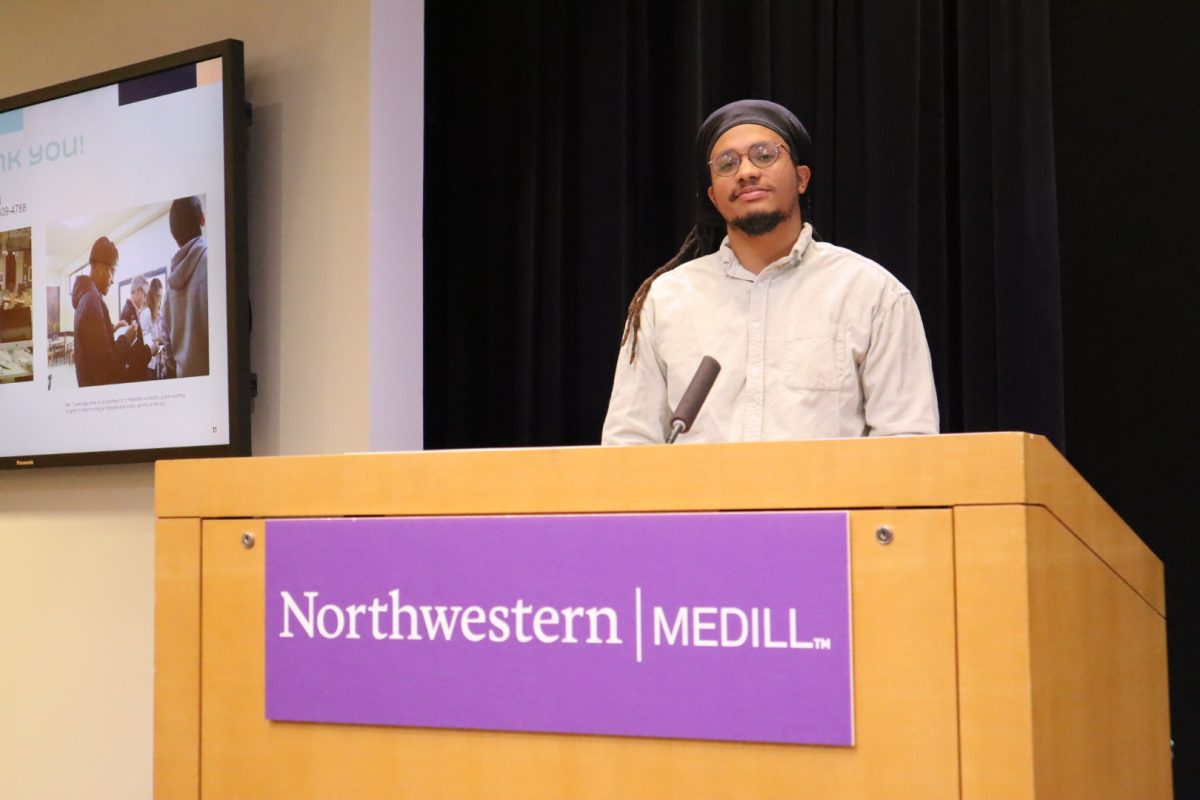
Capital B climate and environment reporter Adam Mahoney (Medill ’21) talked about his career and how reporting can uplift the voices of marginalized communities at a Wednesday evening event.
The Medill School of Journalism and the Pulitzer Center hosted Mahoney, who discussed how his work as a climate reporter impacts underrepresented communities and intersects with other issues like housing, migration and food security.
“A lot of the reporting I’m doing is looking at the disproportionate ways that climate threats and environmental injustices impact Black folks in marginalized communities across the country,” Mahoney said.
He explored how his career in environmental journalism led to international reporting and co-authoring “The Problem With Plastic,” which was published in December.
Mahoney also described his work with Capital B, an independent non-profit with the goal of uplifting the stories of local communities.
“It was really important for me as I was coming into my professional life to do work that felt more aligned with the people that I knew and cared about,” he said.
Mahoney said his collegiate experiences like researching how the environmental impacts of the Vietnam War affected the nation’s food map and his work with NU’s BlackBoard Magazine, inspired him to cover the environment and immigration.
Most recently, he has worked on investigating the “secretive” deportation agreements between the Trump administration and Ghana, one of five African nations included in the agreement.
During his presentation, Mahoney emphasized the importance of data collection in journalistic storytelling. He cited how African migrant deportations have nearly tripled in 2025. He added the statistic warranted a reflection on what this increase meant for those undergoing such an experience.
While working on this story, Mahoney said he had to navigate interviewing subjects in vulnerable positions who later requested modifications to the way they were recorded in print.
Mahoney said he chose to honor their wishes despite common journalistic practices, allowing students to ruminate on how practices may change depending on circumstance.
Medill Prof. Kari Lydersen, who introduced Mahoney at the event, said she hopes students are inspired by the reporting he has accomplished since graduating from NU.
“If you want to do something, you can figure out how to do it,” Lydersen said.
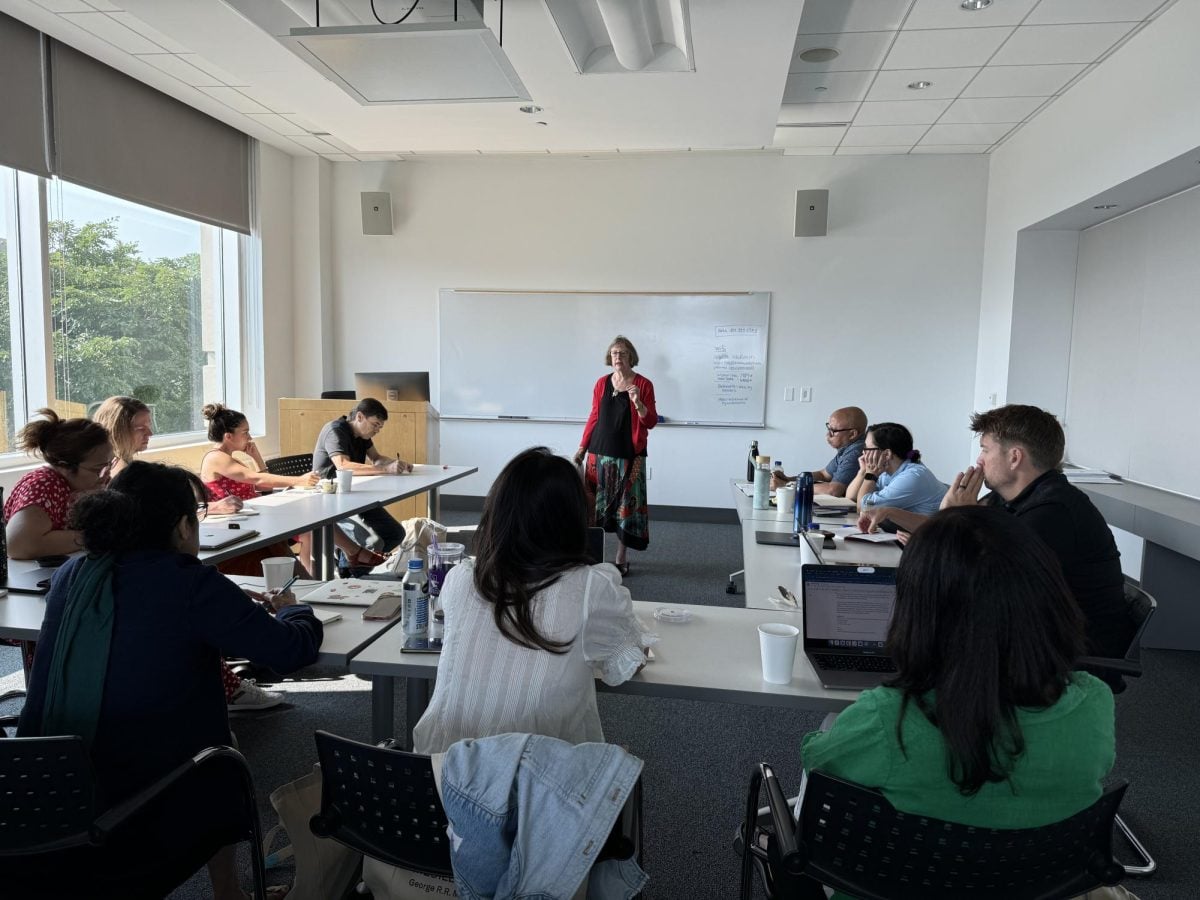
Medill Prof. Natalie Moore said she is a fan of Mahoney’s work and brought her Advanced Audio Reporting class to the event.
Moore added that she thinks it’s important for students to learn about the nuance of journalistic ethics discussed throughout the event.
“There is a dynamic of power that you have as a journalist,” Moore said. “I think extending grace to ‘regular people’ is important, and I think it was good for students to hear that perspective.”
At the event’s close, Mahoney discussed the challenges he experienced in his reporting, such as government secrecy around the detention location for imported deportees, limited internet access and subject hesitancies.
However, he said it was important to let his sources have agency over their stories.
“The biggest goal of our story was not just to focus on the 150 or so folks that were deported over the last six months,” Mahoney said. “But rather to show how this kind of abstract federal policy was impacting people on the ground, both in Ghana and the United States.”
Email: [email protected]
Bluesky: @lucaskubovchik.bsky.social
Related Stories:
— Chicago poet Imani Jackson reflects on family, nature in Black Arts Consortium event
— Greg Porper speaks about ‘Don’t Tell Larry’ theatrical release, film industry
— Experts present research findings on Ukrainian public opinion