In almost three decades of working in childcare, Toddler Town Children’s Learning Academy Executive Director Angelo Nikolov said he’s never seen uncertainty like this — a federal funding freeze that could strip $1 billion from Illinois childcare providers. Now, he’s worried about what the loss of that money might mean for his employees and the families and children they serve.
On Jan. 6, the Trump administration froze $10 billion in federal funding for childcare programs in California, Colorado, Illinois, Minnesota and New York based on “serious concerns about widespread fraud and misuse of taxpayer dollars in state-administered programs,” according to a press release from the Department of Health and Human Services.
Illinois received letters from the federal government informing the state about an immediate freeze of the Child Care and Development Fund, Temporary Assistance for Needy Families and Social Services Block Grant funding programs. The letters also demanded that the state provide “the entire universe” of documents related to these funds.
This follows allegations of widespread fraud in Minnesota, which has implicated billions of dollars and prompted Minnesota Gov. Tim Walz to end his reelection campaign. In December, conservative content creator Nick Shirley alleged corruption at childcare centers in Minnesota, renewing national scrutiny of welfare funding. Shirley’s allegations have not been verified.
Illinois stands to lose about $1 billion in funding for its childcare programs. The CCDBG and TANF support the Illinois Child Care Assistance Program. According to a state press release, CCAP serves around 100,000 families across the state, including more than 152,000 children.
Nikolov said the decision has left providers scrambling for answers. He has already contacted his bank and vendors as he tries to prepare for CCAP funding disruptions. According to Nikolov, Toddler Town’s two locations in Evanston and Chicago serve 76 and 86 children, respectively.
Families using CCAP programs are generally from lower-income to middle-class families, he added, with most of the parents using his services being hourly employees.
“So for them not to have childcare that’s quality and reliable — what are they gonna do? How are they gonna go to work?” Nikolov said. “They can only call off so much. Are they gonna lose their job? What’s gonna happen?”
On Thursday, Illinois Attorney General Kwame Raoul joined attorneys general of other affected states in filing a lawsuit challenging the freeze, which he called “callous” in a news release from his office.
The attorneys general are seeking a court order to stop the freeze, arguing that it is an “unlawful overreach of executive power,” according to the news release.
“This move comes with zero justification, and in the administration’s own words, targets only Democrat-led states,” Raoul wrote. “This unlawful action will hurt families and harm state economies.”
On Friday, U.S. District Judge Arun Subramanian of New York’s Southern District temporarily blocked the freeze, directing the federal government to let funds flow for the next two weeks.
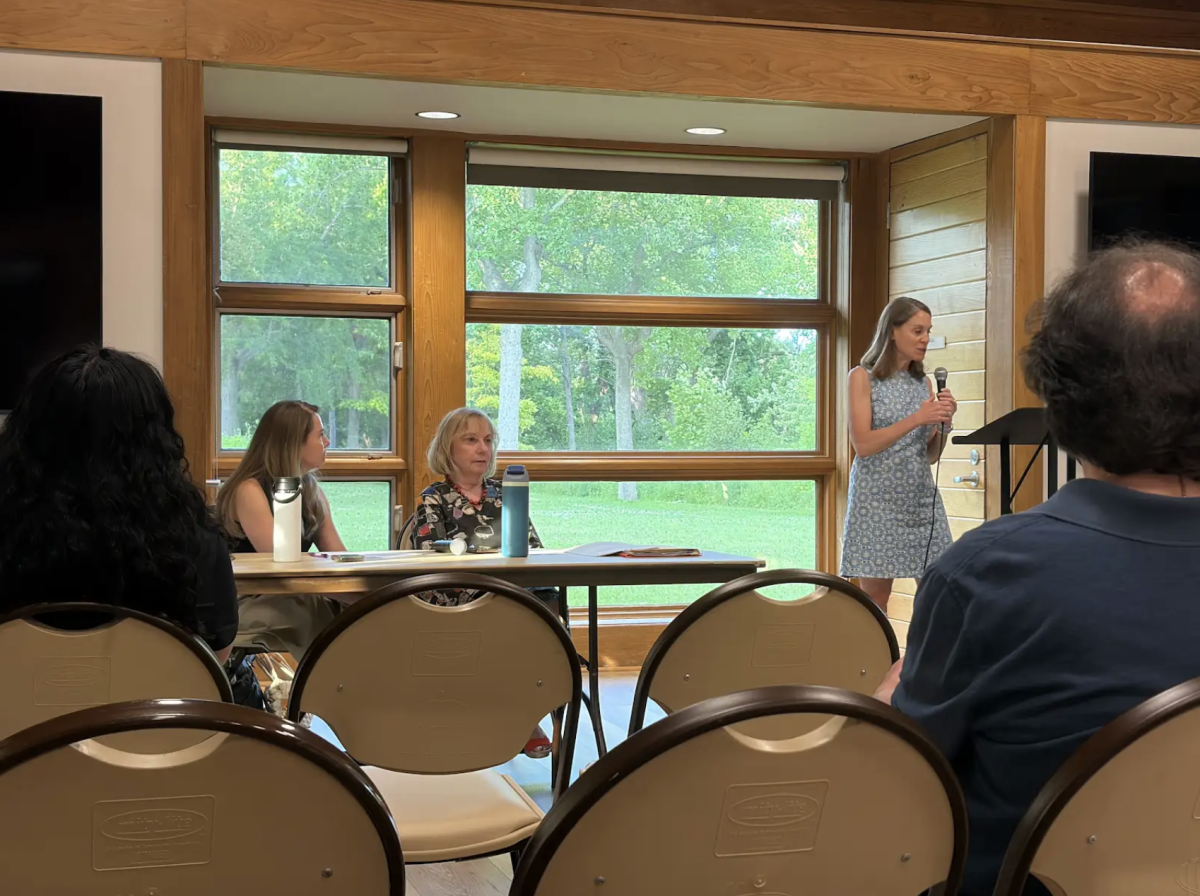
That same day, U.S. Rep. Raja Krishnamoorthi (D-Schaumburg) visited the Infant Welfare Society of Evanston, where he announced the Kids Before Cuts Act — if passed, the legislation would prohibit the withholding of federal funds for TANF, CCDBG and SSBG, barring explicit congressional approval.
Krishnamoorthi’s own family relied on similar federal aid programs when he was a child, according to a Friday news release from his office.
“Cutting off this funding without evidence isn’t oversight,” Krishamoorthi said. “It’s punishing families who are doing their best.”
In terms of immediate impact, IWSE Director Stephen Vick said that CCAP provides his organization with approximately $60,000 each month — critical funds that support its biweekly payroll of about $90,000. IWSE serves roughly 200 children, according to Vick.
However, Vick said the government is already behind on their payments, as IWSE has yet to receive its November funding. The impact on other childcare organizations and programs in Evanston could be even worse, Vick added.
“Some programs are CCAP-only. That’s their only subsidy. And so to lose their only subsidy — they could literally have to shut down,” Vick said. “So there’s a lot of programs that I know of in the community that would have immediate, devastating consequences.”
Evanston Early Childhood Council Executive Director Jesse Rojo leads a coalition of local early childhood organizations. He described the situation as “chaos.” Childcare funding impacts people from all political backgrounds, he said, which should make it more of a bipartisan unifier.
The lack of clarity from the federal government severely impacts childcare providers, according to Rojo, as some organizations’ funding situations already require them to survive paycheck-to-paycheck.
He warned that if centers can’t meet payroll, layoffs could number “in the hundreds,” putting “thousands of children” at risk of losing care.
“Every public dollar wasted is a wasted opportunity to invest in our families,” Rojo said. “Unfortunately, though, this isn’t about investigating waste. This isn’t about investigating fraud.”
Nadia Gronkowski, the policy manager of national policy at Start Early — a Chicago-based nonprofit focused on early childhood development — said that fraud prevention and investigation procedures are already built into the funding stream.
According to her, SSBG and TANF also support initiatives such as maternal health home visiting, early intervention for children with disabilities and nutrition programs.
Gronkowski added that, to receive these funds, every state is required to define what fraudulent use of SSBG and TANF funds means in their state and have a federally-approved plan in place in the event of such activity. This means that fraud prevention and investigation procedures are already built into the funding stream, she said.
She said that as of last week, the federal government had added new “Defend the Spend” questions to CCDF, the Low Income Home Energy Assistance Program and other social services systems to verify that fraud is not taking place. According to Gronkowski, this is causing “minimal delays” but remains an extra hurdle for distributors trying to send funding to families.
“Childcare providers and our childcare state administrators and other social service administrators are putting kids and families at the center of every single decision that they make every day,” Gronkowski said. “What it comes down to is the federal government needs to do the same and make sure that this funding gets out to the people who need it.”
Email: [email protected]
Related Stories:
— ‘They’re going in with a sledgehammer’: Federal policies threaten Evanston Head Start programs
— Infant Welfare Society of Evanston grant grows early childhood support in Skokie