Interim President Henry Bienen and Board of Trustees Chair Peter Barris signed a deal with the Trump administration to restore federal funding to NU on Nov. 28. As part of the deal, Northwestern agreed to pay the Department of the Treasury $75 million and “adhere to federal anti-discrimination laws.”
Bienen said at the State of the University address Thursday that there were several provisions in the deal that he disagreed with. However, he defended signing his name to it to reduce the potential for “years of uncertainty” that would come with suing the federal administration.
In addition to uncertainty around federal funding, his interim presidency has coincided with increased federal immigration enforcement in Evanston.
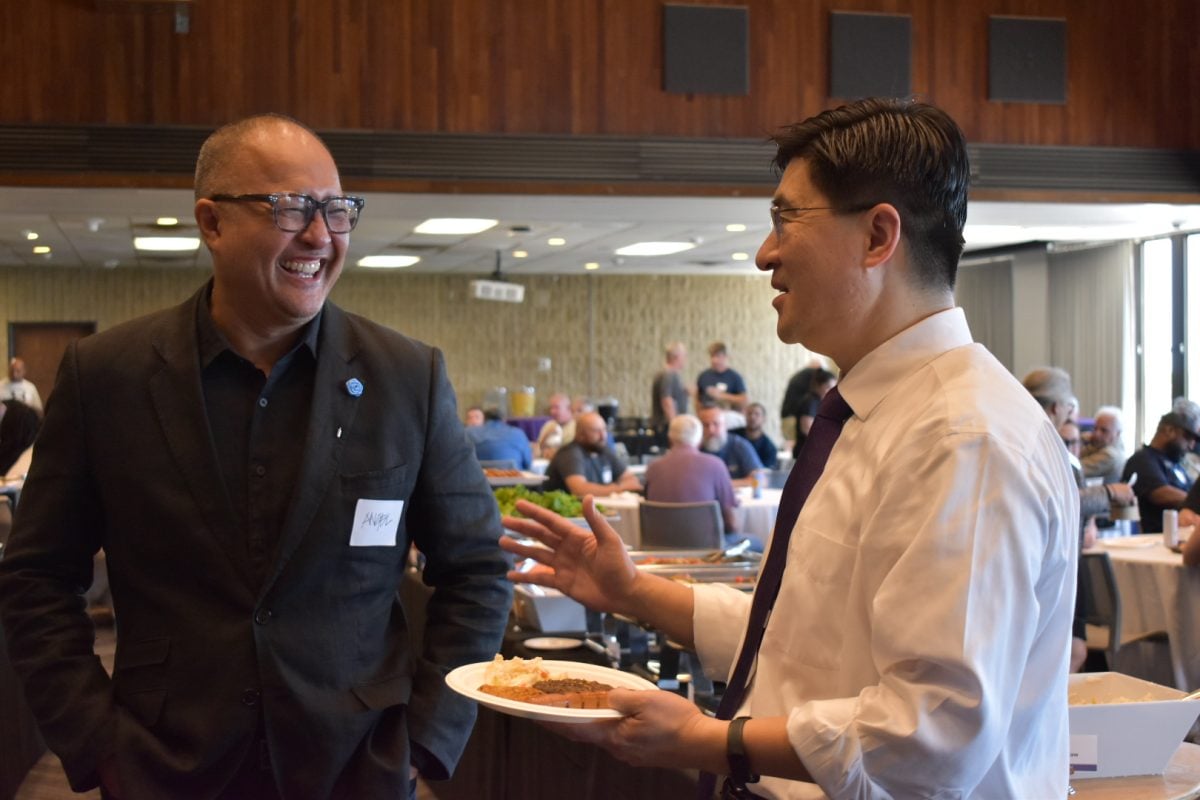
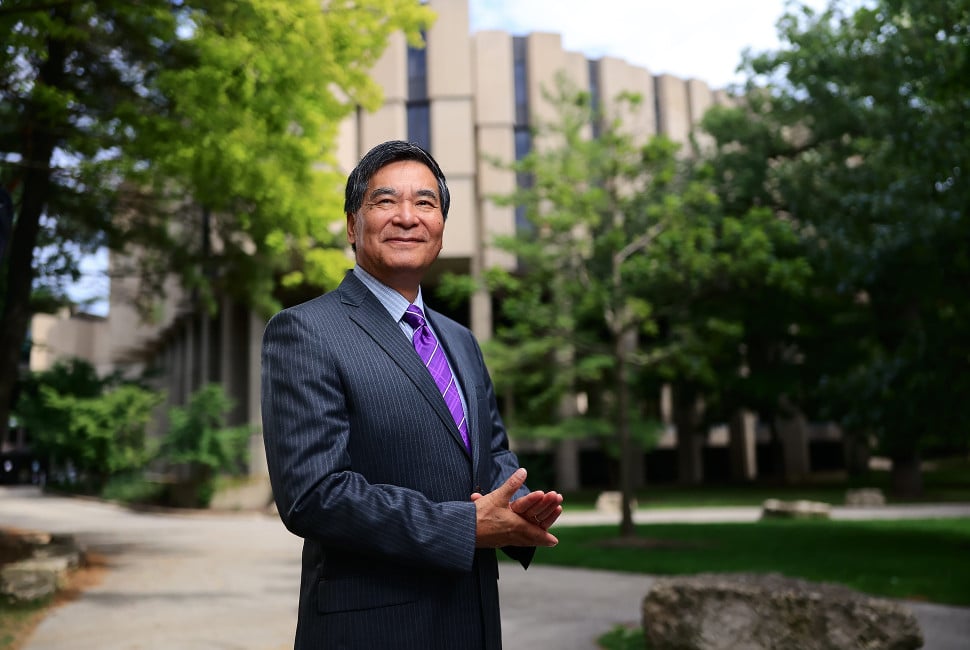
Bienen sat down with The Daily on Friday to talk about the deal with the federal government to restore funding and how the University would respond to immigration enforcement on campus.
This interview has been edited for brevity and clarity.
The Daily: For the federal government, who were you really dealing with? Who were you communicating with?
Bienen: Well, different people at different times. So, and I don’t know, I’m not trying to protect the federal government, particularly. I don’t know what I would want to say about the individuals. But, I would rather say we were dealing with the Justice Department, and the leading office in the Justice Department was the Office for Civil Rights, and the Justice Department was represented by an assistant attorney general … There was a representative from the White House, and then there were, at different times, the Department of Education — the secretary and the general counsel of Education. While they were involved, if you asked me who I think was making decisions about this, I think it was the Justice Department.
The Daily: How many versions (of the deal) did you see that you said you would never sign?
Bienen: More than one, a couple of versions, but they didn’t change very often. One of the problems, I think, and why I don’t like the term ‘negotiation.’ Most people would understand by negotiation, you give me a list of things you want. I reply to it. I say what I don’t like about your list, and we go back and forth. I would say that that would not characterize the dealings with the federal government. Because we would say something, then we wouldn’t hear anything … We had different sets of lawyers, and you know, that was frustrating …
And finally, we had something that I was willing to put my name on, and at the very last minute after the federal government said, ‘Okay, we have a deal,’ … And then they sent in two new provisos, which were not part of (the deal), and I said I wouldn’t sign them.
The Daily: And what was on those?
Bienen: I’m not going to say what was on them, but I will say only one general thing about it: Part of the deal which was very important to me was, you can’t look back and put something in the agreement which allows the federal government to relitigate with us all the aspects of the deal. … And the other thing that was really important to me was not to have an outside monitor, not to have somebody the federal government would appoint, or have somebody we would jointly appoint, that was outside the University, which is what they did with Columbia. … It was really important to me just to have a certainty we were done with this, not for anybody to go back and say, “Oh, well, what about that?” So, there was a new paragraph that, as I read it — I’m not a lawyer, but I don’t think you had to be a great lawyer to read this paragraph — it looked to me like it could open up everything, and I would never sign it. And I told Mr. Barris, you know, I wouldn’t sign it. Get another president. But Mr. Barris had the same view. …
It wasn’t something terrible in the other paragraph. What I found objectionable is that they were asking us to do it. It’s not up to the federal government to tell us, as I’ve said over and over again, who we can hire, who we can fire, what we teach, what organizations we affiliate with, and this proviso overstepped the line in that regard. … We said, “That’s it. I mean, we’re just not going to sign this stuff.” And then two hours later, they took all that out of the proviso.
The Daily: Some students and faculty expressed concern about the fact that the deal with the government followed the Executive Order’s definition of gender as gender assigned at birth. Why was that explicitly included in the agreement?
Bienen: The federal government was, to my view, unmovable in those conversations. As I said the other day at the State of the University, I don’t like any of the language that has to do with gender or transgender, and I think most of it is irrelevant to what we do. The federal government disagreed.
The Daily: Also in the deal, the University is supposed to review its business practices related to international students. How is the University going to do that? And if it finds an “overreliance” on international student admissions, will the University change anything?
Bienen: We are not dependent on international students. Just to speak about undergraduates for a minute — it’s good for the University to have international students. It’s good for the world that we train people in the things we’re good at, whether it’s mathematics or chemistry or history, whatever. A great university should have a diverse population in it by every way you can figure it to my mind, including people who want to come here from different countries. It’s a good thing for us, it’s a good thing for them.
The Daily: There’s particular language about treating international students, what it means to “socialize international students to the norms of a campus dedicated to inquiry and open debate.” Is that something new? Or, has that always been there?
Bienen: No, that’s new that they insisted on this. Again, I think all the training stuff, I’m on record as saying I don’t love these training programs. I think they’re silly. That’s another thing they wanted. Doesn’t mean somebody has to do something. They just have to listen to somebody say something. If that’s improved the quality of humankind, it’s news to me — that somebody was forced to go someplace, to sit and listen to something they didn’t want to listen to. And once in a while, I suppose you’ll learn something under those conditions. I doubt it’s a maximal use of time. However, that’s part of the deal.
The Daily: The University agreed not to provide permanent housing for Middle Eastern and North African students and to take away their temporary space —
Bienen: One of the things we would like is, we’re working on it now, is to try to provide different kind of housing for people, so for Islamic groups, not necessarily MENA. But I’ve met with folks, and we want to help provide housing which is off-campus, which is what we do for Chabad and what we do for Hillel.
The Daily: Does the Northwestern University Police Department have a response plan in place in case some of that enforcement activity (by ICE) does manage to happen on campus?
Bienen: Good question that I don’t know the answer to.
The Daily: What would the University’s response be if, for example, a student or faculty or staff member were to be detained or questioned by federal immigration enforcers on campus?
Bienen: I think we would try to provide help, legal assistance, to faculty or staff. If you’re asking the hypothetical, would we fight with Immigration and Customs Enforcement on campus? They’ve never asked to come to campus. The federal government can come onto your campus. It has the right to do that. I wouldn’t like it very much.
Emily Lichty, Nineth Kanieski Koso, Betsy Lecy, Marisa Guerra Echeverria and Anavi Prakash contributed reporting.
Email: [email protected]
X: @ak_newsom
Bluesky: @aknewsom.bsky.social
Related Stories:
— Northwestern hiring freeze is over, Bienen confirms
— President Henry Bienen talks federal funding freeze, bias training, Qatar campus