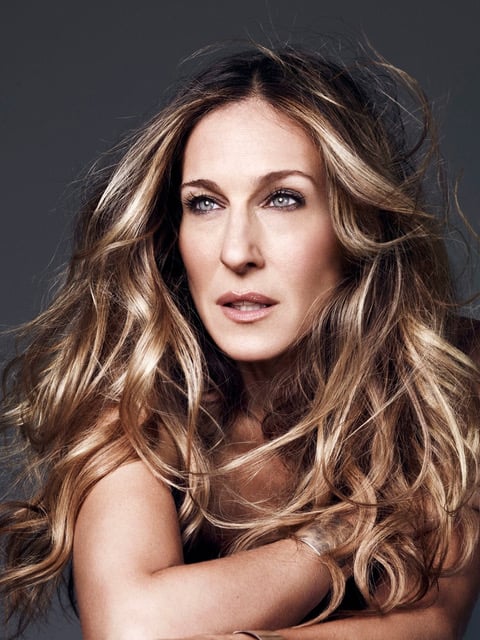
Actor and producer Sarah Jessica Parker will deliver the commencement address to Northwestern’s Class of 2026 at the United Center on Sunday.
Best known for her role as Carrie Bradshaw in the long-running television series “Sex and the City,” Parker has long been an advocate for the arts. The actor will receive an honorary Doctor of Arts degree at the ceremony.
In addition to her acting and producing endeavors, Parker serves as a vice chair on the New York City Ballet’s Board of Directors and is the founder of the literary imprint SJP Lit.
The Daily spoke with Parker ahead of the commencement about the importance of the arts, her young adult life and what students can expect from her address.
This interview has been lightly edited for brevity and clarity.
The Daily: What made you say yes to speaking at Northwestern this year?
Parker: Fear. Challenge. Probably the most influential part in moving me to say yes is that I had a chance to visit the campus. I actually visited the campus when my son was visiting colleges, when he was in the application process, and we fell in love with Northwestern. He didn’t end up going to Northwestern, but it stayed in all of our minds. And then this past year I was graciously offered a visit by (School of Communication Dean E. Patrick Johnson).
I visited again with my daughters, who are rising seniors in high school, and I was so touched to be considered as somebody deserving of time with Northwestern graduates. Like I said, I really did feel challenged and completely daunted by the offer. But I love the school, and I love the students I got to meet. They’ve been so hospitable to me and my family. So I just, I thought, you know, be terrified — that’s okay — try to summon words that are meaningful to students who have worked really, really hard and be worthy of their time. So I said yes.
The Daily: What do you hope graduates take away from your speech?
Parker: They could perhaps read into the very reason I gave for saying yes, if that makes sense, that there was so much about it that really terrified me, that it was an opportunity that I felt was hugely challenging and offered a lot of obstacles. It’s a hugely important day for all of those who are graduating, and I’m not a college graduate. I didn’t pursue higher education, so in many ways, I feel extraordinarily ill-equipped.
But I think that’s a lot like stepping into your future as a graduate. You feel like you don’t yet have the experience, or something is really scary, or it’s unknown, or it’s something you never considered you might do. Some of the greatest triumphs and moments of satisfaction come from pursuing those things that are really intimidating, so I’m going to try to talk a little bit about that and then obviously some bigger themes. I mostly just want them to feel appreciated for everything that they’ve accomplished.
The Daily: How do you think not attending college impacts your perspective on the day to day?
Parker: For a long time, it kind of embarrassed me because I felt like there was a conventional kind of path to success, and I hadn’t followed it. I come from a very different generation where there was sort of a blueprint, and I was an actor from a very, very early age, so I just kept acting. I’ve been acting since I was 8 years old.
But it has, I think for many years, really been a great provocation for me to be self-taught, to read all the time, to learn, to be really curious. I love conversations that are complicated because I keep learning, so there’s many ways in which I’ve tried to give myself the sort of well-rounded education I would have pursued had I gone to a great liberal arts college. It’s impacted me because it’s made me kind of work hard to fill in all the academic gaps that I feel were there for so long. They still exist on paper, but I’ve made it my business to be as educated as I can be and to keep learning.
The Daily: What advice would you have for students who are hoping to pursue careers in the entertainment industry?
Parker: My industry has changed radically over the last five years. We’ve gone from a lot of work in conventional broadcast television to streaming dictating the opportunities, but the business model around those is shape-shifting all the time to accommodate new technology.
For me, it’s unknown, and for them, I would say find ways of connecting with your art. Meet with groups of people, read plays, create your own work as you pursue work by others who will hire you. Be ready in terms of the kind of preparation you can do in front of opportunities, and know that, as I speak a little bit about this in my remarks, it’s not linear. No career is anymore because it all keeps changing so quickly.
But I want to stress because I believe this, and it’ll be hard to shake it for me, that the human contribution will remain the most important. The most profound contribution will come from the human. I know technology is racing ahead, but I believe — and this doesn’t just go to your communication graduates, this is to English graduates, philosophy graduates, history graduates, STEM graduates — books and conversation have to be honored because that’s where all the great ideas really come from. That’s where conflict resolution really exists and the most arresting, original ideas. I’m not going to be talking about technology in my remarks. I’m going to be talking about the human connection and how I believe in it.
The Daily: What are your thoughts on this recent trend of commencement speakers mentioning artificial intelligence in their speeches?
Parker: I’ve really tried to avoid listening to any commencement addresses so that I’m in no position of being ‘inspired,’ in quotes, by anybody else’s words because I feel like I owe the students my thoughts about life and pursuing a dream or an idea. I am not somebody who’s very conversant in technology outside of using my phone and understanding that there is this new way that is dominating a lot of conversations. I’m not conversant in that language, and I don’t come from the world of STEM. It’s very unfamiliar to me, but it’s hard to not understand that there has been a lot of chatter around AI being folded into these commencement addresses. I can only say it wouldn’t have occurred to me to talk about AI because it’s not something I’m relying on to do the kind of work I want to do, or not the ways in which I’m engaging in arts and culture and politics.
I want to talk to the students about who they are and what they’ve done and how important they are as humans. Their interest can be in technology and can be in the digital world, can be in areas that I’m completely unfamiliar with, biology and physics, all the extraordinary things. But I want them to remember that it is their own contributions to themselves to getting to this day that are the most robust part of their accomplishment.
It’s not a judgment call. It’s simply, I can only write about what I know. I can only talk about what has been a point of inspiration for me, and the things that have been most inspiring to me have been human beings, not the machines.
The Daily: What book might you recommend for graduates?
Parker: This is not why I’m recommending it, my hand up — there is a book that I published. It was the first book I published as a publisher. It’s called ‘A Place for Us.’ It’s a novel by Fatima Farheen Mirza. And it’s a book about an Indian American Muslim family in California, and all that pluralism, what that means. It’s an extraordinary book about a devotion to faith, honoring your family, trying to find your own place in the world. What can you leave behind? What tethers you to home and to people? Disappointment, class, economy. It’s an absolutely stunning debut novel. I always thought that it should be taught, that it should be part of an English syllabus, a literature syllabus.
The Daily: You played Carrie Bradshaw for so long. A lot of viewers feel like you grew up with her and that they grew up with the character as well. Is there anything you think you learned from Carrie about adulthood or life?
Parker: I probably learned about friendship from her in a lot of ways. She had the kind of time with friends that I have not had in my life, a sort of alternate universe of time where you can see your friends a lot and have a lot of brunches. It was the devotion she showed to friends. It was the stick-to-itiveness. It was the candor of their conversations, the way they took care of one another, the way they fell short and were told so by friendships. I love that, and I wanted that for myself. I couldn’t mimic it completely because my life just didn’t allow that, but I did. I loved playing somebody that had that kind of intensity in relationships that are so meaningful, and as she said, and the show said all the time, friends are the family that you make as young adults.
The Daily: If you could get a do-over of the college age or that period of life, what might you do differently?
Parker: This is the easiest answer I can tell you, and this is really true. I probably would have gone to museums more. I missed a lot of art. You make a choice. You don’t have a lot of money. In my case, I went to the theater a lot and the cinema a lot. I think I missed out on some pretty great art and exhibitions that just don’t exist anymore. I probably would have done that more.
And I’m gonna give you a really superficial answer: I probably would have used sunscreen sooner.
Email: [email protected]
X: @desiree_luo
Related Stories:
— Meet the four honorary degree recipients NU will honor at Commencement this year
— Class of 2026 marches back through The Arch, reflects on upcoming graduation
— ‘Sex and the City’ star Sarah Jessica Parker comes to Northwestern