This review contains spoilers.
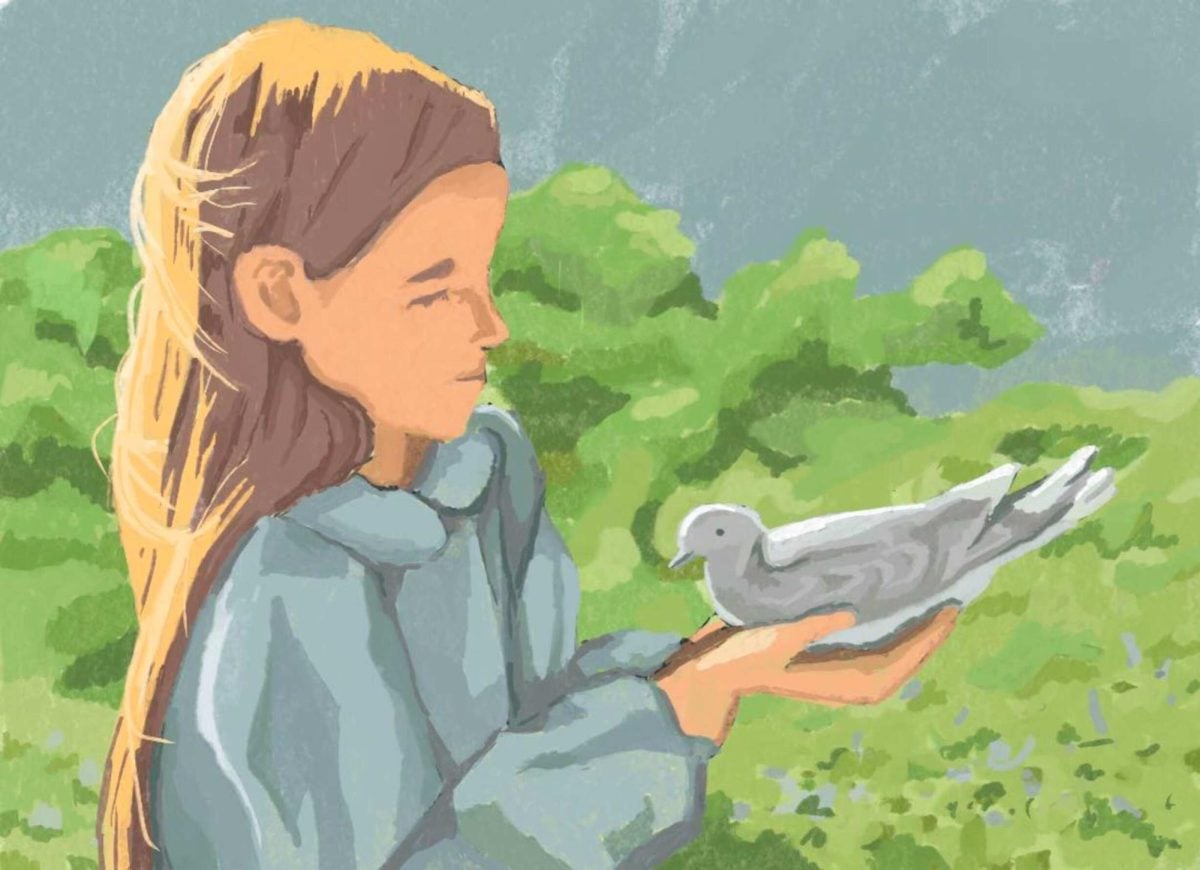
Not too long into “Wicked: For Good,” a young Glinda (Ariana Grande) is showered in applause by her sycophantic friends. In her picturesque bedroom, Glinda stands in front of them awkwardly waving a wand. A rainbow has just appeared through her window which her friends attribute to her goodness and charm, unaware that her only power is a wealthy upbringing.
Glinda understood her mediocrity from a young age. She told her mother, “I want to be magical, for real.” Her mom responded, “Everyone loves you. That’s all you’ll ever need.” Even in early childhood, Glinda internalized that her peer’s adoration was the only signifier of her worth, which guided her throughout her life.
This scene was one of too few earnest moments in a film that dragged on beyond proportion. Most of the flaws in “Wicked: For Good” are attributable to its agonizing length: two hours and 17 minutes, when an hour and a half would have been more than enough.
Directed by Jon M. Chu and released in theaters Friday, “Wicked: For Good” adds to a canon of overdone movie musicals that barely scratch at the surface of its stage production’s complexity.
As a narrative closer, “Wicked: For Good” inherently fails. In any well-conceived Broadway show, a second act of a stage production is centered on completing the play’s narrative, furthering plot and bookending the piece in a timely fashion. While the first act of Broadway’s “Wicked” runs 90 minutes, the second is only an hour. “Wicked: For Good,” far from the sprint that is Act II of the stage production, adds new and unnecessary context, builds plotlines that distract, rather than add nuance, and loses its message entirely at times.
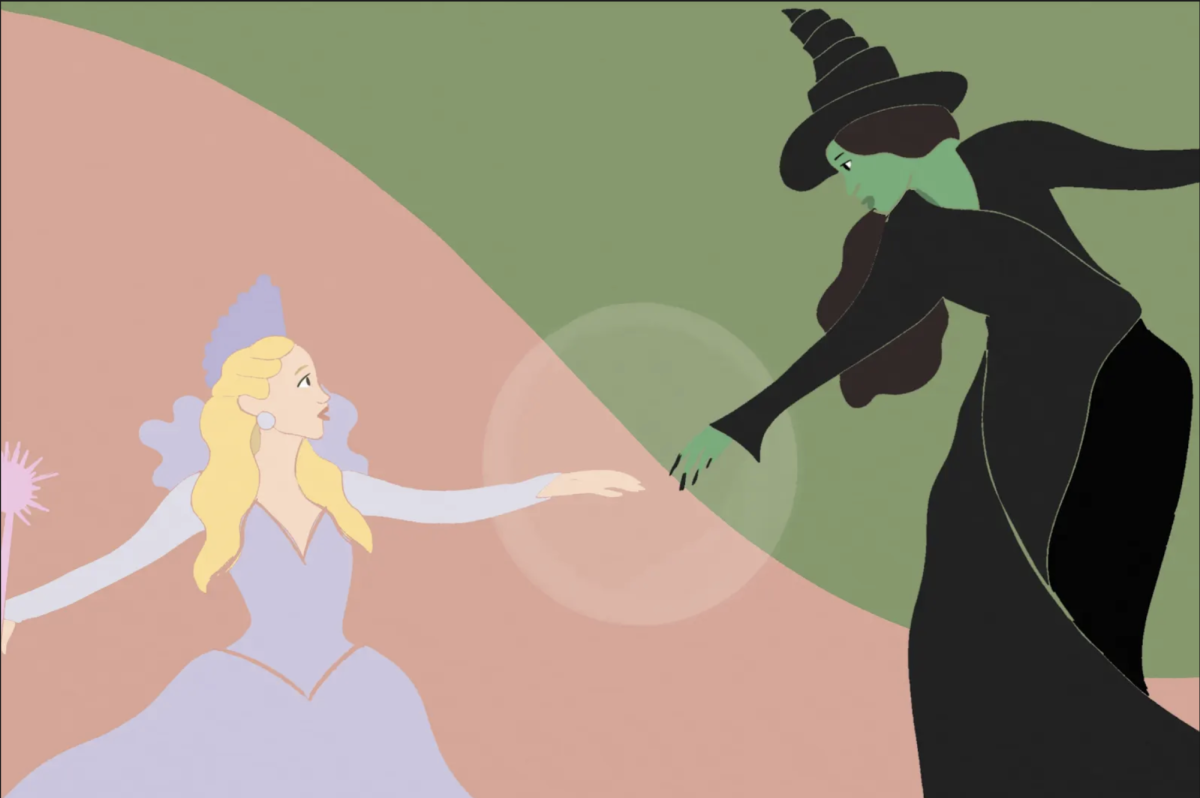
The second half of the movie follows Elphaba (Cynthia Erivo) and Glinda’s growing rift after Elphaba flees from The Wizard’s (Jeff Goldblum) palace to free the monkeys he keeps in captivity. Elphaba defiantly works tooth and nail to liberate the animals, as new laws isolate them.
Slandered by Oz, Elphaba goes into hiding. Glinda is given the reluctant investment of Oz’s press secretary and sorcerer Madame Morrible (Michelle Yeoh), who crowns her as the kingdom’s “Good Witch.” Meanwhile, tensions brew when Elphaba’s sister Nessarose (Marissa Bode) is forced into the role of Munchkinland governess.
Sacrificing all moral codes of friendship, Glinda undertakes a campaign of betrayal. Perhaps the only character that has Elphaba’s back is Prince Fiyero (Jonathan Bailey), Glinda’s fiancé and Elphaba’s eventual secret lover.
A number of things prevent “Wicked: For Good” from shining. Some can be overlooked, like a colorless performance from Yeoh as Morrible and an underutilization of Bowen Yang and Bronwyn James as Glinda’s hysterical friends, Pfannee and Shenshen. The film has also been marketed as a children’s movie, undercutting its adult themes. Other issues loom larger.
There are various incidents in the film where viewers might wonder: What were Chu and composer and lyricist Stephen Schwartz thinking?
“No Place Like Home” is an added number during the film’s start that adds nothing of substance. “Why do I love this place that’s never loved me?” Elphaba sings. The song may have been justifiable had it not been so insipid and misplaced. “There’s no place like home,” she continues. It’s almost as if she’s forgotten that her home is filled with people seeking her death.
“The Girl in the Bubble,” a trite and vapid tune of self-pity Glinda sings after Oz’s military begins to close in on Elphaba, is as soulless as its title suggests. Similar to how she felt as a child, Glinda rightfully doubts her reputation as The Good Witch. Unfortunately, this scene — and the added song — was little more than filler for the film’s excessive length.
The New York Times reported, “The director Jon M. Chu said there was no mandate to add more tunes in hopes of gaining Oscar nominations.” This seems suspect. The numbers add little subtext to the story and seem to be aimed at giving the costars more opportunities to show off their acting abilities.
“Wicked: For Good’s” premise is particularly timely in our current political state, in which people deemed “other” are increasingly being persecuted by the current presidential administration. Whether it’s the demonization of transgender people, mass targeting of undocumented immigrants or use of the legal system to target political opponents — Elphaba’s story offers a parable and red-flag for how societies can devolve when governed by fear. If the film had leaned into this nuance rather than dwelling on the theatrics, “Wicked: For Good” could have paid a touching homage to its source material.
Still, some parts of “Wicked: For Good” are moving. Fieryo’s unbending loyalty toward Elphaba as Oz slanders her name is heartwarming, not to mention his scene-stealing charm. The duo’s emotional duet “As Long as You’re Mine,” a classic from the stage production, is well-rendered as they soar above ground in a romantic forest setting. The film’s titular number “For Good,” a tune of reconciliation for Elphaba and Glinda, was refreshingly genuine in a film that binged on the dramatic.
Other classics like “No Good Deed,” a ballad Elphaba sings after Fiyero is captured, are impactful and rousing. Erivo’s stunning vocals in that number, and all others in the film, compensate, in part, for its glaring flaws.
“Wicked: For Good” is not uniquely terrible. Reimagining Broadway musicals into a cinematic format has often yielded diminishing returns, like the cringe-inducing “Cats,” the rushed “Mean Girls” and the ill-conceived “The Prom.” Regrettably, the chronically overstuffed “Wicked: For Good” is an addition to this list.
Email: [email protected]
Related Stories:
— A&O Productions to host screening of ‘Wicked: For Good’
— Reel Thoughts: ‘Wicked’ is everything it needed to be — and for everyone
— Reel Thoughts: ‘Now You See Me: Now You Don’t’ serves up familiar tricks