Kneeling in a wooded area of Harbert-Payne Park, a 13.5-acre city park nestled along the bank of the North Shore Channel, 4th Ward resident Allison Sloan pinched the leaves of a young buckthorn shrub with her pink gardening gloves. Its round leaves were untouched by hungry bugs, she noted — local insects have not adapted to digest it, giving it a competitive edge over other species.
Sloan yanked the plant out from its roots and discarded it. Though this shrub had only grown a few inches off the ground, the surrounding area was full of shrubs of the same variety standing over 25 feet tall. Less than a decade ago, the plant’s spread across the woodland was largely unmonitored.
“This was all bush,” Sloan said. “You couldn’t see any sunlight in here. It was just big thickets of this invasive plant.”
Although unassuming, buckthorn plants — an invasive species in the Chicago area — block sunlight and wreak havoc on the digestive systems of local animals. Local environmentalists are engaged in a multi-year effort to remove the buckthorn and re-plant native flora in Harbert-Payne, an initiative they recently recruited community members to join in on.
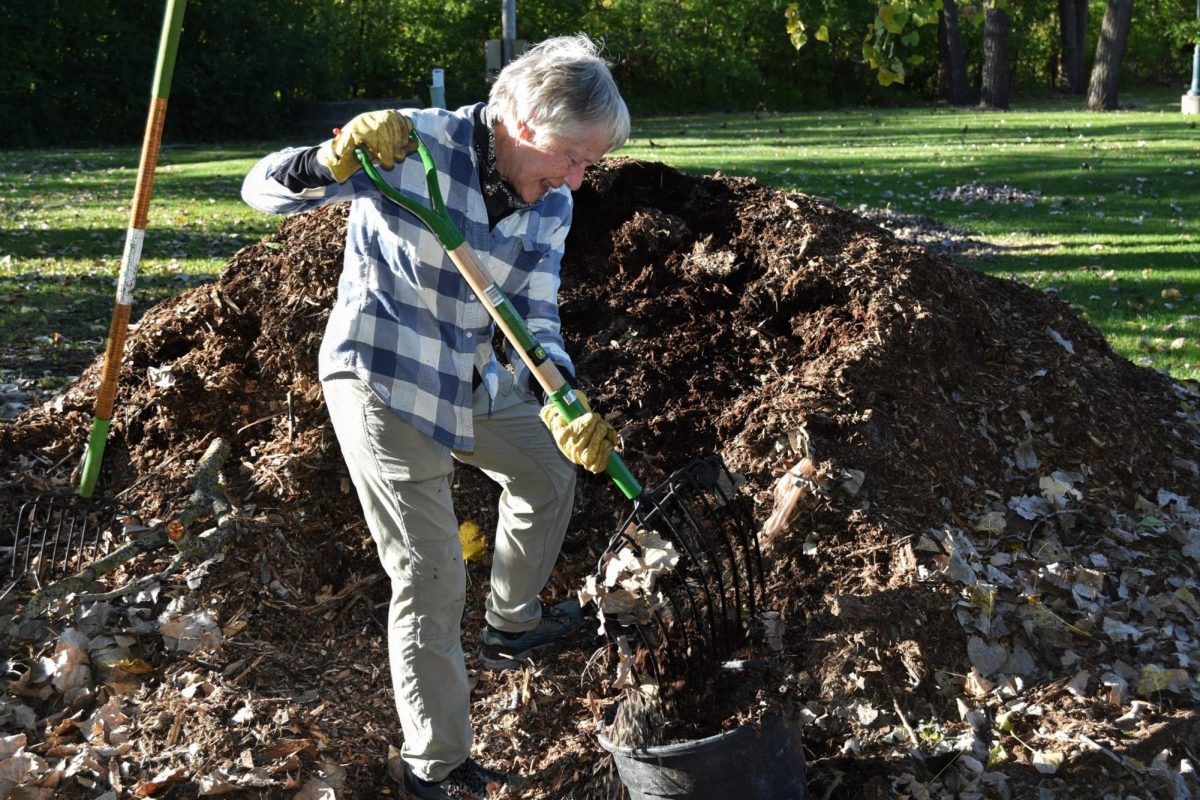
Sloan, a volunteer “natural area steward” of the park, said she has come to Harbert-Payne to volunteer near-weekly since 2018, doing work that’s necessary to keep the buckthorn out, she said.
“There’s no healthy forest in the Midwest that is not being maintained by volunteers now having to keep out the buckthorn,” Sloan said. “Because if the volunteers don’t intervene, then the buckthorn just eats the whole understory, and it shades out all of the native plants.”
But on Oct. 26, she had more company than usual to help with the native plant restoration.
Natural Habitat Evanston, a subgroup of the local climate initiative Climate Action Evanston, promoted the volunteering event as part of “OAKtober,” an annual Evanston tradition the advocacy group celebrates. This year, the group pledged to donate 111 trees to schools, parks and homes in the city’s 2nd and 5th Wards — areas the organization determined to be underserved based on census data. A group of around 15 environmental enthusiasts, local faith leaders and curious residents joined the planting efforts.

Some residents at the event identified themselves as “TreeKeepers” — a title for those who have completed a month-long online certification program hosted by Openlands, a conservation organization. Participants learn about urban forestry and best practices for handling trees in the program.
“Even though you live in an urban place doesn’t mean you are outside of nature,” said Alex McKeag, a TreeKeeper and urban designer. “You’re actually very much in nature still within the city. I love walking, so I go on walks and I can’t help but notice the types of trees, the conditions of trees.”
At the planting, McKeag dug a plot for an ironwood sapling, which he said he hopes to check in on over the years as he continues his volunteer work. Among the other species planted were river birch, bladdernut shrubs, spicebush, sassafras and blue beech.
Though Evanston is in charge of the projects at Harbert-Payne since the park is city property, much of the initiative and maintenance upkeep comes from the stewards, according to Leslie Shad, a member of Natural Habitat Evanston’s steering team. Just down the mulch-topped path from which Sloan and others cleared spots for plantings, a small group completed repairs on a city-installed, volunteer-maintained irrigation system.
“These natural area stewards, they are digging into their own pockets to buy trees, they are organizing some grant funding to be able to fund this, they help get more volunteers,” Shad said. “The city staff just doesn’t have the capacity. It would not exist if not for these volunteers.”
Since the beginning of the restoration effort, the city and volunteers have cleared buckthorn, while preserving the habitats of the birds that rely on it for cover and on its berries for sustenance, as well as reintroduced native species and established nurseries along the channel. Because of the pervasiveness of the invasive species, a full restoration to a pre-buckthorn ecosystem is a lengthy undertaking.
For the stewards, Natural Habitat Evanston and other volunteers, the work is far from done. Still, they consider the project urgent.
“The goal is to eventually get to a point where the soil is so filled up with the native plants that they will shade out anything else that comes back in that doesn’t belong here,” Sloan said.
Email: [email protected]
X: @rubywright0
Bluesky: @rubydowling.bsky.social
Related Stories:
— Climate Action Evanston hosts virtual lecture on turning neat lawns into native gardens
— Come for the coffee, stay for the clean energy consultation: Windfree Solar opens Evanston cafe