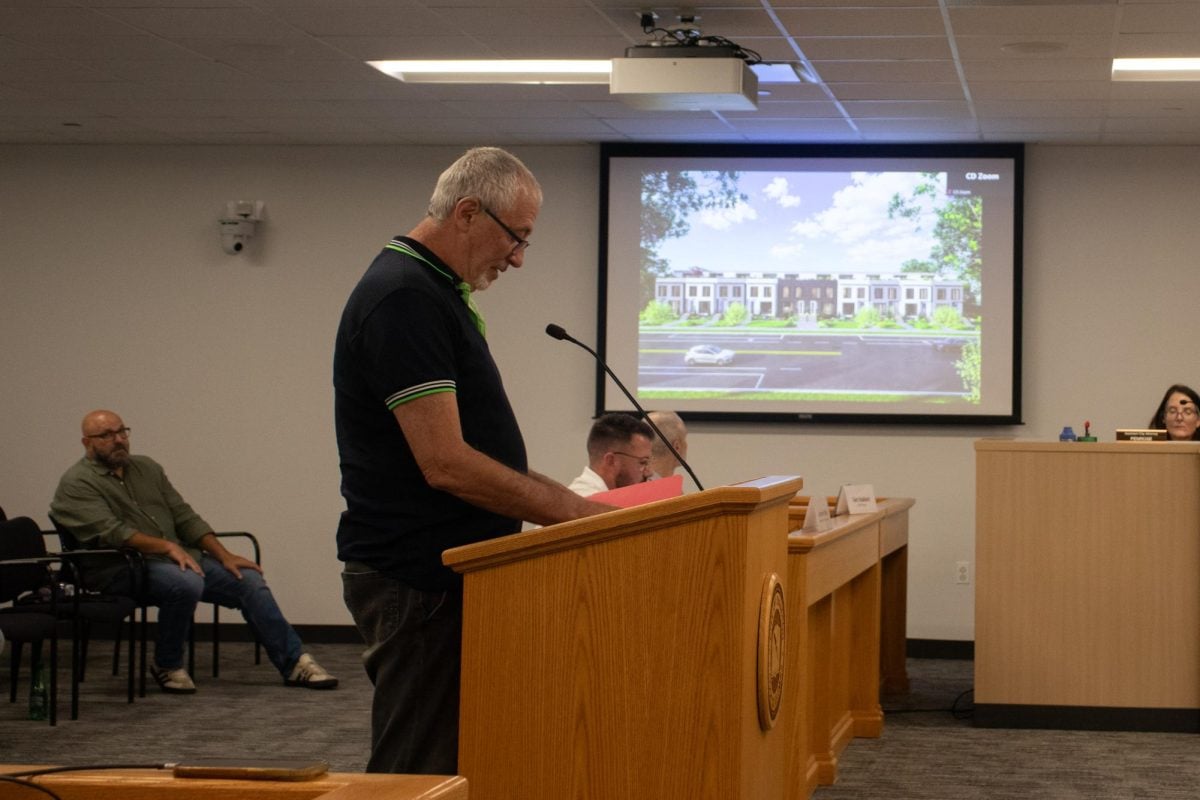
City Council gathered a supermajority Monday evening to override a mayoral veto of the 1% municipal grocery tax.
The meeting was the final opportunity to finalize the ordinance before the state’s Oct. 1 deadline for the implementation of local grocery taxes.
The council members voted 8-0 in favor of overturning Mayor Daniel Biss’ Sept. 17 decision to veto the ordinance. To override, the council needed a two-thirds majority or six votes. Biss’ veto came after the council already passed the tax with a 5-3 vote Sept 15.
Illinois currently has a statewide 1% grocery tax, which will expire at the start of the new year. That state tax currently brings in $2.5 million in revenue for Evanston. Just like the state tax, SNAP beneficiaries will be exempt from the new local tax.
The decision came swiftly and without deliberation. Alds. Clare Kelly (1st) and Matt Rodgers (8th), who voted against the tax in the original 5-3 vote, expressed concern but showed a grudging preference for the ordinance over alternative ways to gather funds.
City staff had also proposed raising property taxes as a suitable alternative to the 1% local grocery tax in order to replace the funds the city would bring in annually from the state tax.
“My concern at this point is damage control,” Kelly said.
The third councilmember who had previously opposed the tax, Ald. Parielle Davis (7th), left the meeting during public comment and was not present for the vote.
Ald. Jonathan Nieuwsma (4th) reaffirmed his support for the tax, citing a “nonscientific poll” he conducted, which he said found that two-thirds of respondents were in favor of a grocery tax.
As of Sept. 26, 694 municipalities in Illinois have adopted ordinances for a grocery tax. The city of Chicago has not yet come to a decision about implementing a similar ordinance after the elimination of the statewide grocery tax, but Chicago Mayor Brandon Johnson has publicly supported such a policy, claiming the city would otherwise lose $80 million.
Critics of the tax, like Biss, have called the ordinance “regressive” — disproportionately burdening low-income shoppers — and see property taxes as a more equitable solution.
“I am not super happy continuing to tax Evanston residents for groceries, but it was the best of a number of bad options,” Nieuwsma said. “Nobody’s happy about it, but it was the right call.”
According to the city, only 44% of shoppers at the eight grocery stores in the city are residents. For each individual store, residents also only comprise 17 to 65% of the consumer population.
Rodgers suggested that a home rules sales tax would be preferable to a municipal grocery tax, but said a property tax increase was the least favorable option.
“I feel that we’ve kind of been backed into this timeline and are being forced to take a vote that some of us find unpalatable, but is the best of the solutions that we have,” he said.
The city’s grocery tax ordinance must be filed with the Illinois Department of Revenue by the Oct. 1 deadline, and the local tax will become effective Jan. 1, 2026.
Email: [email protected]
X: @rubywright0
Bluesky: @rubydowling.bsky.social
Related Stories:
— Council delays discussion on 1% municipal grocery tax to September
— Biss vetoes 1% grocery tax, potential council override looms
— Council passes 1% municipal grocery tax after delaying vote