In addition to its split vote over Northwestern softball field construction, on Monday, City Council voted 5-3 to delay discussion on a 1% municipal grocery tax to replace an expiring statewide grocery tax until its Sept. 8 meeting.
Illinois’ elimination of its 1% grocery tax effective January 2026, while highly favorable among voters, divided the council as they debated alternate forms of revenue for the city. According to a city staff memorandum, Evanston currently receives approximately $2.5 million a year from the tax, which they consider “stable and resilient” as groceries are an essential good.
Mayor Daniel Biss, who strongly opposed a municipal grocery tax from the outset, said after the meeting that the passage of a municipal grocery tax in September would require six votes to override a mayoral veto.
Councilmembers mulled over various alternatives to fill the revenue hole over the grocery tax.
The proposed 1% municipal grocery tax mirrors the former state tax and has a broad tax base, as 56% of taxed sales from Evanston’s eight grocery stores are from non-residents. The option has gained traction statewide and has been adopted by over 425 municipalities since July 31.
Economic experts like NU Kellogg Prof. Therese McGuire agree the grocery tax is “regressive” — burdening lower-income families more than higher-income households — but exemptions for SNAP and food stamp recipients assuaged her and the councilmembers’ worries.
“I’m not saying it’s a great option, I’m not saying I’m super thrilled with it, but I think the best option is to continue taxing groceries,” Ald. Jonathan Nieuwsma (4th) said, adding that there was no “easy” solution to the problem.
In response, Ald. Matt Rodgers (8th) brought up concerns about SNAP benefits being reduced at the federal level and not being as reliable.
Ald. Tom Suffredin (6th), who frontlined support for the municipal grocery tax along with Nieuwsma, added that Evanston residents will likely have to pay grocery taxes in nearby municipalities as well, and would not avoid them completely.
Biss rejected supporting the grocery tax, calling it “deeply, deeply regressive” for its targeting of fundamental essentials. Instead, he favored raising Evanston’s property taxes, a second option presented by city staff.
Nieuwsma argued that the city will have to increase the property tax in the future anyway, and that it wasn’t the solution to the grocery tax dilemma.
Nieuwsma added that a property tax would burden everyone who lives in Evanston, while only 44% of the grocery tax would be paid by the city’s residents.
Alds. Clare Kelly (1st) and Rodgers showed support for a “less regressive” third option — increasing the city’s home rule sales tax by 0.25%, which would not apply to essentials like groceries, drugs or licensed vehicles.
However, it was also marked down by Nieuwsma for being a less stable source of revenue which would not fully cover the $2.5 million gap from the state grocery tax. At one point in the discussion, Nieuwsma galvanized the silent group members to discuss, as the clock began to tick. If the council agreed to pass a municipal grocery tax or increase the local home rule tax, they needed to introduce and adopt an ordinance in their two September council meetings before the state’s deadline of Oct. 1.
The pro-grocery tax camp was soon joined by Alds. Krissie Harris (2nd), Shawn Iles (3rd) and Juan Geracaris (9th).
While Iles pointed out that the grocery tax was regressive, he called the option “the best of the bad lot.”
Harris agreed, saying that a municipal grocery tax “levels itself,” but that the city will have to “trim the fat” of city services before anticipated federal budget cuts.
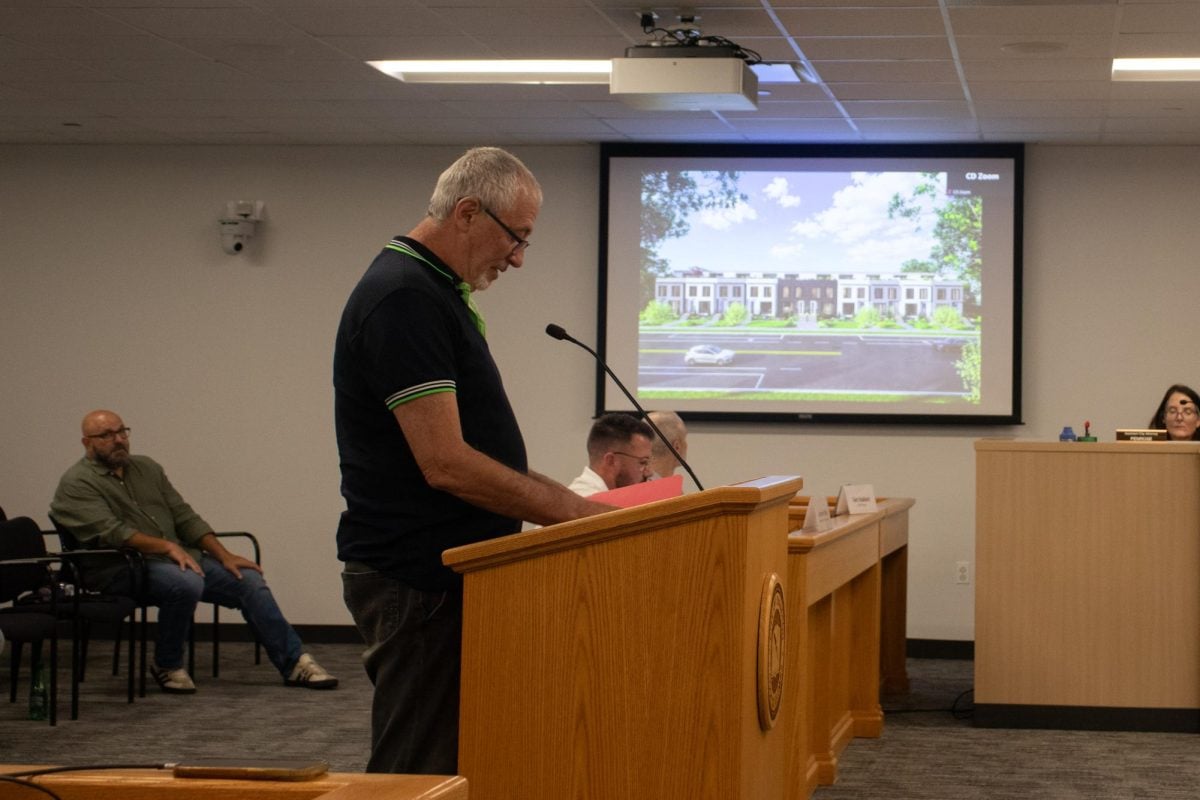
Soon enough, the council voted 5-3, with Alds. Harris, Iles, Nieuwsma, Suffredin and Geracaris in favor. Alds. Kelly, Parielle Davis (7th) and Rodgers voted in opposition. Ald. Bobby Burns (5th) was absent from the meeting.
Though the group will further discuss the grocery tax and city budget in September, councilmembers said they also remain committed to considering spending reductions.
“For this circumstance, we have a $2.5 million hole and a $2.5 million patch available,” Suffredin said. “But I just want to keep clear I don’t intend for spending reductions to not be on the table for the budget proper.”
Email: [email protected]
Related Stories:
— Decision looms regarding grocery tax in Evanston
— Councilmembers, community activist propose ‘circuit breaker’ for property tax, rent relief
— City Council passes $395 million budget with no property tax increase