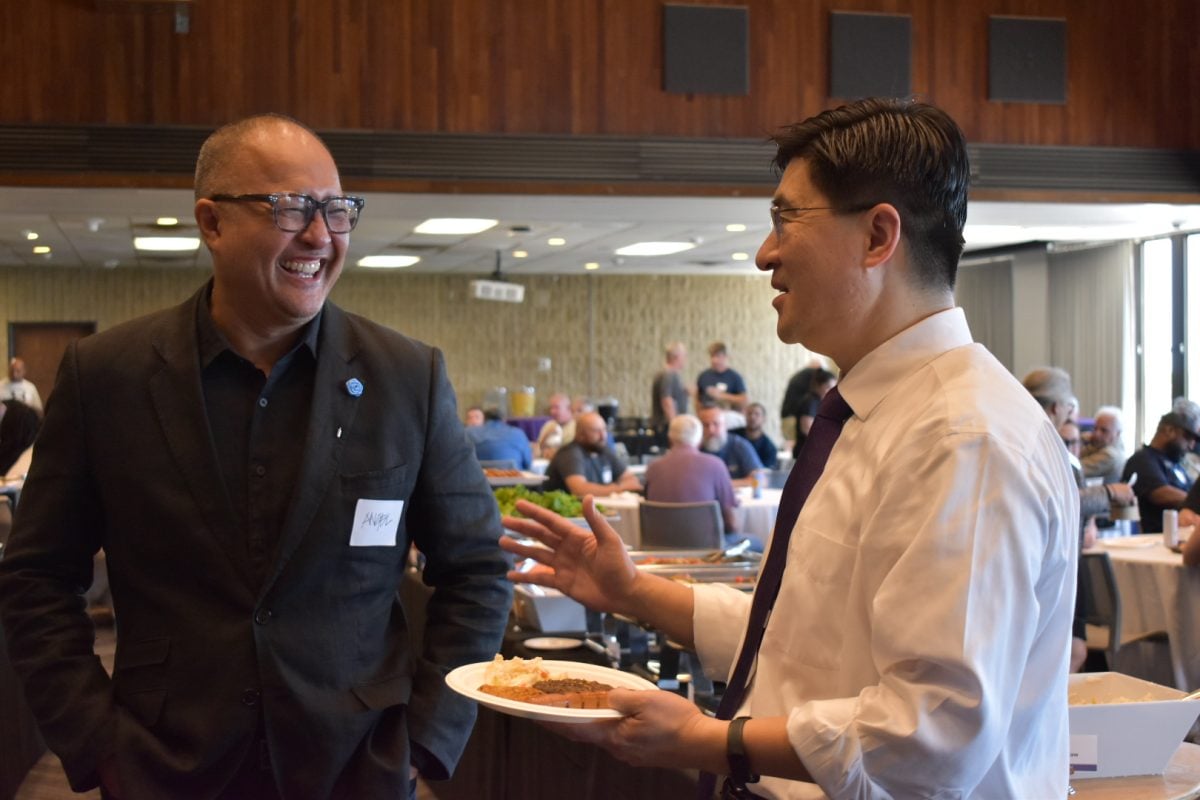
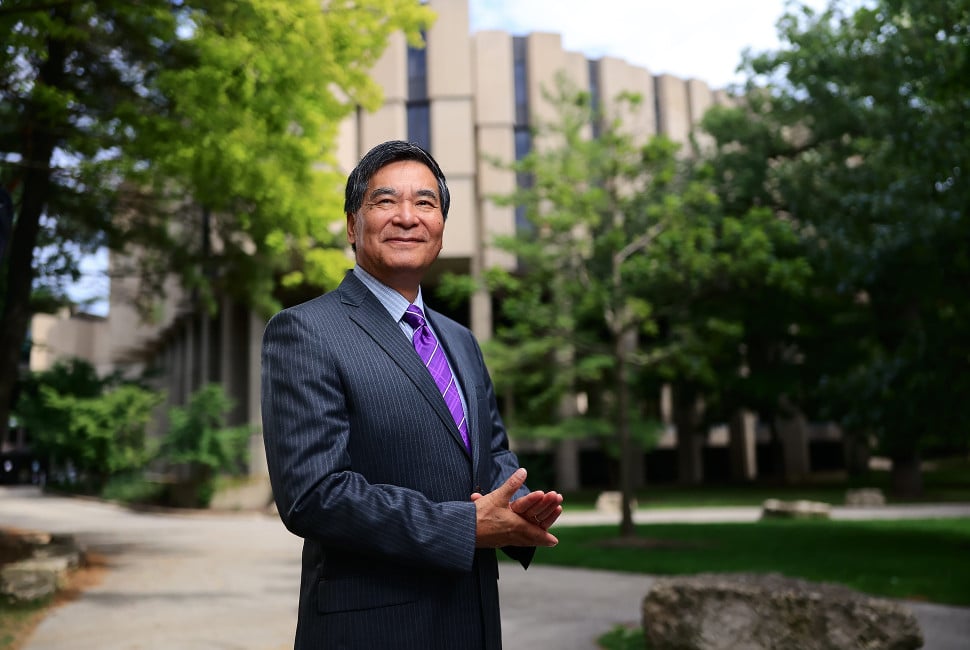
Dr. Daniel Wozniczka’s (Weinberg ’10) career has taken him to the Centers for Disease Control and Prevention as an Epidemic Intelligence Service trainee, the chambers of Congress as a whistleblower and, most recently, back to his alma mater.
Wozniczka testified before a 2022 congressional committee investigating “the lost month” — what many in the CDC dub the Trump administration’s inaction during the onset of COVID-19.
His testimony centered on the administration’s Feb. 2020 withholding of early CDC knowledge that the virus was spread asymptomatically, a fact that CDC employees say could have saved thousands of lives and billions of dollars if publically known then.
During the summer, Wozniczka returned to campus — this time taking on the title of professor.
Driving his summer 2025 class, titled “Disease Outbreak Investigation,” was experience working for the CDC and researching a number of diseases, including COVID-19.
“On a professional level, it’s cool to teach about your CDC experience and during COVID what actually happened day by day,” Wozniczka said. “On a personal level, it’s amazing to be able to come back 15 years later as a professor and teach the next generation.”
Looking back at his time as a student at NU, Wozniczka expressed gratitude for the study abroad opportunities provided to him by NU’s Global Health Studies program, which allowed him to travel to Uganda and China where he researched HIV and swine flu, respectively. He said these opportunities were “unheard of” in similar undergraduate programs.
While “Disease Outbreak Investigations” was offered on the Evanston campus, Wozniczka aimed to preserve the same hands-on spirit as his global experiences while teaching the class.
“My course has a lot of case simulations, so it’s a mixture of lectures and discussions and discussion posts, but we quite literally go through outbreaks together, chronologically from the start to the finish,” Wozniczka said.
To Wozniczka, many of the challenges of public health go “beyond science” and require transparency.
He said he applies this same philosophy to his job as a physician at Evanston Hospital.
“There is this very specific doctor-patient relationship that we establish,” Wozniczka said. “For me, it’s a regular Tuesday, but that patient coming in via ambulance is (having) the scariest day of his or her life.”
Much like in one-on-one patient encounters, Wozniczka said he sees trust as the key ingredient in bridging the gap between the CDC and a disease-affected population.
Weinberg junior Skylar Blair, who took Wozniczka’s summer course, said one of the major communication strategies Wozniczka taught was called BLUF or “Bottom Line Up Front.”
“Whatever the core of your message is, start with that,” Blair said. “It’s being clear, honest and concise.”
Blair said it’s critical for medical professionals to be transparent about what they do not know about a disease and maintain an air of empathy despite delivering uncertainty.
Another key component of the class is what Wozniczka described as a “Single Overriding Communication Objective.” SOCO should be the main takeaway an audience walks away with, such as what steps to take to prevent a disease, according to Wozniczka.
While CDC officials knew COVID-19 was a primarily airborne virus as early as Feb. 2020, federal overlap prevented scientists from embodying the transparency Wozniczka promotes in his course.
“I lost track of him (Wozniczka) for a while, until I read about him being one of those whistleblowers at CDC,” GHS co-founder Dr. Devora Grynspan said. “He was very brave to (be a whistleblower).”
Grynspan also taught classes in NU’s GHS program during Wozniczka’s undergrad years. She said she was proud that Wozniczka was able to get so much mileage out of what was at the time a very small program.
She added that Wozniczka’s actions were very much in line with the GHS program’s themes of prioritizing science over politics in disease-related policymaking.
“It is very scary that we’re not basing our public health policy or other policies on data and on research,” Grynspan said. “It’s very important to have people like (Wozniczka) and like all our students who graduate in public health because they are aware of the interconnectedness of the world.”
Clarification: This story has been updated to better describe Wozniczka’s testimony about how COVID-19 spread.
Email: [email protected]
X: @migtsang
Related Stories:
— Statewide respiratory virus, COVID-19 levels drop, CDC data shows
— Northwestern awarded $1.7 million CDC grant for disease outbreak response network
— Global health studies prof discusses significance of Iran protests, future of the movement