By the five-hour mark of Wednesday night’s special city council meeting, council members remained torn at the dais, stuck between adjourning for the night or making further headway into a seemingly never-ending list of edits for the city’s comprehensive plan draft.
After an initial 4-4 vote to adjourn the meeting, Mayor Daniel Biss broke the tie to hold a final discussion about the comprehensive plan’s trajectory that night.
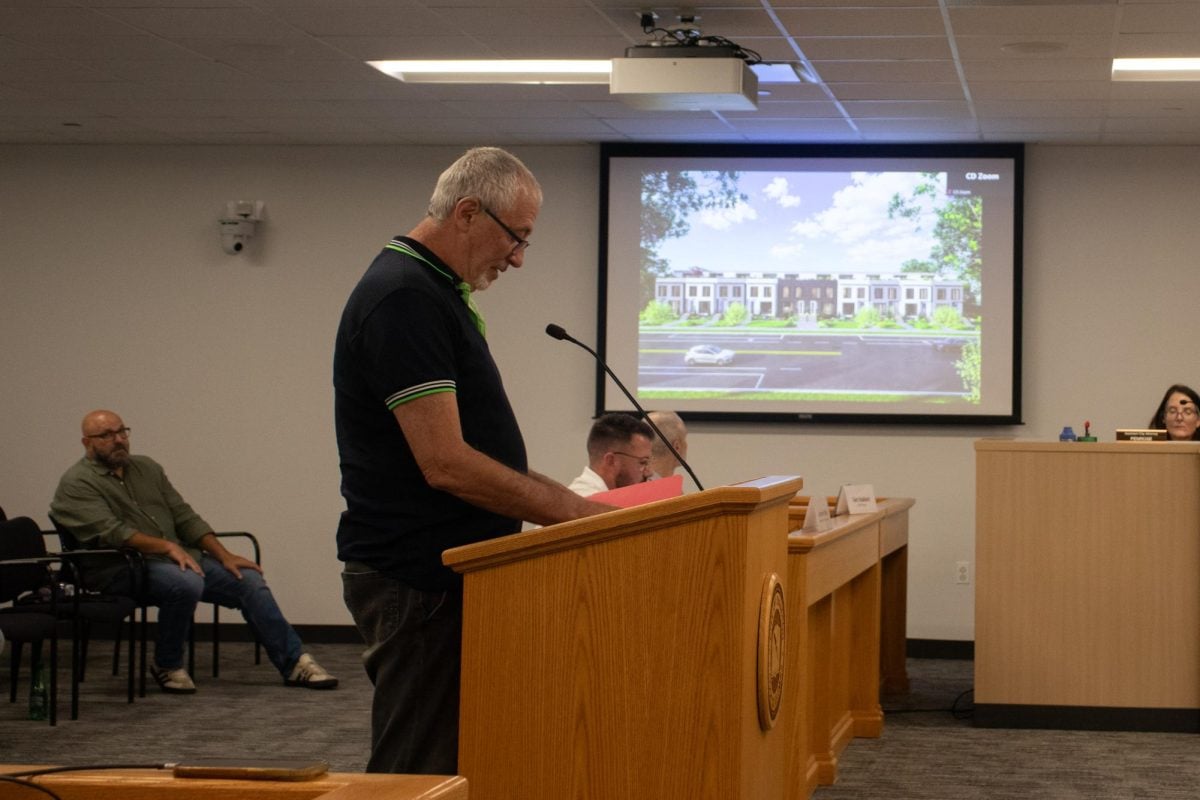
“I don’t think continuing to push this comp plan to another meeting, and then another meeting, is going to change how we feel as individuals,” Ald. Bobby Burns (5th) said. “We just need to have the discussion tonight.”
Subsequently, 6-2 of the council, including Burns, voted to adjourn the meeting and schedule another one, with Alds. Shawn Iles (3rd) and Jonathan Nieuwsma (4th) voting to stay. Ald. Krissie Harris (2nd) was absent from the meeting.
Having reviewed consent items at last week’s iteration, the council aimed to go through all policy items up for discussion at that meeting.
It ended up reviewing about half of those items — stopping just shy of diving fully into the plan’s contentious Housing chapter.
Further deliberations on discussion items, as well as individual councilmember items, will take place at an additional special council meeting next Monday at 5 p.m., according to city staff.
The entrenchment, delay and multiple tie-breaking votes from the Wednesday night meeting exacerbated tensions on both sides of the comprehensive plan, with proponents of its passing hoping to expedite the plan’s progression.
Despite stalling on the Housing chapter, the council evaluated and voted on edits to the plan’s first nine chapters, covering themes such as “Neighborhoods and Places” and “What We Heard.”
While many of the accepted edits were wording-based, one of the more substantial and contentious topics of the meeting was whether to add a sentence to “eliminate parking minimums downtown and reduce along corridors” to the plan’s “Getting Around” chapter.
In a 5-3 vote, councilmembers voted to add language to “eliminate parking minimums downtown” and “rightsize along transit-adjacent corridors,” with Alds. Clare Kelly (1st), Tom Suffredin (6th) and Matt Rodgers (8th) dissenting.
Evanston currently requires a minimum number of parking spaces for developers of both commercial and residential spaces, according to Planning Manager Elizabeth Williams.
An early wing of proponents advocating to eliminate parking minimums downtown consisted of Alds. Shawn Iles (3rd), Jonathan Nieuwsma (4th) and Juan Geracaris (9th).
Nieuwsma argued that it aligns with the council’s goals toward housing affordability, climate action and city finances, as the city can lease parking spaces to developers without requiring them to build more parking.
Iles said eliminating the minimums would also mean “less red tape” for developing new projects downtown, as there are no minimum parking requirements new developments have to meet.
Councilmembers and city staff further clarified that eliminating minimums would not get rid of parking or the federal requirement for accessible spaces under the Americans with Disabilities Act.
Kelly opposed the edit, saying the city does not have enough data to support eliminating minimums without expanded access to public transit. Instead, she proposed softening the language by including the word “explore” — a motion that narrowly lost in a tiebreaking vote by Biss.
While councilmembers reached a decisive vote on parking minimums, they voted to table several items characterizing the community’s disagreements on how to achieve housing affordability in the “What We Heard” section of the plan.
The housing affordability arguments seemed to repeat themselves once the council reached the housing chapter, according to Rodgers, when councilmembers debated choosing between goals to “increase housing supply and housing choices at all income levels” or “preserve and increase housing choices.”
Iles opted for the first choice, saying that having the word “preserve” in the goal is “loaded,” though Kelly advocated for language to preserve the city’s naturally occurring affordable housing.
Fundamental disagreements on housing supply and affordability arose yet again, with Davis and Rodgers contesting the role of increased housing supply in actually ensuring greater affordability.
“Folks are going to fall where folks are going to fall,” Rodgers said. “We don’t agree on what our terms mean, and we’re just going to sit up here and argue about what our terms mean.
Email: [email protected]
Related Stories:
— NU-City Committee discusses zoning, off-campus housing
— Housing language debates dominate City Council’s first Comprehensive Plan review